Archiv für den Monat: September 2026

Google wants adult products labeled, not left to its imagination

Google has updated its guidance for sites containing explicit content with a fairly straightforward request for ecommerce merchants: if you’re selling adult products, tell Google.

The company says merchants should identify adult-oriented products using the adult attribute in Merchant Center or the hasAdultConsideration property in Product structured data.

The labeling affects how products are handled across Google Shopping features. Google specifically says it does not affect the product page’s visibility in organic Search results.

That’s an important distinction. Marking a product as adult isn’t some new SEO scarlet letter. It gives Google the information it needs to apply the appropriate Shopping restrictions based on things such as age and country.

The label itself isn’t new

Google already had an adult attribute for Merchant Center feeds.

It also added hasAdultConsideration support to Product structured data in May 2026, giving merchants another way to explicitly identify products intended for adult audiences.

What’s changed now is the documentation.

Google has added the instruction directly to its Search Central guidance for explicit-content sites, making it rather harder for ecommerce operators to claim they didn’t know.

For stores with mixed inventories, Google recommends identifying the relevant products individually rather than treating the entire business as adult-oriented.

Our take

There isn’t much mystery here.

If Google Shopping needs to decide whether a product should be restricted by age or location, telling it what you’re selling is preferable to asking an algorithm to inspect the merchandise and reach its own conclusions.

And, importantly for SEOs, Google is explicitly separating that classification from ordinary organic Search visibility.

Source: Search Engine Roundtable

The post Google wants adult products labeled, not left to its imagination appeared first on Search Engine Watch.

Source:: searchenginewatch.com

Google Trends for product research: I almost mistook a spike for real demand

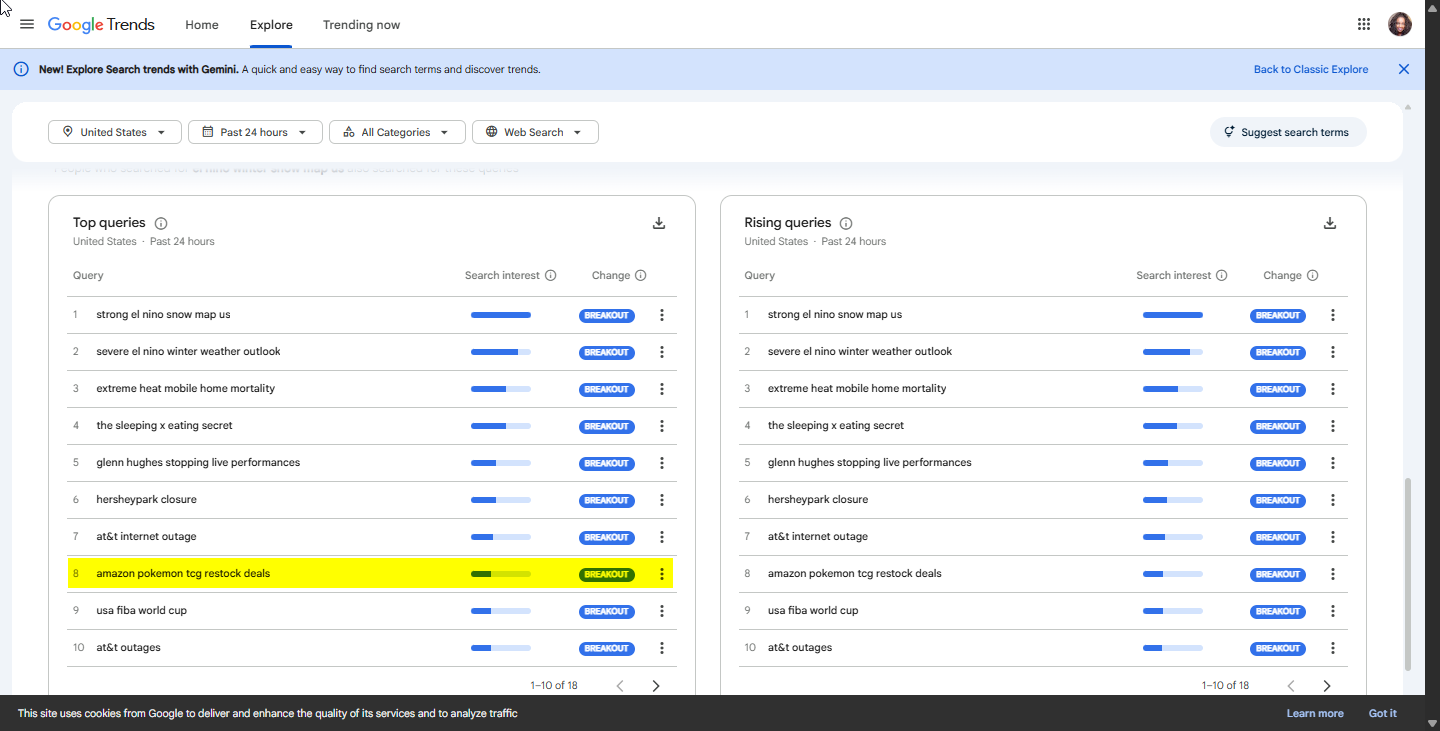
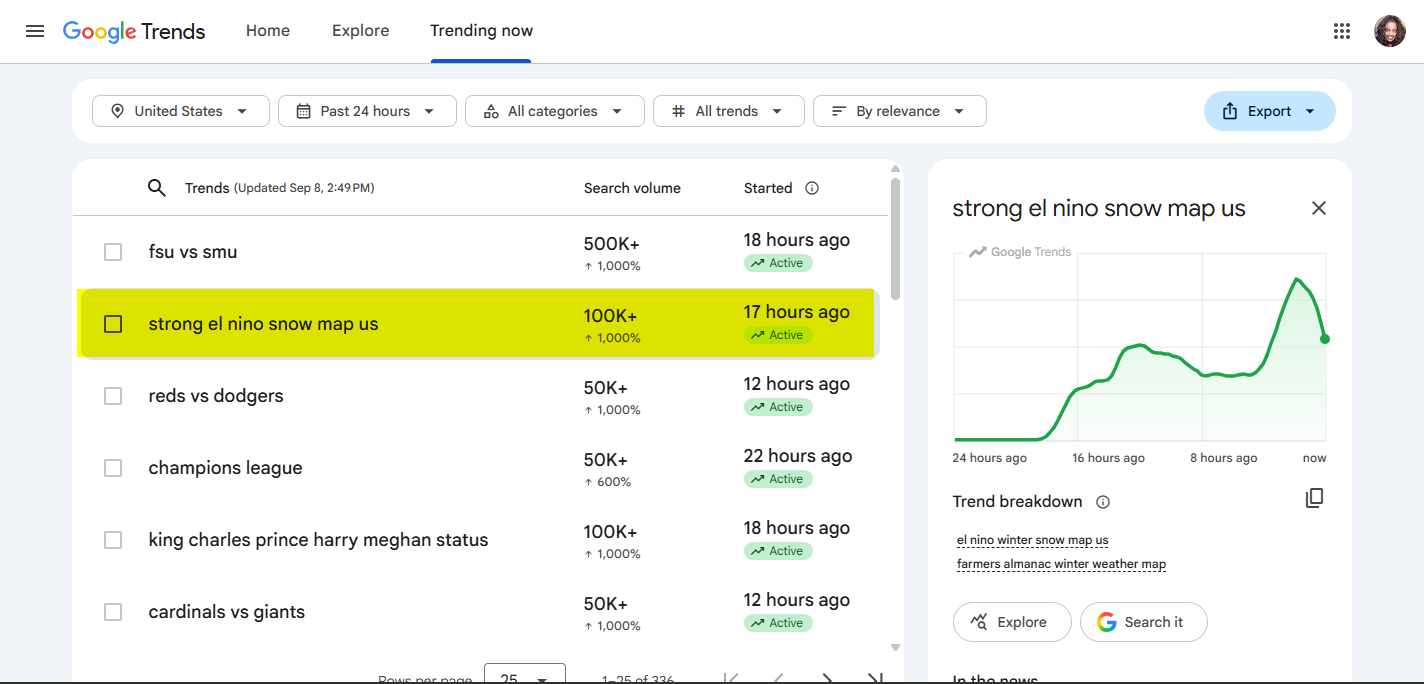
Google Trends told me that Amazon Pokémon TCG was a breakout query while El Niño-related snow searches were also surging. The two looked connected: bad weather keeps people indoors, and card games are an indoor product. It was a tidy story. It also turned out to be wrong. How it fell apart is the more useful lesson than the trend itself. I went down the rabbit hole and pulled the initial data on September 8 and follow-up on September 16th 2026 with the region set to United States, time-frame as the past 24 hours and kept the category and search type unchanged.

The Claim

Off the bat, when I open Google Trends, I’ll find a list of trending topics. At this time, strong el nino snow map us was among the top search queries. Say my trending product is likely to fall in the same category.

In this particular situation, that points to a card game; the Amazon Pokémon TCG. The predicted weather change provides a plausible explanation for why an indoor entertainment product might suddenly attract attention. Google Trends surfaced it as a breakout query. But a breakout label alone doesn’t tell you whether it’s worth betting inventory on.
How Easy It Is to Misread a Google Trends Spike

As a seller, your first assignment is to determine whether the trending product has enough staying power. Just how much are the searchers who could turn into potential buyers showing interest in this product? A short window plus a believable explanation is often enough to make a spike feel confirmed, even when nothing about it has been checked against history.

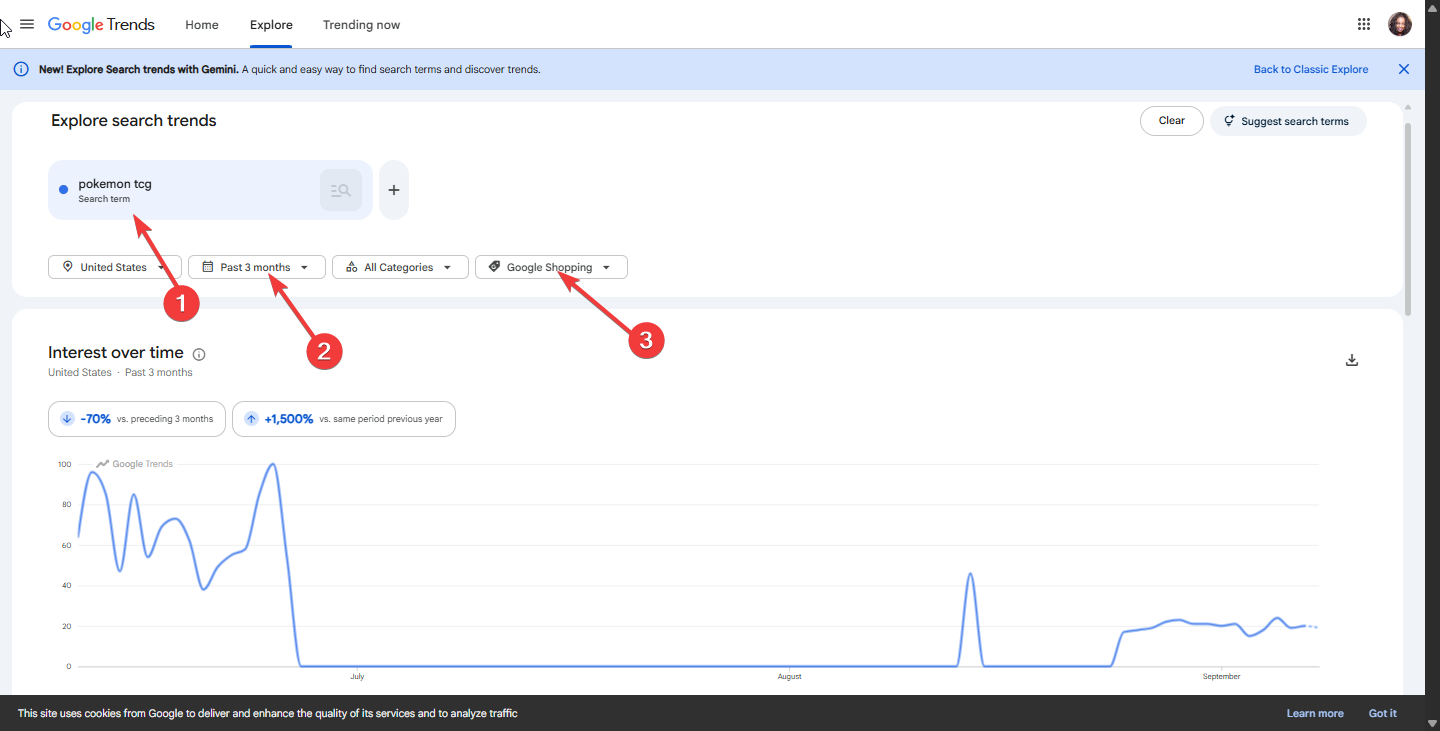
I put the claim to test and compared interest for the Amazon Pokemon TCG across four windows: past month, past 3 months, past year, and past 5 years. I also adjusted the search type to Google Shopping because I wanted to see if it would translate to a more commercially oriented search signal, or if they were just searching out of general curiosity. Differentiating general interest form intent-to-buy isolates true consumer demand from casual interest.

The short windows were convincing. The one-month view showed a sharp, clean spike. Impressive enough that makes it worth stocking inventory for. The three-month view still showed real activity. But the one-year view flattened into a near-flat line, and the five-year view showed no meaningful historical baseline.
A week later, on September 16, I ran the same check. The weather query itself had already shifted from strong el nino snow map us to el nino winter forecast. The breakout query, Amazon Pokémon TCG had dropped out of the trending list entirely.
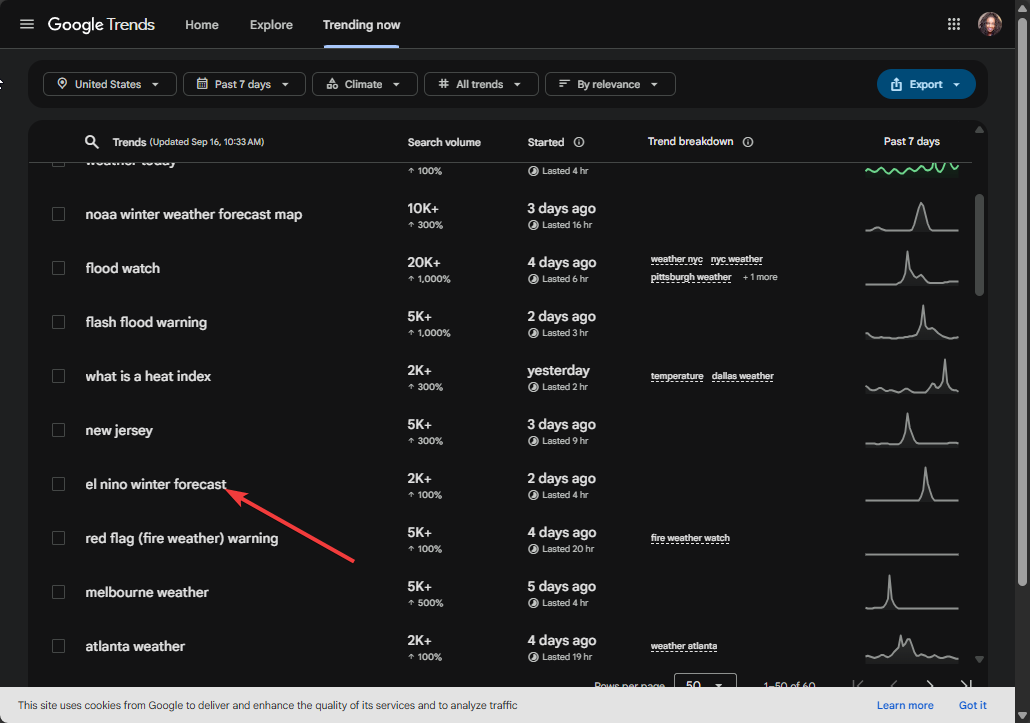
Amazon Pokemon TCG was not among the trending queries but Amazon was.
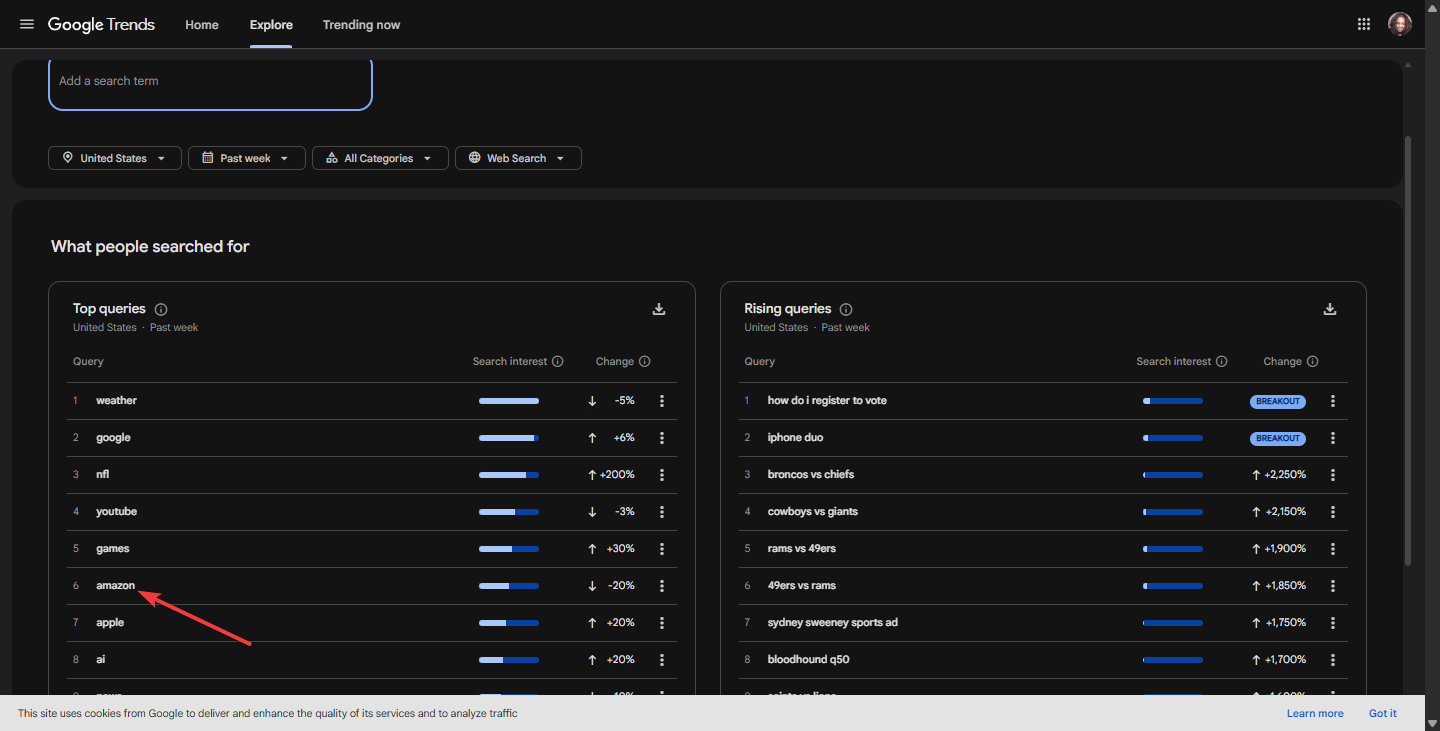
I went ahead to explore the search query with a small adjustment by adding the game to the search query alongside Amazon. It wasn’t among the breakout queries and upon further examination, its search interest had slowed down.

The three-month Shopping-filtered view showed a spike that peaked quickly and then flattened, rather than building into anything sustained.
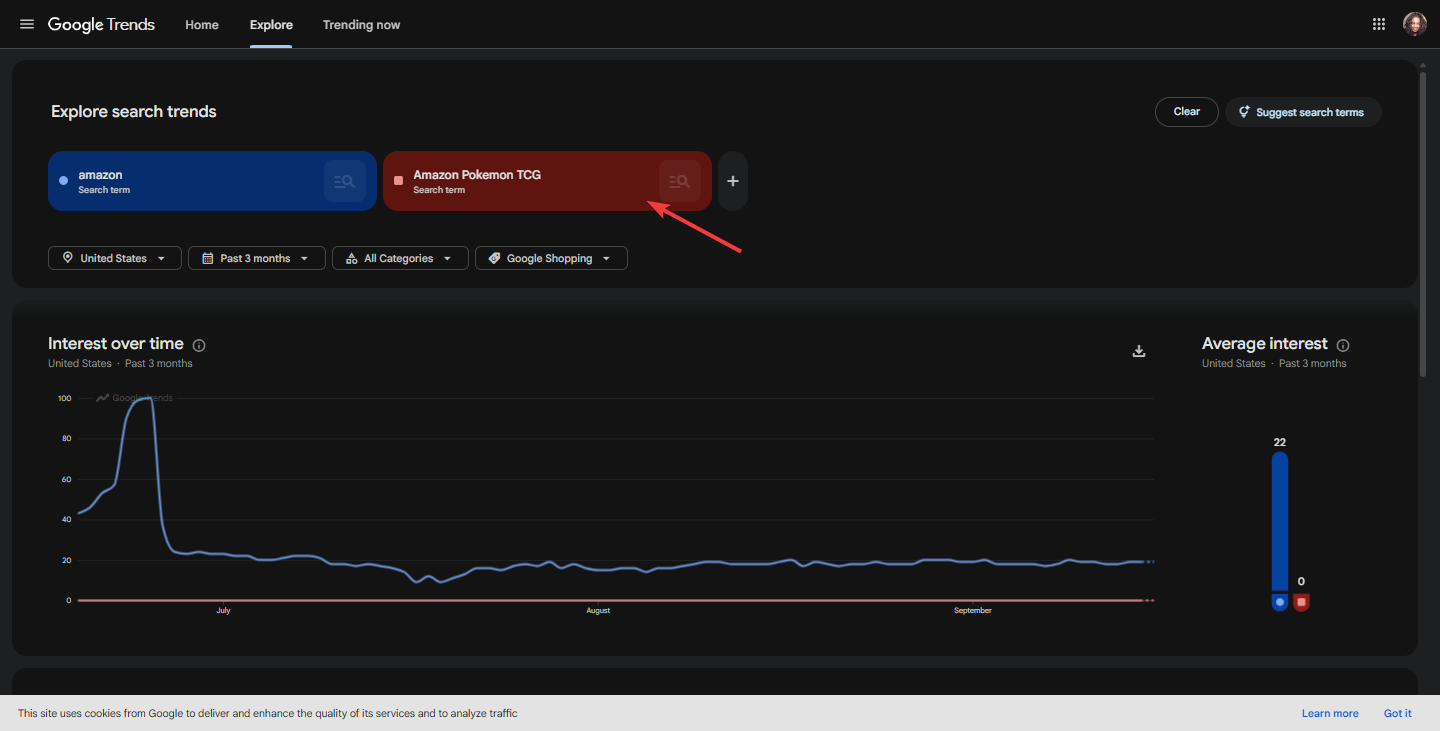
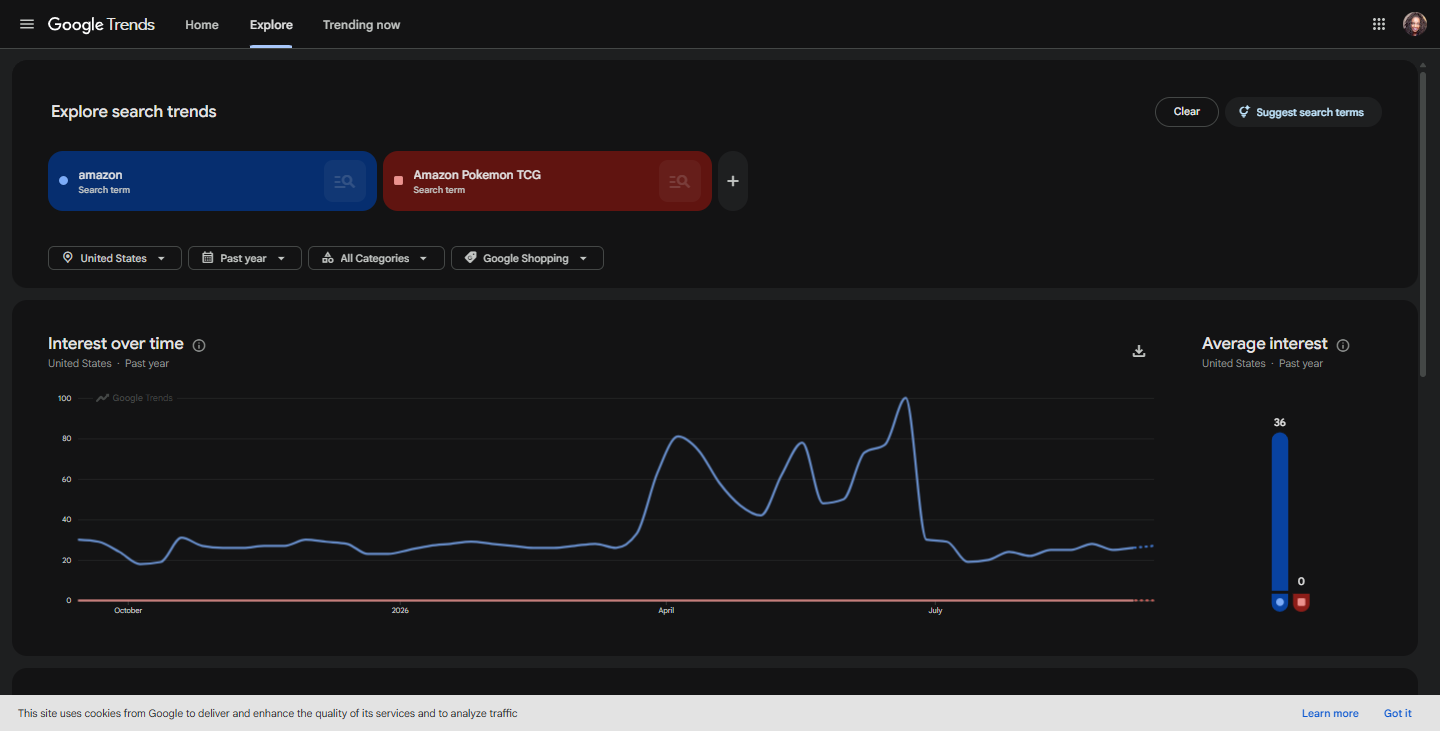
The one-year and five-year views still showed no baseline.
Where I was almost fooled

First off, Google Trends asn’t wrong. The breakout was real. The mistake would have been interpreting “breakout” as proof of a large and sustainable market. While it highlighted a breakout spike, it provided no data on overall market size, commercial intent, or whether the trend had real staying power.

On the 1-month view alone, the game looked like a clean, confident signal. The three-month view almost sealed the deal with some activity. Further, not only was it a breakout query, it had a plausible cause. The weather trend gave me a very convenient explanation for the Pokémon spike, and it became easy to build a story around the data. If I was a seller, I’d have stopped there. I would have read this as validated demand and moved straight to sourcing inventory.

This breakout query paints a different picture from a seasonal product. The trend would be predictable. If this were a genuine seasonal trend, I’d expect to see recurring peaks around the same period each year on the five-year view. That’s exactly why I went back a week later to see if this momentum would hold up and unfortunately, I couldn’t verify a recurring seasonal pattern. The follow-up confirmed the initial momentum had already fizzled out and the longer-term views did not show a meaningful historical baseline.

My Verdict

Based on the numbers, this claim didn’t hold up. The 1-month spike looked strong in isolation. However, a single unconfirmed spike with no five-year track record isn’t evidence of a genuine breakout query. More importantly, Google Trends does not provide absolute numbers or even the search volume. What you get access to is relative peak interest over a time frame. After all, it could be trending because it’s a new game or some controversy around it. I’m glad I waited it out to see how the search query transformed. I used the breakout query as a signal to investigate rather than a green light to buy inventory. My key takeaway is to look beyond the immediate breakout and check longer timeframes. You can avoid the costly trap of misreading search noise for real demand.

The post Google Trends for product research: I almost mistook a spike for real demand appeared first on Search Engine Watch.

Source:: searchenginewatch.com
Google is turning local Knowledge Panels into AI Overviews

Google appears to be testing AI Overviews directly inside local Knowledge Panels.

Local SEO expert Ben Fisher spotted the change on mobile, and Search Engine Roundtable’s Barry Schwartz was able to reproduce it.

The panel carries an AI Overview label above an AI-generated description of the business. Tapping Show more opens an AI Mode-style interface where users can continue asking questions about the company.

Google has not announced the feature, so this appears to be a test for now.

Why this matters for local SEO

AI-generated descriptions in local results are not completely new. Google has already experimented with AI summaries around Business Profiles and local listings.

What is different here is the prominence.

The AI summary is now being presented as an AI Overview and connected to a conversational search experience.

That means users searching for a business may increasingly see Google’s interpretation of the company before reading information supplied directly by the business.

Schwartz also found outdated information appearing in the AI-generated description of his own company. The source information on his website was outdated too.

That is an important detail for local businesses.

If Google is using websites and other sources to generate these summaries, keeping a Business Profile accurate may no longer be enough. Businesses will also need to make sure the information across their own websites is current.

Our take

Local SEO used to be relatively straightforward: keep your Business Profile accurate and make sure Google understands what your company does.

AI adds another layer.

Google can now generate its own description of the business and put it directly in front of searchers.

So the question is no longer just whether your business information is correct.

It is whether Google’s version of your business is correct too.

The post Google is turning local Knowledge Panels into AI Overviews appeared first on Search Engine Watch.

Source:: searchenginewatch.com
GA4’s Singapore bot problem is back, and some of it now looks almost human

If your Google Analytics dashboard suddenly thinks Singapore is your biggest market, check the numbers before celebrating.

Search Engine Watch saw the pattern firsthand on September 18. In one GA4 Realtime snapshot, 365 of 419 active users were reported as being in Singapore, with desktop accounting for more than 85% of users.

The pattern is showing up elsewhere too.

A September 2 investigation by developer Ken Imoto found Singapore sessions had increased ninefold in a day. The traffic had a 0% engagement rate, averaged just 0.5 seconds per session, and 99% arrived as Chrome users on Windows desktop. Nearly all also reported the same screen resolution.

Shopify merchants have been seeing similar activity. One merchant reported in early September that traffic had reached as many as 80,000 visitors from Singapore in a single day. Another August report said Singapore traffic had inflated normal traffic levels by as much as 20 to 30 times during previous bot waves.

The problem appears to be continuing this week. On September 17, a Shopify merchant said the platform was classifying roughly 74% of a large Singapore traffic spike as bots, while claiming the remaining activity also appeared designed to resemble human browsing.

Reports of suspicious Singapore and China traffic have also appeared repeatedly in Google’s own Analytics community, including new complaints this summer.

Our take

The interesting part is no longer simply that bot traffic exists. It is that some of it is making its way far enough through the stack to pollute analytics dashboards.

A sudden Singapore boom might be great news. But if hundreds of desktop users appear simultaneously without the conversions, referrals or engagement to match, perhaps hold off on opening the Singapore bureau.

The post GA4’s Singapore bot problem is back, and some of it now looks almost human appeared first on Search Engine Watch.

Source:: searchenginewatch.com
Bing tests showing favicons in Shopping ad results

favicons in Shopping ad results-1

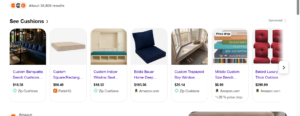
Bing is testing favicons within its Shopping ad results. Previously, Bing only showed the site name without a favicon, but now we’re spotting favicons appearing alongside these results.

This mirrors a similar change we recently covered on Google, where favicons started appearing in Shopping ad results after previously showing only the website name.

Here is screenshot with favicons.

favicons in Shopping ad results

Here is a screenshot without a favicon.

without favicons in Shopping ad results

Showing favicons within Shopping ad results is a solid addition, helping build trust with users by making it easier to quickly recognize a familiar brand before clicking.

The post Bing tests showing favicons in Shopping ad results appeared first on Search Engine Watch.

Source:: searchenginewatch.com