Archiv für den Autor: Andreas

New Google Ad Labeling

2022 Google SERP layouts with new ad labeling

TechCrunch recently highlighted how Google is changing their ad labeling on mobile devices.

A few big changes include:

  • ad label removed from individual ad units
  • where the unit-level label was instead becomes a favicon
  • a „Sponsored“ label above ads
  • the URL will show right of the favicon & now the site title will be in a slightly larger font above the URL

An example of the new layout is here:

Displaying a site title & the favicon will allow advertisers to get brand exposure, even if they don’t get the click, while the extra emphasis on site name could lead to shifting of ad clicks away from unbranded sites toward branded sites. It may also cause a lift in clicks on precisely matching domains, though that remains to be seen & likely dependes upon many other factors. The favicon and site name in the ads likely impact consumer recall, which can bleed into organic rankings.

After TechCrunch made the above post a Google spokesperson chimed in with an update

Changes to the appearance of Search ads and ads labeling are the result of rigorous user testing across many different dimensions and methodologies, including user understanding and response, advertiser quality and effectiveness, and overall impact of the Search experience. We’ve been conducting these tests for more than a year to ensure that users can identify the source of their Search ads and where they are coming from, and that paid content is clearly labeled and distinguishable from search results as Google Search continues to evolve

The fact it was pre-announced & tested for so long indicates it is both likely to last a while and will in aggregate shift clicks away from the organic result set to the paid ads.

Categories:

Source:: seobook.com

Automating Ourselves Out of Existence

Time has grown more scarce after having a child, so I rarely blog anymore. Though I thought it probably made sense to make at least a quarterly(ish) post so people know I still exist.

One of the big things I have been noticing over the past year or so is an increasing level of automation in ways that are not particularly brilliant. 😀

Just from this past week I’ve had 3 treat encounters on this front.

One marketplace closed my account after I made a bunch of big purchases, likely presuming the purchases were fraudulent based on the volume, new account & an IP address in an emerging market economy. I never asked for a refund or anything like that, but when I believe in something I usually push pretty hard, so I bought a lot. What was dumb about that is they took a person who would have been a whale client & a person they were repeatedly targeting with ads & turned them into a person who would not recommend them … after being a paying client who spent a lot and had zero specific customer interactions or requests … an all profit margin client who spent big and then they discarded. Dumb.

Similarly one ad network had my account automatically closed after I had not used it for a while. When I went to reactivate it the person in customer support told me it would be easier to just create a new account as reactivating it would take a half week or more. I said ok, went to set up a new account, and it was auto-banned and they did not disclose why. I asked feedback as to why and they said that they could not offer any but it was permanent and lifetime.

A few months go by and I wondered what was up with that and I logged into my inactive account & set up a subaccount and it worked right away. Weird. But then even there they offer automated suggestions and feedback on improving your account performance and some of them were just not rooted in fact. Worse yet, if they set the default targeting options to overly broad it can cause account issues in a country like Vietnam to where if you click to approve (or even auto approve!) their automated suggestions you then get notifications about how you are violating some sort of ToS or guidelines … if they can run that logic *after* you activate *their* suggestions, why wouldn’t they instead run that logic earlier? How well do they think you will trust & believe in their automated optimization tips if after you follow them you get warning pop overs?

Another big bonus recently was a client was mentioned in a stray spam email. The email wasn’t from the client or me, but the fact that a random page on their site was mentioned in a stray spoofed email that got flagged as spam meant that when the ticket notification from the host sent wounded up in spam they never saw it and then the host simply took their site offline. Based on a single email sent from some other server.

Upon calling the host with a friendly WTF they explained to the customer that they had so many customers they have to automate everything. At the same time when it came time to restoring hosting that the client was paying for they suggested the client boot in secure mode, run Apache commands x and y, etc. … even though they knew the problem was not with the server, but an overmalicious automated response to a stray mention in a singular spam email sent by some third party.

When the host tried to explain that they „have to“ automate everything because they have so many customers the customer quickly cut them off with „No, that is a business choice. You could charge different prices or choose to reach out to people who have spent tens of thousands on hosting and have not had any issues in years.“ He also mentioned how emails can be sent to spam, or be sent to an inbox on the very web host that went offline & was then inaccessible. Then the lovely customer support person stated „I have heard that complaint before“ meaning they are aware of the issue, but do not see it as an issue for them. When the customer said they should follow up any emails with an SMS for servers going offline the person said you could do it on your end & then later sent them a 14-page guide for how to integrate the Twillio API.

Nothing in the world is fair. Nothing in the world is equal. But there are smart ways to run a business & dumb ways to run a business.

If you have enough time to write a 14-page integration guide it probably makes sense to just incorporate the feature into the service so the guide is unneeded!

Businesses should treat their heavy spenders or customers with a long history of a clean account with more care than a newly opened account. I had a big hedge fund as a client who would sometimes want rush work done & would do stuff like „hey good job there, throw in an extra $10,000 for yourself as a bonus“ on the calls. Whenever they called or emailed they got a quick response. 😀

I sort of get that one small marketplace presuming my purchases might have been a scam based on how many I did, how new my account was, and how small they were, but the hosting companies & ad networks that are worth 9 to 12 figures should generally do a bit better. Though in many ways the market cap is a sign the entity is insulated from market pressures & can automate away customer service hoping that their existing base is big enough to offset the customer support horror stories that undermine their brand.

It works.

At least for a while.

A parallel to the above is my Facebook ad account, which was closed about a half decade or so ago due to geographic mismatch. That got removed, but then sort of only half way. If I go to run ads it says that I can’t, but then if I go to request an account review to once again explain the geographic difference I can’t even get the form to submit unless I edit the HTML of the page on the fly to seed the correct data into the form field as by default it says I can not request a review since I have no ad account.

The flip side of the above is if that level of automation can torch existing paid accounts you have to expect the big data search & social companies are taking a rather skeptical view of new sites or players wanting to rank freely in their organic search results or social feeds. With that being the case, it helps to seed what you can to provide many signals that may remove some of the risks of getting set in the bad pile.

I have seen loads of people have their YouTube or Facebook or whatever such account get torched & only override the automated technocratic persona non grata policies by having followers in another channel who shared their dire situation so it could get flagged for human review and restoration. If that happens to established & widely followed players who have spent years investing into a platform the odds of it happening to most newer sites & players is quite high.

You can play it safe and never say anything interesting, ensuring you are well within the Overtone Window in all aspects of life. That though also almost certainly guarantees failure as it is hard to catch up or build momentum if your defining attribute is being a conformist.

Categories:

Source:: seobook.com

Engineering Search Outcomes

Kent Walker promotes public policies which advantage the Google monopoly.

His role doing that means he has to write some really bad hot takes that lack context or intentionally & dishonestly redirect attention away from core issues – that’s his job.

With that in mind, his most recent blog post defending the Google monopoly was exceptional.

Force Ranking of Inferior Search Results

„When you have an urgent question — like “stroke symptoms” — Google Search could be barred from giving you immediate and clear information, and instead be required to direct you to a mix of low quality results.“

On some search queries users get a wall of Google ads, the forced ranked Google insert (or sometimes multiple of them with local & ecommerce) and then there can even be a „people also ask“ box above the first organic result.

The idea that organic results must be low quality if not owned & operated indicates 1 of the following 3 must be true:

  • they should not be in search
  • their content scraping & various revenue shifting scams with their ad tech stack demonetized legit publishers
  • their forced rank of their own content is stripping them of the signals needed to rank websites & pages

Whenever Google puts a „people also ask“ box above the first organic result that is them saying they did not know what to rank, or they are just trying to create a visual block to push the organic result set down the page and user attention back up toward the ads.

The solution to Google’s claims is easy to solve. Either of the following would work.

  • Have an API that allows user choice (to set rich snippet or vertical defaults in various categories), or
  • If the vertical inserts remain Google-only then for Google to justify force ranking their own results above the organic result set Google should also be required to rank those same results above all of their ads, so that Google is demonetizing Google along with the rest of the ecosystem, rather than just demonetizing third parties.

If the thesis that this information needs to be front and center & that is a matter of life or death, then asking searchers to first scroll past a page or two of ads is not particularly legitimate.

Spam & Security

„when you use Google Search or Google Play, we might have to give equal prominence to a raft of spammy and low-quality services.“

Many of the worst versions of spam that have repeatedly made news headlines like fake tech support, fake government document providers, and fake locksmiths were buying distribution through Google Ads or were featured in the search results through Google force ranking their own local search offering even though they knew the results were vastly inferior to Yelp.

If Google did not force rank Google local results above the rest of the organic result set then the fake locksmiths would not have ranked.

I have lost count of how many articles I have read about hundreds or thousands of fake apps in the Google Play store which existed to defraud advertisers or commit identity theft, but there have been literally thousands of such articles. I see a similar headline at least once a month without eve looking for them. Here is one this week for scammers monetizing the popularity of Wordle with fake apps.

Making matters worse, some of the tech support scams showed the URL of a real business and rerouted the call through a Google number directly to a scammer. A searcher who trusted Google & sees Apple.com or Dell.com on Google Ads in the search results then got connected with a scammer who would commit identity theft or encrypt their computer then demand ransom cryptocurrency payments to decrypt it.

After making the ads harder to run for scammers Google decided the problem was too hard & expensive to sort out so they also blocked legitimate computer repair shops.

Sometimes Google considers something spam strictly due to financial considerations.

Their old remote rater documents stated *HELPFUL* hotel affiliate websites should be labeled as spam.

Years later the big OTAs are complaining about Google eating their lunch as well as Google is twice as big as the next player.

At one point Google got busted for helping an advertiser route around the automated safety features built into their ad network so that they could pay Google to run ads promoting illegal steroids.

With cartels, you can only buy illegal goods and services from the cartel if you don’t want to suffer ill consequences. The same appears to be true here.

The China Problem

„Handicapping America’s technology leaders would threaten our leading sources of research and development spending — just as bipartisan voices in Congress are recognizing the need to increase American R&D investment to stay competitive in the global race for AI, quantum, and other advanced technologies.“

We are patriotic, and, but China… is a favorite misdirection of a tech monopolist.

The problem with that is while Eric Schmidt warns it is a national emergency if China overtakes the US in AI tech, Google also operates an AI tech lab in China.

In other words, Eric Schmidt is trying to warn you about himself and his business interests at Google.

Duplicitous? Absolutely.

Patriotic? Less than Chamath!

Who the fuck did this? pic.twitter.com/BD4NKpila6— Girolamo Carlo Casio (Free Twatter) (@INArteCarloDoss) January 19, 2022

Inflation

„the online services targeted by these bills have reduced prices; these bills say nothing about sectors where prices have actually been rising and contributing to inflation.“

Technology is no doubt deflationary (moving bits on an optical line is cheaper than printing out a book and shipping it across the world) BUT some dominant channels have increased the cost of distribution by increasing the chunk size of information and withholding performance information.

Before Google Analytics was „free“ there was a rich and vibrant set of competition in web analytics software with lots of innovation from players like ClickTracks.

Most competing solutions went away.

Google moved away from an installed licensing model to a hosted service where they can change the price upon contract renewal.

Search hid progressively more performance information over time, only sampled data from larger data sets, & now you can sign up for Google Analytics 360 starting at only $150,000 per year.

The hidden search performance data also has many layers to that onion. Not only does Google not show keyword referrers on organic search, but they often don’t show your paid search keywords either, and they keep extending out keyword targeting broader than advertisers intend.

Yesterday’s announcement on match type changes had me crawling through query data this morning. I’m staring at many 2-3 word exact match keywords that are matching to 8-word queries. G thinks ‚deck paint‘ and ‚how do i put paint on my deck‘ mean the exact same thing. CPA is 10x.— Brad Geddes (@bgtheory) February 5, 2021

Google used to pay Brad Geddes to run official Google AdWords ad training seminars for advertisers, so the idea that *he* has to express his frustrations on Twitter is an indication of how little effort Google is putting into having open communications channels or caring about what their advertisers think.

This is in accordance with the Google customer service philosophy:

he told her that the whole idea of customer support was ridiculous. Rather than assuming the unscalable task of answering users one by one, Page said, Google should enable users to answer one another’s questions.

Those who were paying for ads get the above „serve yourself“ treatment, all the while Google regularly resets user default ad settings to extend out ad distribution, automatically ad keywords, shift to enhanced AdWords ad campaigns, etc.

Then there are other features which would be beneficial and offered in a competitive market that have been deprioritized. Many years ago eBay did a study which showed their branded Google AdWords ad buys were cannibalistic to eBay profits. Google maintained most advertisers could not conduct such a study because it would be too expensive and Google does not make the feature set available as part of their ad suite.

Missing Information

„When you search for local businesses, Google Search and Maps may be prohibited from highlighting information we gather about hours of operation, contact information, and reviews. That could hurt small businesses and local retailers, as well as their customers.“

Claiming reviews or an attempt to offer a comprehensive set of accurate review data as a strong point would be economical with the truth.

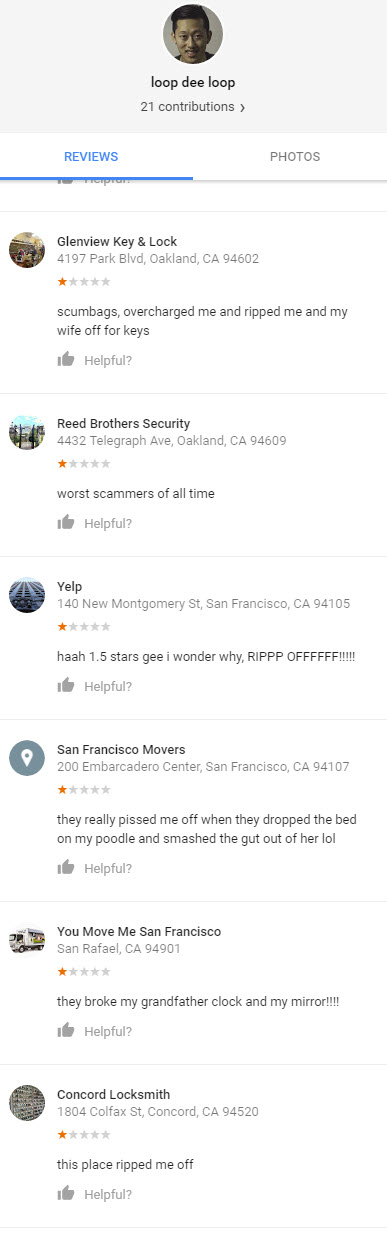
Back when I had a local business page my only review was from a locksmith spammer / scammer who praised his own two businesses, trashed a dozen other local locksmiths, crapped on a couple local SEO services, and joked about how a local mover smashed the guts out of his dog. Scammer fake reviewer’s name was rather sophisticated … it was … Loop Dee Loop

About a decade back when Google was clearly losing Google took Yelp reviews wholesale (sometimes without even attributing them to Yelp!) and told Yelp that if they did not want Google stealing their work and displacing them with a copy of it then they should block GoogleBot. Google offered the same sort of advice / threat to TripAdvisor.

A few years before that Google temporarily „forgot“ to show phone numbers on local listings.

After Yelp turned down an acquisition offer by Google & Yelp did a great job making some people aware of how Google was stealing their reviews wholesale without attribution Google bought Zagat & Fromer’s to augment the Google local review data and then sold those businesses off.

This is sort of the same playbook Google has run in the past elsewhere. After Groupon said no to Google’s acquisition offer, Google quickly provided daily deal ads to over a dozen Groupon competitors to help commoditize the Groupon offering and market position.

Ultimately with the above sort of stuff Google is primarily a volume aggregator or has lower editorial costs than pure plays due to the ability to force bundle their own distribution. And they use the ability to rank themselves above a neutral algorithmic position as a core part of their biz dev strategy. When shopping search engines were popular Google kept rewording the question set they sent remote raters to justify rank demotion for shopping search engines & Google also came up with innovative ranking „signals“ like concurrent ranking of their own vertical search offering whenever competitors x or y are shown in the result set & rolled out a „diversity“ algorithm to limit how many comparison shopping sites could appear in the search results. The intent of the change was strictly anti-competitive:

„Although Google originally sought to demote all comparison shopping websites, after Google raters provided negative feedback to such a widespread demotion, Google implemented the current iteration of its so-called ‚diversity‘ algorithm.“

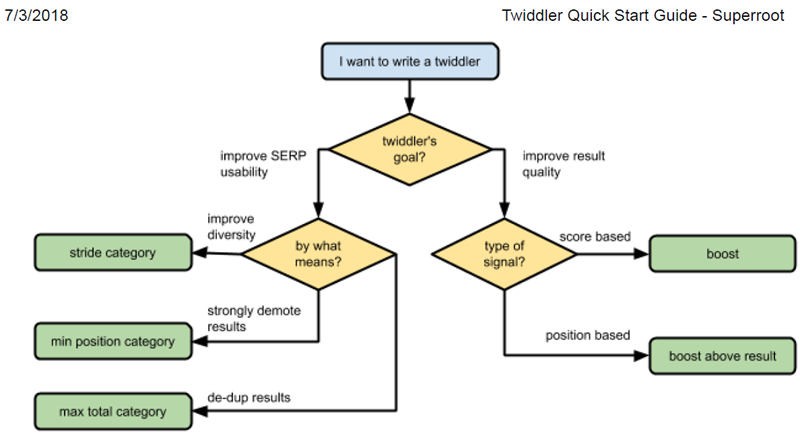
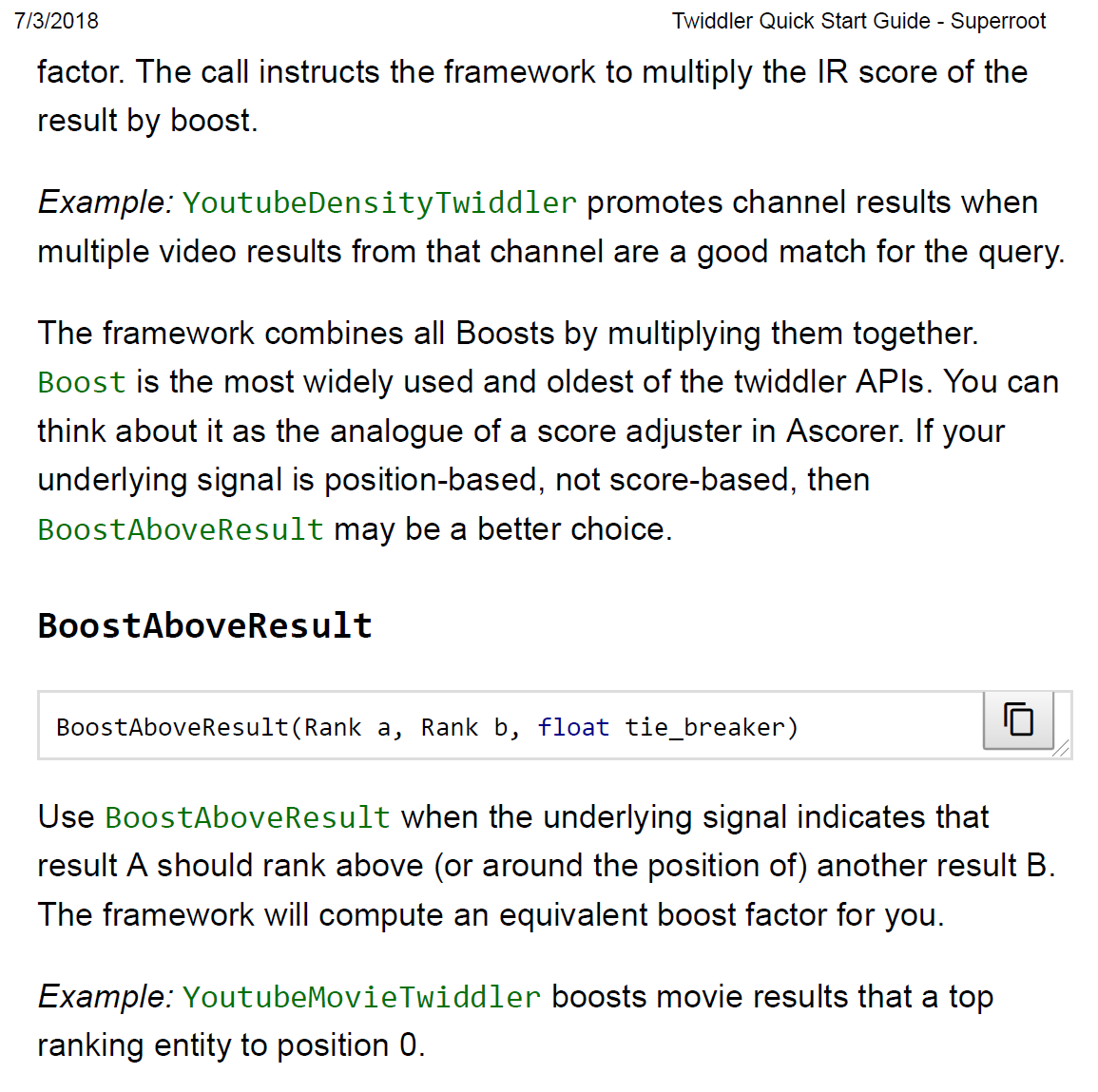
As a matter of fact, part of one of many document dumps in recent years went further than the old concurrent ranking signal to a rank x above y feature which highlights how YouTube can be hard coded at a number 1 ranking position.

Part of that guide highlighted how to hardcode ranking YouTube #1.

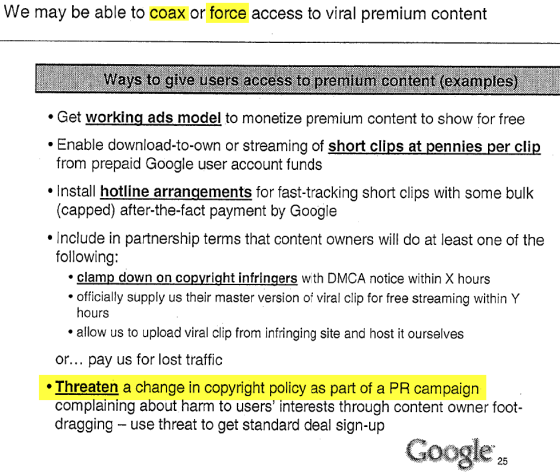
If you re-represent content & can force rank yourself #1 (with larger listings) that can be used to force other players onto your platform on your terms. Back when YouTube was must less of a sure thing Google suggested they could threaten to change copyright.

This same approach to „relevancy“ is everywhere.

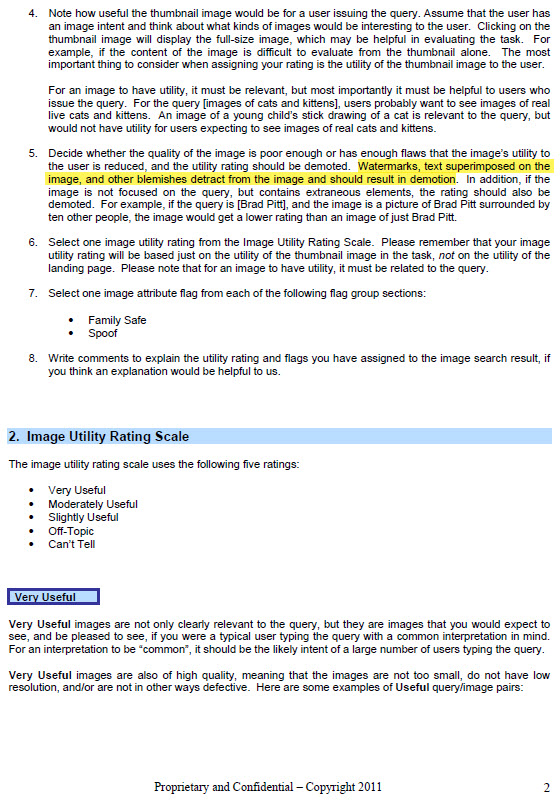
Did you watermark your images? Well shame on you, as that is good for a rank demotion

And if there are photos which are deemed illegal Google will make you file an endless series of DMCA removal requests even though they already had the image fingerprinted.

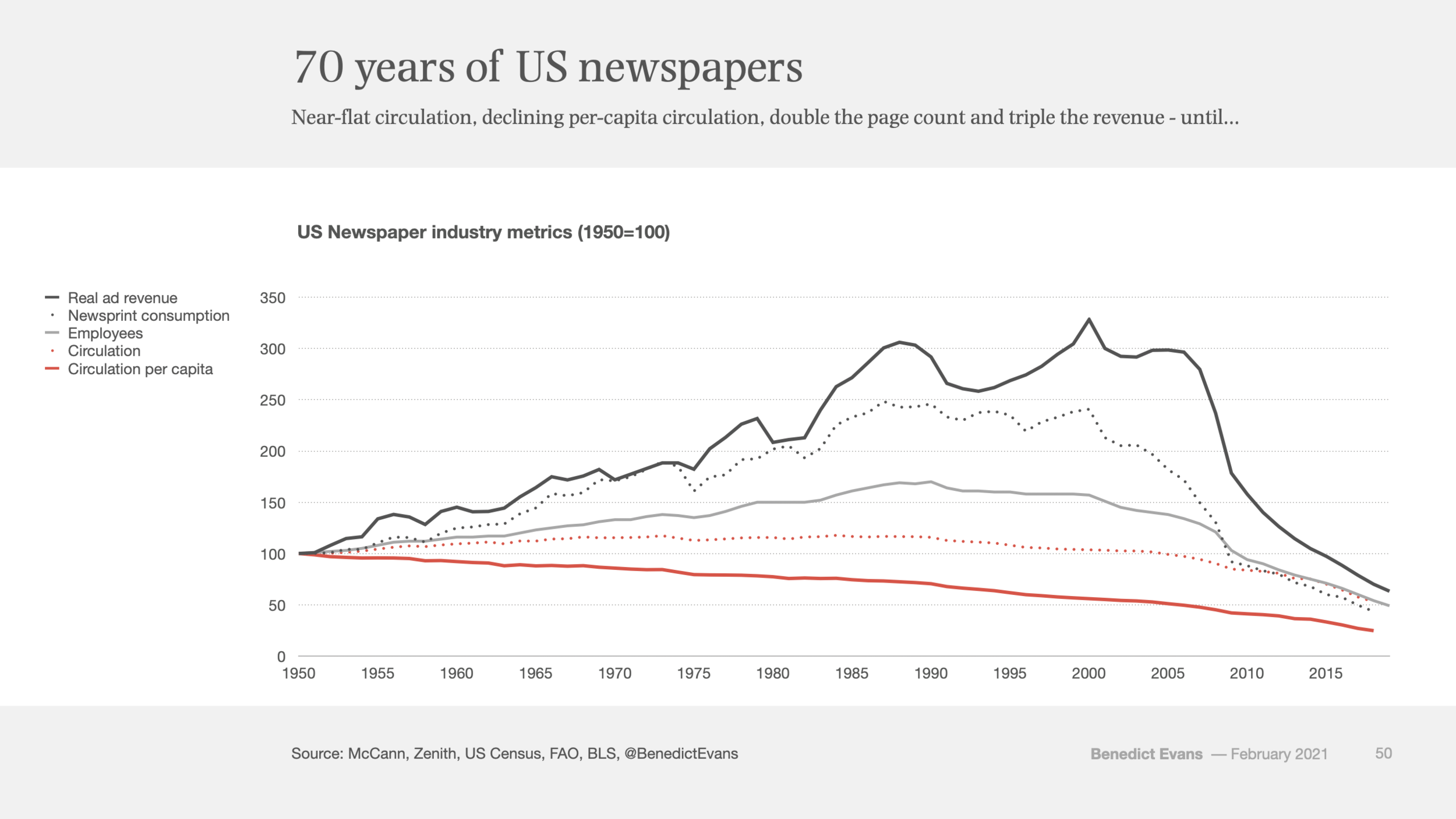
Now there are some issues where there is missing information. These areas involve original reporting on local politics & are called news deserts. As the ad pie has consolidated around Google & Facebook that has left many newspapers high and dry.

Private equity players like Alden Global Capital buy up newspapers, fire journalists, and monetize brand equity as they drive the papers into the ground.

If you are sub-scale maybe Google steals your money or hits you with a false positive algorithm flag that has you seeking professional mental health help.

Big players get a slower blood letting.

Google has maintained they do not make any money from news search, but the states lawsuit around ad tech made it clear Google promoted AMP for anti-competitive purposes to block header bidding, lied to news publishers to get them to adopt AMP and eat the tech costs of implementation, did a deal with their biggest competitor in online advertising Facebook to maintain the status quo, charge over double what their competitors do for ad tech, and had a variety of bid rigging auction manipulation algorithms they used to keep funneling more money to themselves.

Internally they had an OKR to make *most* search clicks land on AMP pages within a year of launch

„AMP launched as an open source project in October 2015, with 26 publishers and over 40 publications already publishing AMP files for our preview demo. Our team built g.co/ampdemo and is now racing towards launching it for all of our users. We’re responsible for the AMP @ Google integrations, particularly focusing on Search, our most visible product. We have a Google-wide 2016 OKR to deliver! By the end of 2016, our goal is that 50%+ of content consumed through Search is being consumed through AMP.“

You don’t get over half the web to shift to a proprietary version of HTML in under a year without a lot of manipulation.

So, when Google tells buyers an ad sold for one price and they tell sellers it sold for a lower price, isn’t that just plain old fraud? I mean, on top of the anti-competitive tying and all that, fraud is illegal, isn’t it?— Jerry Neumann (@ganeumann) January 14, 2022

Categories:

Source:: seobook.com

SEMrush IPO (SEMR)

On Wednesday SEMrush priced their IPO at $14 a share & listed Thursday.

There have been many marketing and online advertising companies which are publicly traded, but few that were so focused specifically on SEO while having a sizeable market cap. According to this SeekingAlpha post at the IPO price SEMrush had a valuation of about $1.95 to $1.99 billion. For comparison sake, here are some other companies & valuations.

  • Facebook acquired Instagram for $1 billion.
  • Google acquired YouTube for $1.65 billion.
  • Yelp trades at around a $2.9 billion market cap.
  • Yahoo! was acquired by Verizon for $4.48 billion.
  • Hubspot has a market cap of around $20.4 billion.

A couple years ago Gannett bought AdWords reseller WordStream. A few years before that they bought ReachLocal. The Hearst publishing empire also bought iCrossing long ago. Marin Software remains publicly traded, but they are only valued at about $20 million.

Newspapers reselling Google AdWords ads isn’t really SEO though. Beyond those sorts of deals, many of the publicly traded SEO stuff has been only tangentially relevant to SEO, or crap.

There are some quality category-leading publishers which use SEO as a means of distribution but are not necessarily an SEO service provider like TripAdvisor, BankRate, and WebMD. Over time many of these sorts of companies have been gobbled up by Red Ventures or various private equity firms. Zillow, Yelp and TripAdvisor are some of the few examples which still exist as independent companies.

So that puts most of the publicly traded SEO stuff in one of the following categories…

  • small scale – does anyone other than Andy Beal & Mike Grehan still remember KeywordRanking / WebSourced / Think Interactive / MarketSmart Interactive?
  • hope and nope – sites like Business.com were repeatedly acquired but never really gained lasting relevance.
  • affiliate networks – which reliant on partners with SEO traffic like Quinstreet & Commission Junction. many affiliate networks were hit hard as the barrier to entry in SEO increased over the years. Quinstreet is doing well in some verticals but sold their education division to Education Dynamics for $20 million. CJ was part of the Publicis Groupe acquisition of Epsilon.
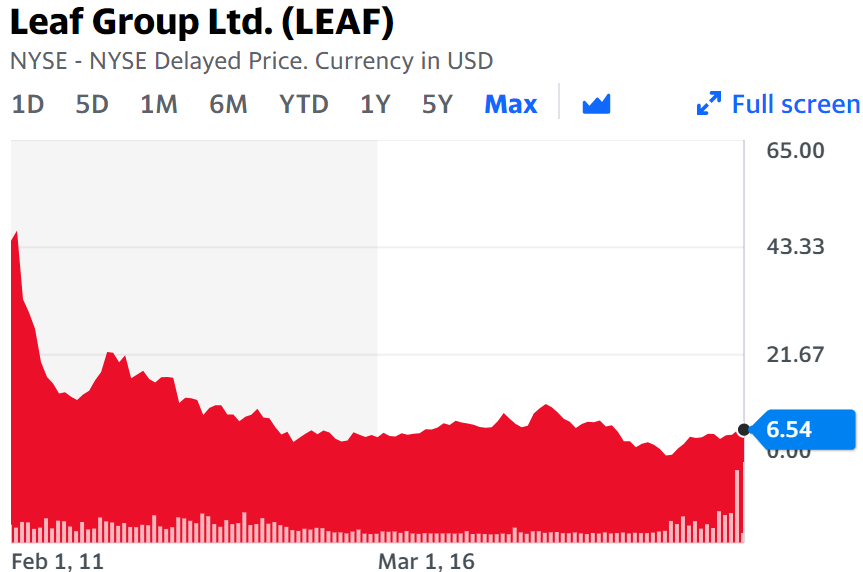
  • pump and dump scams – Demand Media, owner of eHow, which later rebranded as Leaf Group & still trades at a small fraction of their IPO price.

[Editorial note: 8 days after writing this post LEAF announced a $304.3 million all cash buyout offer from Graham Holdings at 21% above current market prices and was trading at $8.63 a share. If you bought shares at $40 or $30 or $20 and hoped it would at some point come back – nope – the losses are crystalized on a take out. Graham Holdings formerly owned the Washington Post but sold it to Jeff Bezos 8 years ago for $250 million.]

The one lasting counter-example to the above is Barry Diller’s IAC. [edit: added … here is the WSJ recommending the stock 3 months later, even after a big run]

IAC’s innovation ecosystem is surreal. Across time & across markets Diller is the best creator of vertical leading properties later spun off as their own companies. He’s owned Expedia, TripAdvisor, LendingTree, HomeAdvisor, Match.com, TicketMaster and so many other category leaders.

His buying of Ask.com did not pan out as well as hoped as web browsers turned the address bar into a search box, his ability to differentiate the service went away after they shut down the engine in 2008, he was locked out of mobile search marketshare by default placement contracts & Google pushed back against extension bundling, but just about everything else he touched turned to gold.

A lot of IAC’s current market cap is their ownership of Vimeo, which by itself is valued at $6 billion.
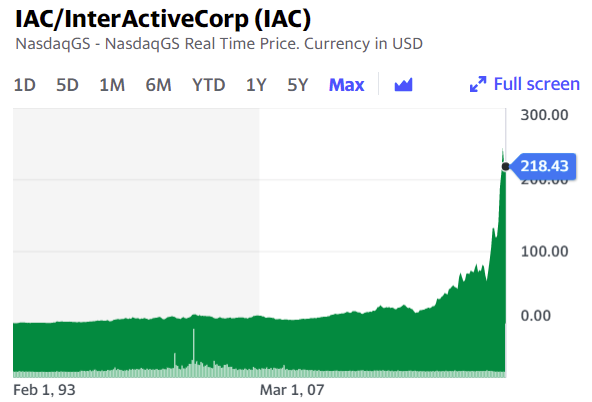
[Added a section on Vimeo here since it was spun out after this post was originally published.] Vimeo was a throw in when IAC bought CollegeHumor owner Connected Ventures. IAC was willing to sell Vimeo to Kodak for around $10 million over a decade ago, but there was no transaction. Around that time I ran a membership website here and we were going to use Vimeo for delivery of our videos but they deleted our paid subscription claiming Vimeo wasn’t for businesses and was just for artistic uses. They probably did that hundreds or thousands of times over the years and then realized … wait, we should allow businesses to use this, everyone else will just upload to YouTube. So they switched focus to business use, YouTube kept increasing ad load, and Vimeo kept becoming more appealing on a relative basis. This year YouTube updated their terms of service allowing them to monetize and and all uploaded videos, which only makes Vimeo look that much more appealing to businesses which are on the fence about paying a small monthly subscription for video hosting. When IAC spun out Vimeo this year (VMEO) it was valued at north of $6 billion. Someone like Microsoft could buy it and promote it in Bing search results the way Google does YouTube.

What is the most recent big bet for Barry Diller? MGM. Last August he bet $1 billion on the growth of online gambling. And he was willing to bet another billion to help them acquire Entain:

IAC has to date invested approximately US$1 billion in MGM with an initial investment thesis of accelerating MGM’s penetration of the $450 billion global gaming market. IAC notes in its letter of intent that IAC continues to strongly support this objective for MGM whether or not a transaction with Entain is consummated.

Barry Diller not only accurately projects future trends, but he also has the ability to rehab broken companies past their due dates.

The New York Times bought About.com for $410 million in 2005 & did little with it as its relevance declined over time as its content got stale, Wikipedia grew and search engines kept putting more scraped content in the search results. The relentless growth of Wikipedia and Google launching „universal search“ in 2007 diminished the value of About.com even as web usage was exploding.

IAC bought About.com from the New York Times for $300 million in August of 2012. They tried to grow it through improving usability, content depth and content quality but ultimately decided to blow it up.
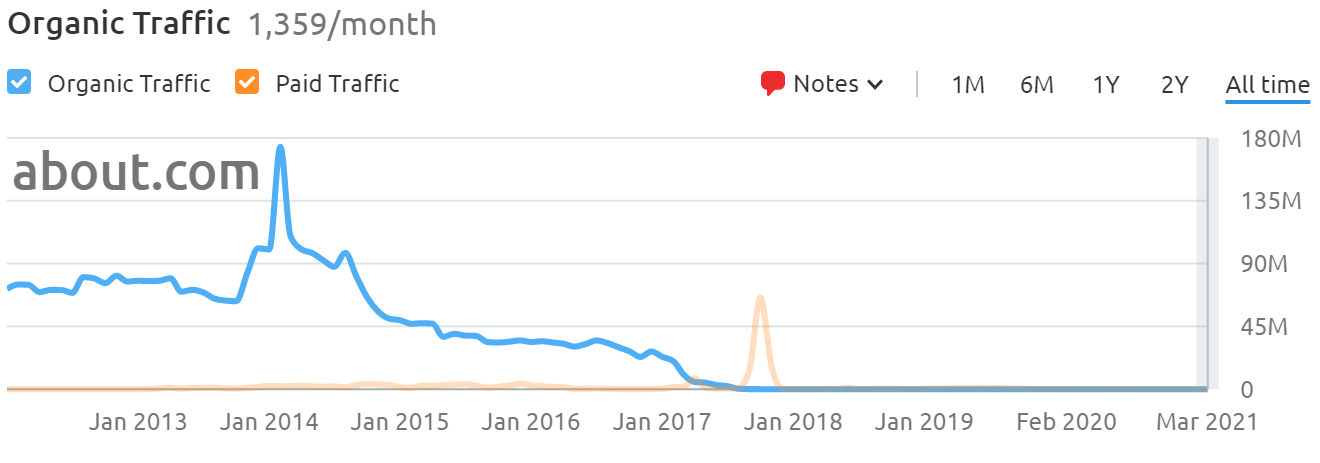
They were bold enough to break it into vertical category branded sites. They’ve done amazingly well with it and in many cases they rank 2, 3, 4 times in the SERPs with different properties like TheSpruce, TheBalance, Investopedia, etc. As newspapers chains keep consolidating or going under, IAC is one of the few constant „always wins“ online publishers.

At its peak TheBalance was getting roughly 2/3 the traffic About.com generated.
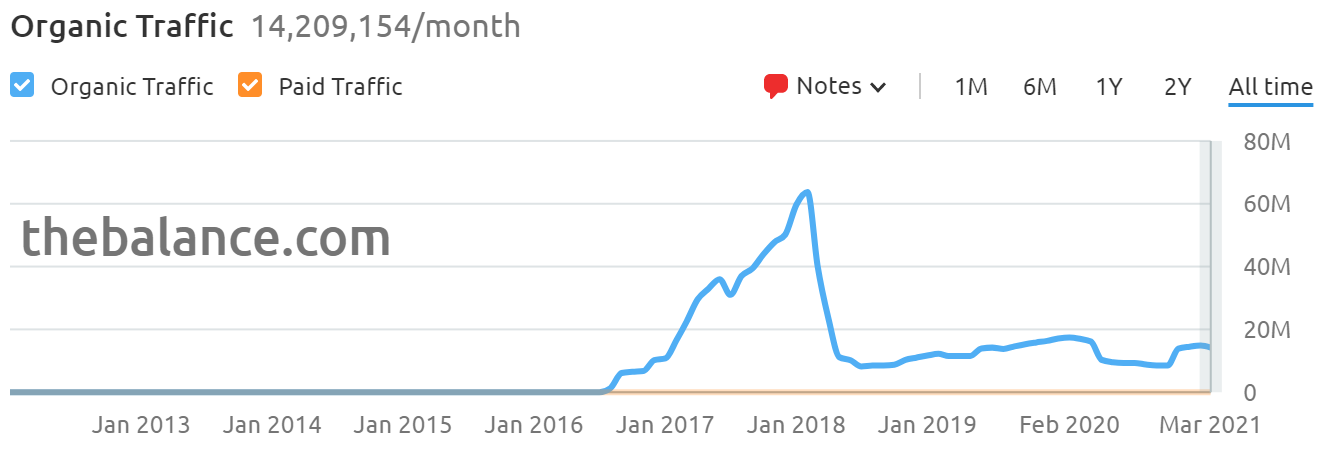
Part of the decline in the chart there was perhaps a Panda hit, but the reason traffic never fully recovered is they broke some of these category sites into niche sites using sub-brands.
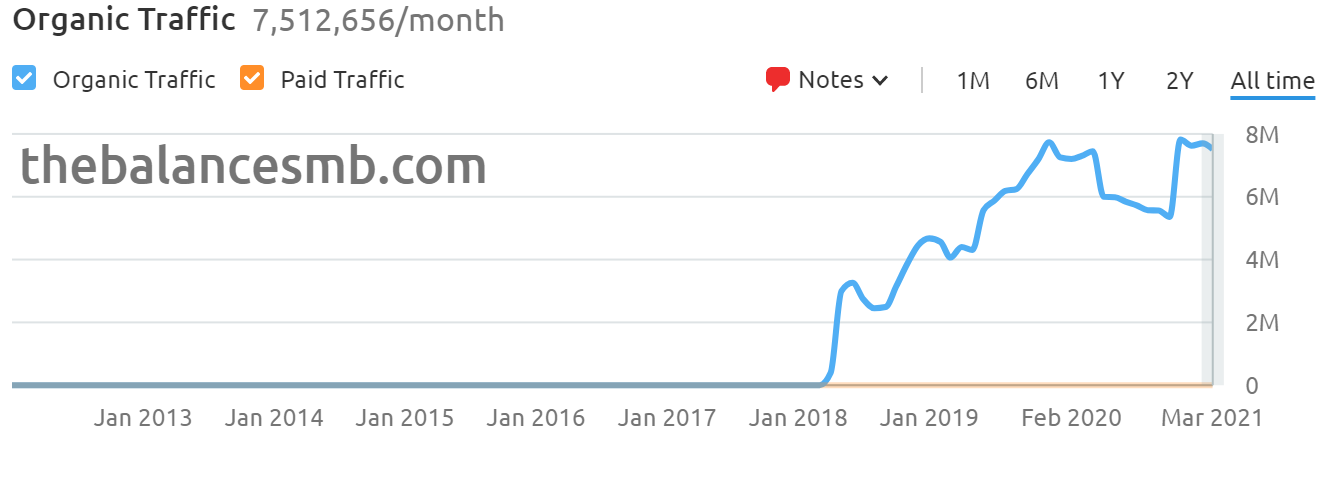
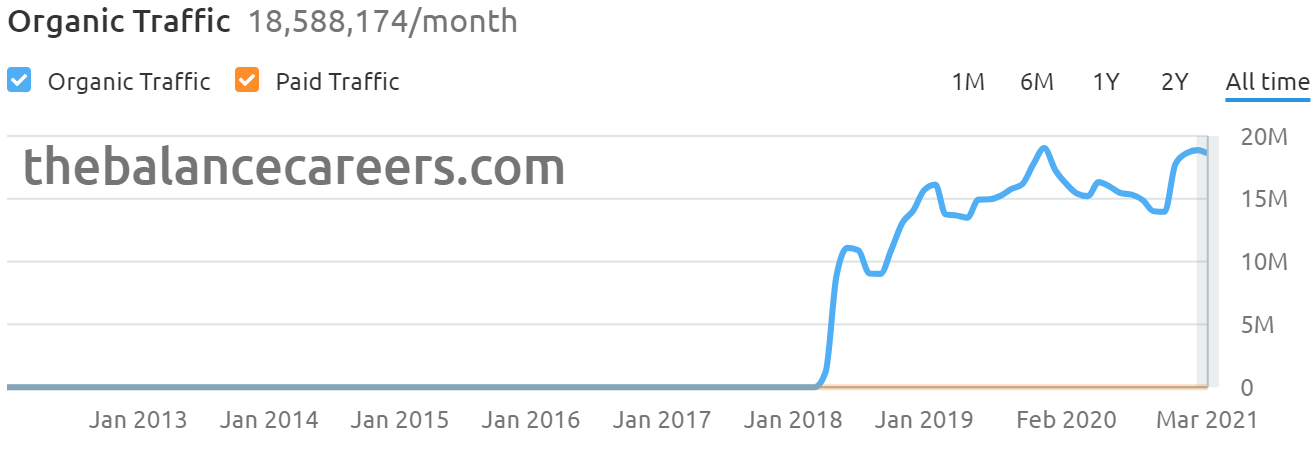
All the above search traffic estimate trend charts are from SEMrush. :)

I could do a blog post titled 1001 ways to use SEMrush if you would like me to, though I haven’t yet as I already have affiliate ads for them here and don’t want to come across as a shill by overpromoting a tool I love & use regularly.

I tend to sort of „not get“ a lot of SaaS stocks in terms of prices and multiples, though they seem to go to infinity and beyond more often than not. I actually like SEMrush more than most though & think they’ll do well for years to come. I get the sense with both them and Ahrefs that they were started by programmers who learned marketing rather than started by marketers who cobbled together offerings which they though would sell. If you ever have feedback on ways to improve SEMrush they are fast at integrating it, or at least were in the past whenever I had feedback.

When SEMrush released their S-1 Dan Barker did a quick analysis on Twitter.

Some stats from the S-1: $144 million in annual recurring revenues @ 50% compound annual growth rate, 76% gross margins, nearly 1,000 employees and over 67,000 paying customers.

SEMrush, the SEO tool, has filed to go public. Here’s the S-1: https://t.co/i1meSHts4Y

They spent $54 million on marketing last year, for revenue of $125 million.

(gross profit $95m, net loss $7m) pic.twitter.com/iz5nybcwfA— dan barker (@danbarker) March 1, 2021

At some point a lot of tool suits tend to overlap because much of their data either comes from scraping Google or crawling the open web. If something is strong enough of a point of differentiation to where it is widely talked about or marketed then competitors will try to clone it. Thus spending a bit extra on marketing to ensure you have the brand awareness to be the first tool people try is wise. Years ago when I ran a membership site here I paid to license the ability to syndicate some SEMrush data for our members & I have promoted them as an affiliate for what seems like a decade now.

When Dan Barker did his analysis of the S-1 it made me think SEMrush likely has brighter prospects than many would consider. A few of the reasons I could think of off the top of my head:

  • each day their archive of historical data is larger, especially when you consider they crawl many foreign markets which some other competitive research tools ignore
  • increasing ad prices promote SEO by making it relatively cheaper
  • keyword not provided on organic search means third party competitive analysis tools are valuable not only for measuring competitors but also measuring your own site
  • Google Ads has recently started broadening ad targeting further and hiding some keyword data so advertisers are paying for clicks where they are not even aware what the keyword was

That last point speaks to Google’s dominance over the search ecosystem. But it is also so absurd that even people who ran AdWords training workshops point out the absurdity.

Yesterday’s announcement on match type changes had me crawling through query data this morning. I’m staring at many 2-3 word exact match keywords that are matching to 8-word queries. G thinks ‚deck paint‘ and ‚how do i put paint on my deck‘ mean the exact same thing. CPA is 10x.— Brad Geddes (@bgtheory) February 5, 2021

In Google maximizing their income some nuance is lost for the advertiser who must dig into N-Gram analysis or look at historical data to find patterns to adjust:

The account overall has a CPA in the $450 range. If the word ‘how‘ is in the query, our CPA is over double. If someone searches for ‘quote,‘ our CPA is under $300. If they ask a question about cost, the CPA is over $1000. Obviously, looking for quotes versus cost data is very different in the eyes of a user, but not in the matching search terms of Google.

Every ad network has incentive to overstate its contribution to awareness and conversions so that more ad budget is allocated to them.

  • Facebook kept having to restate their ad stats around video impressions, user reach, etc.
  • Facebook gave themselves a 28 day window for credit for some app installs.
  • Google AMP accidentally double counted unique users on Google Analytics (drives adoption = good).
  • Google Analytics came with last click attribution, which over-credits the search channel you use near the end of a conversion journey.

There are a lot of Google water carriers who suggest any and all of their actions are at worst benevolent, but when I hear about hiding keyword data I am reminded of the following quote from the Texas AG Google lawsuit.

„Google employees agreed that, in the future, they should not directly lie to publishers, but instead find ways to convince publishers to act against their interest and remove header bidding on their own.“

That lawsuit details the great lengths Google went to in order to leverage their search monopoly to keep monopoly profit margins on their display ad serving business.

AMP was created with the explicit intent to kill header bidding as header bidding shifted power and profit margins to publishers. Some publishers saw a 50% rise in ad revenues from header bidding.

Remember how Google made companywide bonuses depend on the performance of the Google Facebook clone named Google+? Google later literally partnered with Facebook on a secret ad deal to prevent Facebook from launching a header bidding solution. The partnership agreement with Facebook explicitly mentioned antitrust repeatedly.

Bid-rigging?! Is this bid-rigging? As in, one of the „supreme evils of antitrust“? As in, the thing that if RE investors do it at foreclosure auctions they go to prison? pic.twitter.com/w7ez6gwfZd— John Newman (@johnmarknewman) December 16, 2020

When a company partners with its biggest direct competitor on a bid rigging scheme you can count on it that the intent is to screw others.

So when you see Google talk about benevolence, remember that they promise to no longer lie in the future & only deceive others into working against themselves via other coercive measures.

We went from the observation that you can’t copyright facts to promoting opinion instead:

The Internet commoditized the distribution of facts. The „news“ media responded by pivoting wholesale into opinions and entertainment.— Naval (@naval) May 26, 2016

to where after many thousands of journalists have been laid off now the „newspaper of record“ is promoting ponzi scheme garbage as a performance art piece:

The NYT made a NFT!

My new column is about NFTs, and I also turned the column into a NFT and put it up for auction on @withFND, with proceeds going to charity.

Bid away, and you could own the first NFT in the paper’s 170-year history. https://t.co/9ItGZvID8B— Kevin Roose (@kevinroose) March 24, 2021

Is it any wonder people have lost trust in institutions?

A one-hour @CBCNews special that examines the media’s role in the polarization of America and the unmaking of a citizen — Big News is now streaming. pic.twitter.com/tm5QB2P4Ro— CBC Gem (@cbcgem) March 26, 2021

The decline of About.com was literally going to be terminal without the work of Barry Diller to revive it. That slide reflected how over time a greater share of searches never actually leave Google:

Of those 5.1T searches, 33.59% resulted in clicks on organic search results. 1.59% resulted in clicks on paid search results. The remaining 64.82% completed a search without a direct, follow-up click to another web property. Searches resulting in a click are much higher on desktop devices (50.75% organic CTR, 2.78% paid CTR). Zero-click searches are much higher on mobile devices (77.22%)

The data from the above study came from SimilarWeb, which is another online marketing competitive research tool planning on going public soon.

Google „debunked“ Rand’s take by focusing on absolute numbers instead of relative numbers. But if you keep buying default placements in a monopoly ecosystem where everyday more people have access to a computer in their pocket you would expect your marketshare and absolute numbers to increase even if the section of pie other publishers becomes a smaller slice of a bigger pie.

Google’s take there is disingenuous at the core. It reminds me of the time when they put out a study claiming brand bidding was beneficial and that it was too complex and expensive for advertisers to set up a scientific study, without any mention of the fact the reason that would be complex and expensive is because Google chooses not to provide those features in their ad offering. That parallels the way they now decide to hide keyword data even from paying advertisers in much the same way they hide ad fees and lie to publishers to protect their ad income.

Google suggests they don’t make money from news searches, but if they control most of the display ads technology stack & used search to ram AMP down publishers throats as a technological forced sunk cost while screwing third party ad networks and news publishers, Google can both be technically true in their statement and lying in spirit.

„Google employees agreed that, in the future, they should not directly lie to publishers, but instead find ways to convince publishers to act against their interest and remove header bidding on their own.“

There are many more treats in store for publishers.

Google Chrome stopped sending full referrals for most web site visitors late last year. Google will stop supporting third party cookies in Chrome next year. They’ve even floated the idea of hiding user IP addresses from websites (good luck to those who need to prevent fraud!).

Google claims they also going to stop selling ads where targeting is based on tracking user data across websites:

„Google plans to stop selling ads based on individuals‘ browsing across multiple websites, a change that could hasten upheaval in the digital advertising industry. The Alphabet Inc. company said Wednesday that it plans next year to stop using or investing in tracking technologies that uniquely identify web users as they move from site to site across the internet. … Google had already announced last year that it would remove the most widely used such tracking technology, called third-party cookies, in 2022. But now the company is saying it won’t build alternative tracking technologies, or use those being developed by other entities, to replace third-party cookies for its own ad-buying tools. … Google says its announcement on Wednesday doesn’t cover its ad tools and unique identifiers for mobile apps, just for websites.“

Google stated they would make no replacement for the equivalent of the third party cookie tracking of individual users:

„we continue to get questions about whether Google will join others in the ad tech industry who plan to replace third-party cookies with alternative user-level identifiers. Today, we’re making explicit that once third-party cookies are phased out, we will not build alternate identifiers to track individuals as they browse across the web, nor will we use them in our products. We realize this means other providers may offer a level of user identity for ad tracking across the web that we will not — like PII graphs based on people’s email addresses. We don’t believe these solutions will meet rising consumer expectations for privacy, nor will they stand up to rapidly evolving regulatory restrictions, and therefore aren’t a sustainable long term investment.“

On the above announcement, other ad networks tanked, with TheTradeDesk falling 20% in two days.

These are all Google’s competitors in advertising technology, collapsing after Google announced that it won’t let them do targeted advertising anymore, but that Google itself will continue to do it. https://t.co/S6Axcrw5a0— Matt Stoller (@matthewstoller) March 5, 2021

Competing ad networks wonder if Google will play by their own rules:

“One clarification I’d like to hear from them is whether or not it means there’ll be no login for DBM [a historic name for Google’s DSP], no login for YouTube and no login for Google properties. I’m looking for them to play by the same rules that they so generously foisted upon the rest of the industry,” Magnite CTO Tom Kershaw said.

Regulators are looking into antitrust implications:

„Google’s plan to block a popular web tracking tool called “cookies” is a source of concern for U.S. Justice Department investigators who have been asking advertising industry executives whether the move by the search giant will hobble its smaller rivals, people familiar with the situation said.“

The web will continue to grow more complicated, but it isn’t going to get any more transparent anytime soon.

„Google employees agreed that, in the future, they should not directly lie to publishers, but instead find ways to convince publishers to act against their interest and remove header bidding on their own.“

As the Attention Merchants blur the ecosystem while shifting free clicks over to paid and charging higher ad rates on their owned and operated properties it increases the value of neutral third party measurement services.

The trend is not too hard to notice if you are remotely awake.

While I was writing this post Google announced the launch of a „best things“ scraper website featuring their scraped re-representations of hot selling items. And they are cross-promoting competitors in „knowledge“ panels to dilute brand values & force the brand ad buy.

Oh man. Check out this bullshit on our GMB Knowledge Panel. Are they going to list competitors on everyone’s listings now? pic.twitter.com/ITwiZGyRxs— Darren Shaw (@DarrenShaw_) March 26, 2021

Shortly after Google launched their thin affiliate scraper site full of product ads they announced an update to demote other product review sites.

Where Google can get away with it, they will rig things in their favor to rip off other players in the ecosystem:

Google for years operated a secret program that used data from past bids in the company’s digital advertising exchange to allegedly give its own ad-buying system an advantage over competitors, according to court documents filed in a Texas antitrust lawsuit. The program, known as “Project Bernanke,” wasn’t disclosed to publishers who sold ads through Google’s ad-buying systems.

If I could give you one key takeaway here, it would be this:

„Google employees agreed that, in the future, they should not directly lie to publishers, but instead find ways to convince publishers to act against their interest and remove header bidding on their own.“

Categories:

Source:: seobook.com

SEMrush IPO (SEMR)

On Wednesday SEMrush priced their IPO at $14 a share & listed Thursday.

There have been many marketing and online advertising companies which are publicly traded, but few that were so focused specifically on SEO while having a sizeable market cap. According to this SeekingAlpha post at the IPO price SEMrush had a valuation of about $1.95 to $1.99 billion. For comparison sake, here are some other companies & valuations.

  • Facebook acquired Instagram for $1 billion.
  • Google acquired YouTube for $1.65 billion.
  • Yelp trades at around a $2.9 billion market cap.
  • Yahoo! was acquired by Verizon for $4.48 billion.
  • Hubspot has a market cap of around $20.4 billion.

A couple years ago Gannett bought AdWords reseller WordStream. A few years before that they bought ReachLocal. The Hearst publishing empire also bought iCrossing long ago. Marin Software remains publicly traded, but they are only valued at about $20 million.

Newspapers reselling Google AdWords ads isn’t really SEO though. Beyond those sorts of deals, many of the publicly traded SEO stuff has been only tangentially relevant to SEO, or crap.

There are some quality category-leading publishers which use SEO as a means of distribution but are not necessarily an SEO service provider like TripAdvisor, BankRate, and WebMD. Over time many of these sorts of companies have been gobbled up by Red Ventures or various private equity firms. Zillow, Yelp and TripAdvisor are some of the few examples which still exist as independent companies.

So that puts most of the publicly traded SEO stuff in one of the following categories…

  • small scale – does anyone other than Andy Beal & Mike Grehan still remember KeywordRanking / WebSourced / Think Interactive / MarketSmart Interactive?
  • hope and nope – sites like Business.com were repeatedly acquired but never really gained lasting relevance.
  • affiliate networks – which reliant on partners with SEO traffic like Quinstreet & Commission Junction. many affiliate networks were hit hard as the barrier to entry in SEO increased over the years. Quinstreet is doing well in some verticals but sold their education division to Education Dynamics for $20 million. CJ was part of the Publicis Groupe acquisition of Epsilon.
  • pump and dump scams – Demand Media, owner of eHow, which later rebranded as Leaf Group & still trades at a small fraction of their IPO price.

[Editorial note: 8 days after writing this post LEAF announced a $304.3 million all cash buyout offer from Graham Holdings at 21% above current market prices and was trading at $8.63 a share. If you bought shares at $40 or $30 or $20 and hoped it would at some point come back – nope – the losses are crystalized on a take out. Graham Holdings formerly owned the Washington Post but sold it to Jeff Bezos 8 years ago for $250 million.]

The one lasting counter-example to the above is Barry Diller’s IAC. [edit: added … here is the WSJ recommending the stock 3 months later, even after a big run]

IAC’s innovation ecosystem is surreal. Across time & across markets he is the best creator of vertical leading properties later spun off as their own companies. He’s owned Expedia, TripAdvisor, LendingTree, HomeAdvisor, Match.com, TicketMaster and so many other category leaders. His buying of Ask.com did not pan out as well as hoped as web browsers turned the address bar into a search box, his ability to differentiate the service went away after they shut down the engine in 2008, he was locked out of mobile search marketshare by default placement contracts & Google pushes back against extension bundling, but just about everything else he touched turned to gold. A lot of their current market cap is their ownership of Vimeo, which by itself is valued at $6 billion.

[Added a section on Vimeo here since it was spun out after this post was originally published.] Vimeo was a throw in when IAC bought CollegeHumor owner Connected Ventures. IAC was willing to sell Vimeo to Kodak for around $10 million over a decade ago, but there was no transaction. Around that time I ran a membership website here and we were going to use Vimeo for delivery of our videos but they deleted our paid subscription claiming Vimeo wasn’t for businesses and was just for artistic uses. They probably did that hundreds or thousands of times over the years and then realized … wait, we should allow businesses to use this, everyone else will just upload to YouTube. So they switched focus to business use, YouTube kept increasing ad load, and Vimeo kept becoming more appealing on a relative basis. This year YouTube updated their terms of service allowing them to monetize and and all uploaded videos, which only makes Vimeo look that much more appealing to businesses which are on the face about paying a small monthly subscription for video hosting. When IAC spun out Vimeo this year (VMEO) it was valued at north of $6 billion. Someone like Microsoft could buy it and promote it in Bing search results the way Google does YouTube.

What is the most recent big bet for Barry Diller? MGM. Last August he bet $1 billion on the growth of online gambling. And he was willing to bet another billion to help them acquire Entain:

IAC has to date invested approximately US$1 billion in MGM with an initial investment thesis of accelerating MGM’s penetration of the $450 billion global gaming market. IAC notes in its letter of intent that IAC continues to strongly support this objective for MGM whether or not a transaction with Entain is consummated.

Barry Diller not only accurately projects future trends, but he also has the ability to rehab broken companies past their due dates.

The New York Times bought About.com for $410 million in 2005 & did little with it as its relevance declined over time as its content got stale, Wikipedia grew and search engines kept putting more scraped content in the search results. The relentless growth of Wikipedia and Google launching „universal search“ in 2007 diminished the value of About.com even as web usage was exploding.

IAC bought About.com from the New York Times for $300 million in August of 2012. They tried to grow it through improving usability, content depth and content quality but ultimately decided to blow it up.

They were bold enough to break it into vertical category branded sites. They’ve done amazingly well with it and in many cases they rank 2, 3, 4 times in the SERPs with different properties like TheSpruce, TheBalance, Investopedia, etc. As newspapers chains keep consolidating or going under, IAC is one of the few constant „always wins“ online publishers.

At its peak TheBalance was getting roughly 2/3 the traffic About.com generated.

Part of the decline in the chart there was perhaps a Panda hit, but the reason traffic never fully recovered is they broke some of these category sites into niche sites using sub-brands.
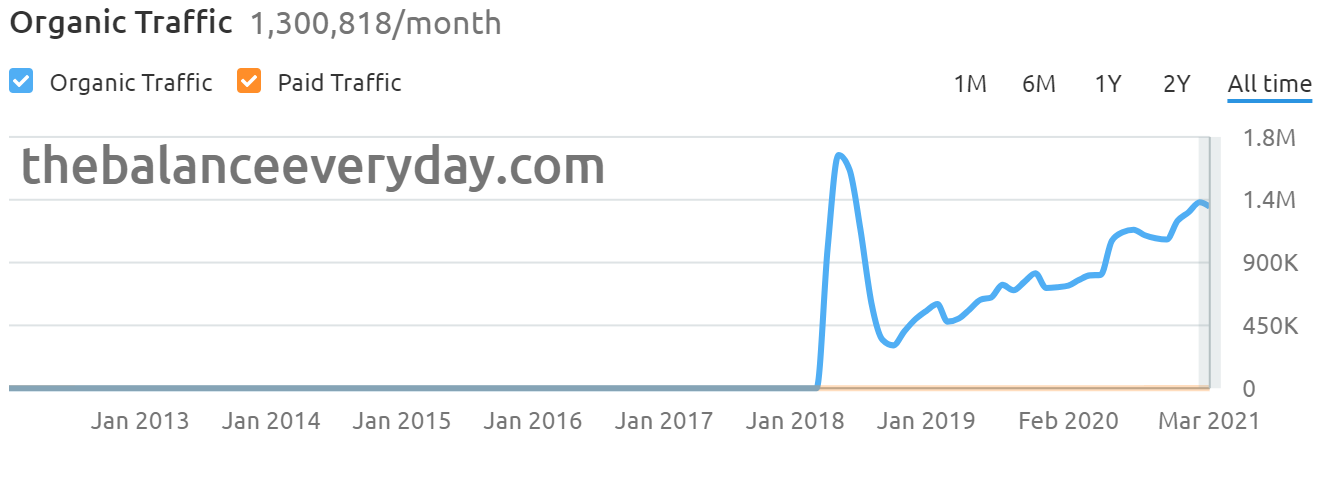
All the above search traffic estimate trend charts are from SEMrush. :)

I could do a blog post titled 1001 ways to use SEMrush if you would like me to, though I haven’t yet as I already have affiliate ads for them here and don’t want to come across as a shill by overpromoting a tool I love & use regularly.

I tend to sort of „not get“ a lot of SaaS stocks in terms of prices and multiples, though they seem to go to infinity and beyond more often than not. I actually like SEMrush more than most though & think they’ll do well for years to come. I get the sense with both them and Ahrefs that they were started by programmers who learned marketing rather than started by marketers who cobbled together offerings which they though would sell. If you ever have feedback on ways to improve SEMrush they are fast at integrating it, or at least were in the past whenever I had feedback.

When SEMrush released their S-1 Dan Barker did a quick analysis on Twitter.

Some stats from the S-1: $144 million in annual recurring revenues @ 50% compound annual growth rate, 76% gross margins, nearly 1,000 employees and over 67,000 paying customers.

SEMrush, the SEO tool, has filed to go public. Here’s the S-1: https://t.co/i1meSHts4Y

They spent $54 million on marketing last year, for revenue of $125 million.

(gross profit $95m, net loss $7m) pic.twitter.com/iz5nybcwfA— dan barker (@danbarker) March 1, 2021

At some point a lot of tool suits tend to overlap because much of their data either comes from scraping Google or crawling the open web. If something is strong enough of a point of differentiation to where it is widely talked about or marketed then competitors will try to clone it. Thus spending a bit extra on marketing to ensure you have the brand awareness to be the first tool people try is wise. Years ago when I ran a membership site here I paid to license the ability to syndicate some SEMrush data for our members & I have promoted them as an affiliate for what seems like a decade now.

When Dan Barker did his analysis of the S-1 it made me think SEMrush likely has brighter prospects than many would consider. A few of the reasons I could think of off the top of my head:

  • each day their archive of historical data is larger, especially when you consider they crawl many foreign markets which some other competitive research tools ignore
  • increasing ad prices promote SEO by making it relatively cheaper
  • keyword not provided on organic search means third party competitive analysis tools are valuable not only for measuring competitors but also measuring your own site
  • Google Ads has recently started broadening ad targeting further and hiding some keyword data so advertisers are paying for clicks where they are not even aware what the keyword was

That last point speaks to Google’s dominance over the search ecosystem. But it is also so absurd that even people who ran AdWords training workshops point out the absurdity.

Yesterday’s announcement on match type changes had me crawling through query data this morning. I’m staring at many 2-3 word exact match keywords that are matching to 8-word queries. G thinks ‚deck paint‘ and ‚how do i put paint on my deck‘ mean the exact same thing. CPA is 10x.— Brad Geddes (@bgtheory) February 5, 2021

In Google maximizing their income some nuance is lost for the advertiser who must dig into N-Gram analysis or look at historical data to find patterns to adjust:

The account overall has a CPA in the $450 range. If the word ‘how‘ is in the query, our CPA is over double. If someone searches for ‘quote,‘ our CPA is under $300. If they ask a question about cost, the CPA is over $1000. Obviously, looking for quotes versus cost data is very different in the eyes of a user, but not in the matching search terms of Google.

Every ad network has incentive to overstate its contribution to awareness and conversions so that more ad budget is allocated to them.

  • Facebook kept having to restate their ad stats around video impressions, user reach, etc.
  • Facebook gave themselves a 28 day window for credit for some app installs.
  • Google AMP accidentally double counted unique users on Google Analytics (drives adoption = good).
  • Google Analytics came with last click attribution, which over-credits the search channel you use near the end of a conversion journey.

There are a lot of Google water carriers who suggest any and all of their actions are at worst benevolent, but when I hear about hiding keyword data I am reminded of the following quote from the Texas AG Google lawsuit.

„Google employees agreed that, in the future, they should not directly lie to publishers, but instead find ways to convince publishers to act against their interest and remove header bidding on their own.“
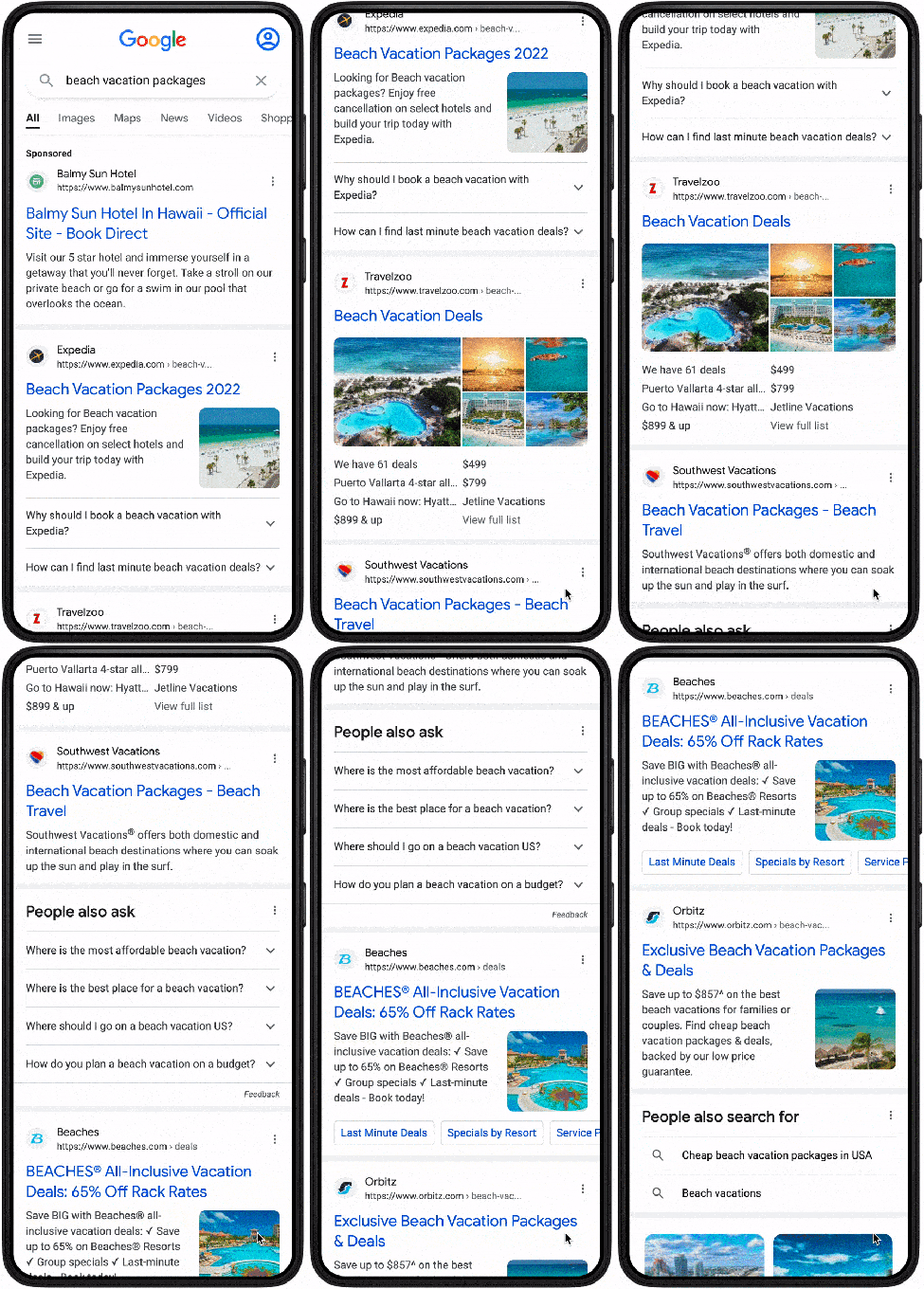
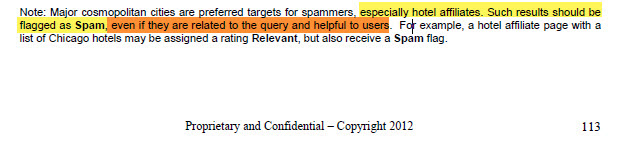
That lawsuit details the great lengths Google went to in order to leverage their search monopoly to keep monopoly profit margins on their display ad serving business.

AMP was created with the explicit intent to kill header bidding as header bidding shifted power and profit margins to publishers. Some publishers saw a 50% rise in ad revenues from header bidding.

Remember how Google made companywide bonuses depend on the performance of the Google Facebook clone named Google+? Google later literally partnered with Facebook on a secret ad deal to prevent Facebook from launching a header bidding solution. The partnership agreement with Facebook explicitly mentioned antitrust repeatedly.

Bid-rigging?! Is this bid-rigging? As in, one of the „supreme evils of antitrust“? As in, the thing that if RE investors do it at foreclosure auctions they go to prison? pic.twitter.com/w7ez6gwfZd— John Newman (@johnmarknewman) December 16, 2020

When a company partners with its biggest direct competitor on a bid rigging scheme you can count on it that the intent is to screw others.

So when you see Google talk about benevolence, remember that they promise to no longer lie in the future & only deceive others into working against themselves via other coercive measures.

We went from the observation that you can’t copyright facts to promoting opinion instead:

The Internet commoditized the distribution of facts. The „news“ media responded by pivoting wholesale into opinions and entertainment.— Naval (@naval) May 26, 2016

to where after many thousands of journalists have been laid off now the „newspaper of record“ is promoting ponzi scheme garbage as a performance art piece:

The NYT made a NFT!

My new column is about NFTs, and I also turned the column into a NFT and put it up for auction on @withFND, with proceeds going to charity.

Bid away, and you could own the first NFT in the paper’s 170-year history. https://t.co/9ItGZvID8B— Kevin Roose (@kevinroose) March 24, 2021

Is it any wonder people have lost trust in institutions?

A one-hour @CBCNews special that examines the media’s role in the polarization of America and the unmaking of a citizen — Big News is now streaming. pic.twitter.com/tm5QB2P4Ro— CBC Gem (@cbcgem) March 26, 2021

The decline of About.com was literally going to be terminal without the work of Barry Diller to revive it. That slide reflected how over time a greater share of searches never actually leave Google:

Of those 5.1T searches, 33.59% resulted in clicks on organic search results. 1.59% resulted in clicks on paid search results. The remaining 64.82% completed a search without a direct, follow-up click to another web property. Searches resulting in a click are much higher on desktop devices (50.75% organic CTR, 2.78% paid CTR). Zero-click searches are much higher on mobile devices (77.22%)

The data from the above study came from SimilarWeb, which is another online marketing competitive research tool planning on going public soon.

Google „debunked“ Rand’s take by focusing on absolute numbers instead of relative numbers. But if you keep buying default placements in a monopoly ecosystem where everyday more people have access to a computer in their pocket you would expect your marketshare and absolute numbers to increase even if the section of pie other publishers becomes a smaller slice of a bigger pie.

Google’s take there is disingenuous at the core. It reminds me of the time when they put out a study claiming brand bidding was beneficial and that it was too complex and expensive for advertisers to set up a scientific study, without any mention of the fact the reason that would be complex and expensive is because Google chooses not to provide those features in their ad offering. That parallels the way they now decide to hide keyword data even from paying advertisers in much the same way they hide ad fees and lie to publishers to protect their ad income.

Google suggests they don’t make money from news searches, but if they control most of the display ads technology stack & used search to ram AMP down publishers throats as a technological forced sunk cost while screwing third party ad networks and news publishers, Google can both be technically true in their statement and lying in spirit.

„Google employees agreed that, in the future, they should not directly lie to publishers, but instead find ways to convince publishers to act against their interest and remove header bidding on their own.“
There are many more treats in store for publishers.

Google Chrome stopped sending full referrals for most web site visitors late last year. Google will stop supporting third party cookies in Chrome next year. They’ve even floated the idea of hiding user IP addresses from websites (good luck to those who need to prevent fraud!).

Google claims they also going to stop selling ads where targeting is based on tracking user data across websites:

„Google plans to stop selling ads based on individuals‘ browsing across multiple websites, a change that could hasten upheaval in the digital advertising industry. The Alphabet Inc. company said Wednesday that it plans next year to stop using or investing in tracking technologies that uniquely identify web users as they move from site to site across the internet. … Google had already announced last year that it would remove the most widely used such tracking technology, called third-party cookies, in 2022. But now the company is saying it won’t build alternative tracking technologies, or use those being developed by other entities, to replace third-party cookies for its own ad-buying tools. … Google says its announcement on Wednesday doesn’t cover its ad tools and unique identifiers for mobile apps, just for websites.“

Google stated they would make no replacement for the equivalent of the third party cookie tracking of individual users:

„we continue to get questions about whether Google will join others in the ad tech industry who plan to replace third-party cookies with alternative user-level identifiers. Today, we’re making explicit that once third-party cookies are phased out, we will not build alternate identifiers to track individuals as they browse across the web, nor will we use them in our products. We realize this means other providers may offer a level of user identity for ad tracking across the web that we will not — like PII graphs based on people’s email addresses. We don’t believe these solutions will meet rising consumer expectations for privacy, nor will they stand up to rapidly evolving regulatory restrictions, and therefore aren’t a sustainable long term investment.“

On the above announcement, other ad networks tanked, with TheTradeDesk falling 20% in two days.

These are all Google’s competitors in advertising technology, collapsing after Google announced that it won’t let them do targeted advertising anymore, but that Google itself will continue to do it. https://t.co/S6Axcrw5a0— Matt Stoller (@matthewstoller) March 5, 2021

Competing ad networks wonder if Google will play by their own rules:

“One clarification I’d like to hear from them is whether or not it means there’ll be no login for DBM [a historic name for Google’s DSP], no login for YouTube and no login for Google properties. I’m looking for them to play by the same rules that they so generously foisted upon the rest of the industry,” Magnite CTO Tom Kershaw said.

Regulators are looking into antitrust implications:

„Google’s plan to block a popular web tracking tool called “cookies” is a source of concern for U.S. Justice Department investigators who have been asking advertising industry executives whether the move by the search giant will hobble its smaller rivals, people familiar with the situation said.“

The web will continue to grow more complicated, but it isn’t going to get any more transparent anytime soon.

„Google employees agreed that, in the future, they should not directly lie to publishers, but instead find ways to convince publishers to act against their interest and remove header bidding on their own.“
As the Attention Merchants blur the ecosystem while shifting free clicks over to paid and charging higher ad rates on their owned and operated properties it increases the value of neutral third party measurement services.

The trend is not too hard to notice if you are remotely awake.

While I was writing this post Google announced the launch of a „best things“ scraper website featuring their scraped re-representations of hot selling items. And they are cross-promoting competitors in „knowledge“ panels to dilute brand values & force the brand ad buy.

Oh man. Check out this bullshit on our GMB Knowledge Panel. Are they going to list competitors on everyone’s listings now? pic.twitter.com/ITwiZGyRxs— Darren Shaw (@DarrenShaw_) March 26, 2021

Shortly after Google launched their thin affiliate scraper site full of product ads they announced an update to demote other product review sites.

Where Google can get away with it, they will rig things in their favor to rip off other players in the ecosystem:

Google for years operated a secret program that used data from past bids in the company’s digital advertising exchange to allegedly give its own ad-buying system an advantage over competitors, according to court documents filed in a Texas antitrust lawsuit. The program, known as “Project Bernanke,” wasn’t disclosed to publishers who sold ads through Google’s ad-buying systems.

If I could give you one key takeaway here, it would be this:

„Google employees agreed that, in the future, they should not directly lie to publishers, but instead find ways to convince publishers to act against their interest and remove header bidding on their own.“
Categories:

Source:: seobook.com