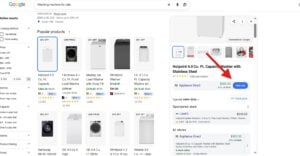
Wikipedia is preparing an experiment with Google Preferred Sources as it deals with a steady decline in traffic coming from Google.
The idea is simple: when someone arrives at Wikipedia from Google on a mobile device, Wikipedia would show them a small notice asking them to add the site as a Preferred Source.
Then Wikipedia will see whether they come back more often.
The experiment has not started yet. Wikimedia’s Future Audiences team says it wants to run the test in late September or early October, initially for about two weeks.
There is a fairly obvious reason for the timing.
In the proposal, Wikimedia Foundation product lead Maryana Pinchuk said Wikipedia received about 138 million fewer clickthroughs from Google during the last week of August and first week of September compared with the same period last year.
That works out to a 17% year-over-year decline for that comparison period. Around 75% of Wikipedia reading sessions historically start with a search engine, and roughly 90% of those search sessions come from Google.
So Wikipedia is going to ask Google for help dealing with less Google traffic. Sort of.
Preferred Sources becomes a retention tool
Google Preferred Sources lets signed-in users tell Google which websites they want to see more often.
Google originally launched the feature around Top Stories, but has since expanded Preferred Sources into AI Overviews and AI Mode, where selected sites can receive a Preferred Source label.
Google says people are twice as likely to click through to a site after selecting it as a Preferred Source. In August, Google also released a button publishers can place directly on their own websites to make the process easier. More than 600,000 unique sources had been selected by users at that point.
Wikipedia wants to find out whether that translates into something more useful than a nice badge.
The proposed test would split logged-out mobile visitors arriving from Google into treatment and control groups. One group would see the Preferred Sources prompt. The other would see Wikipedia as usual.
Wikimedia plans to measure pageviews per user, click-through rate on the prompt and, more loosely, AI Overview impressions. Its Phabricator documentation describes the goal as testing whether the CTA increases pageviews generated by those users.
That makes this more interesting for publishers than another button Google would like them to install.
Wikipedia is effectively testing whether publishers can use the Google traffic they still receive to create a preference that helps generate more Google traffic later.
AI Overviews are part of the backdrop
Separately, Wikimedia’s September research newsletter highlighted a University of Washington preprint estimating that Google’s rollout of AI Overviews reduced external search referrals to English Wikipedia by roughly 4.8% to 5.5%, depending on the comparison group used.
That figure should not be confused with Wikipedia’s recent 17% year-over-year Google referral decline.
The study looks specifically at the estimated effect of AI Overviews using 2024 data and a statistical comparison between language editions. The 17% figure is a direct year-over-year comparison for a recent period and could reflect several changes in Google Search, user behavior and demand.
The preprint has also changed considerably during development. Earlier versions estimated a much larger effect before the researchers changed both their methodology and data source. It has not yet been peer reviewed.
Wikipedia’s experiment may give publishers something more immediately useful: an actual test of whether Preferred Sources can bring readers back.
If it works, expect that little “add us as a Preferred Source” button to become considerably harder to avoid.
The post Wikipedia plans to test Google Preferred Sources as search traffic falls appeared first on Search Engine Watch.
Source:: searchenginewatch.com