Archiv für den Autor: Andreas

Bing tests Top Picks badges within Shopping ad results

top picks

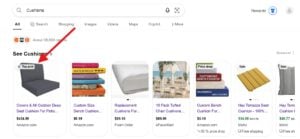
Bing is now testing “Top Pick” badges within Shopping ad results. Along with the badge, the box for that particular result appears larger compared to others.

I think this “Top Pick” badge might be based on past user behavior how often users have clicked on or purchased a particular product for a given keyword and it could reflect the best-selling item for that specific search term.

Here is a screenshot of how it looks.

top picks

Showing a badge with a larger box for a specific product could help increase CTR, giving that website a visibility boost over competing results.

The post Bing tests Top Picks badges within Shopping ad results appeared first on Search Engine Watch.

Source:: searchenginewatch.com

Anthropic merges Claude Cowork into Claude chat

Anthropic is merging Claude Cowork and regular Claude chat into one interface.

Instead of choosing which Claude mode to use, users can simply start a conversation. Claude will decide which capabilities are needed for the task.

The change is rolling out first to Claude Pro and Max users across web, desktop and mobile. Team and Free users will get it later.

Anthropic is also adding Claude Docs and Claude Slides, allowing users to create and edit documents and presentations from the same conversation. Presentations can be exported to PowerPoint or PDF, while Claude Design is also being brought directly into conversations.

The bigger change, though, is what happens to Cowork.

Cowork is becoming part of normal Claude use

Cowork is Anthropic’s system for handling longer, multi-step tasks.

Rather than simply answering a question, Claude can work with files, use connected services, carry out research and complete a series of steps toward a finished result.

Until now, users had to deliberately move into Cowork when they wanted that kind of workflow.

Anthropic says that distinction created unnecessary friction. A task could start as a simple conversation and then become more complicated, forcing users to decide whether they should continue in chat or move into another Claude experience.

Now that decision increasingly belongs to Claude.

A user can start with a simple request, then ask Claude to investigate further, work with connected data, produce a document and turn the findings into a presentation without changing interfaces.

Why this matters for search marketers

Anthropic has already shown that Cowork can be used for marketing tasks that go well beyond writing copy.

One example from Anthropic’s own marketing team is a Google Ads search term audit.

Claude can inspect search terms, identify possible negative keywords, explain why they may need to be excluded and wait for human approval before changes are made.

Anthropic has also demonstrated Cowork being used for scheduled marketing briefings, reporting dashboards and other recurring workflows. (anthropic.com)

Those capabilities are not new.

What is changing is how easily users can reach them.

A search marketer could start by asking Claude why campaign performance changed, then continue into reviewing search terms, investigating the data, summarizing the findings and preparing a client report.

That entire workflow can increasingly begin from the same chat box.

Anthropic is removing the line between chat and agents

This is why the update is more than a cosmetic redesign.

AI assistants have largely trained users to think in terms of questions and answers. Agentic tools such as Cowork are designed around giving the AI a goal and allowing it to complete multiple steps.

Anthropic is now bringing those two behaviors closer together.

Instead of asking users to decide when they need an AI agent, Claude can move from answering a question to completing a larger task as the conversation develops.

For marketers, that makes the difference between asking AI what to do and asking AI to do the work increasingly small.

The post Anthropic merges Claude Cowork into Claude chat appeared first on Search Engine Watch.

Source:: searchenginewatch.com

New Google Ads Spend Benchmarks feature will put peer pressure on your budget

Google Ads is rolling out a new Spend Benchmarks report that compares an advertiser’s weekly spend and clicks with businesses Google considers similar.

The feature was first spotted by paid search specialist Thomas Eccel. Google does not appear to have publicly documented the report yet. The interesting part is not simply that Google is showing advertisers what their peers spend.

It is what the numbers actually say.

More spend, but much more traffic

In Eccel’s example, the advertiser spent €284 over seven days, compared with €268 for its peers.

That is about 6% more spend.

But the same account generated 912 clicks, compared with 765 clicks for its peers, or roughly 19% more clicks.

That puts the advertiser’s implied average CPC at about €0.31, versus roughly €0.35 for the peer group.

So the advertiser appears to be getting clicks around 11% cheaper than its peers.

That makes the spend comparison much less useful on its own.

Peer spend is not a budget recommendation

Knowing what similar advertisers spend can provide useful context, especially for agencies trying to understand whether a client’s budget is unusually high or low.

But similar businesses can have very different margins, conversion rates, customer values and sales economics.

An advertiser spending less than its peers could still be running a better business.

And an advertiser spending more could simply be wasting more money.

That distinction matters because the Spend Benchmarks interface also encourages advertisers to explore what they could get by increasing spend.

For marketers, the more important question remains whether the next dollar spent produces profitable incremental results, not whether competitors are spending more.

The first Spend Benchmarks example makes that point surprisingly well.

The advertiser spent 6% more than its peers, generated 19% more clicks, and appears to have paid about 11% less per click.

Google can tell you what similar advertisers are spending.

It still cannot tell you whether you should spend like them.

The post New Google Ads Spend Benchmarks feature will put peer pressure on your budget appeared first on Search Engine Watch.

Source:: searchenginewatch.com

Google lowers Search Profiles to 10,000 followers, giving more publishers a way into Discover

Google is lowering the entry requirement for Search Profiles to 10,000 followers on YouTube, Instagram, X or TikTok. That sounds like a fairly ordinary eligibility update. The speed of the change makes it more interesting.

When Google officially launched Search Profiles on June 4, publishers and creators generally needed at least 100,000 followers on YouTube, Instagram or X. TikTok required 300,000. Just 104 days later, the main threshold is down to 10,000 across all four platforms.

That is a 90% reduction for YouTube, Instagram and X, and roughly a 97% reduction from TikTok’s original requirement.

Google is effectively moving Search Profiles from something reserved for very large publishers and creators toward something a much wider group of established websites can realistically use.

This is more about Discover than rankings

The important distinction for SEOs is that claiming a Search Profile does not directly improve Google Search rankings.

Google says so explicitly in its documentation. The distribution opportunity sits elsewhere.

People can follow a publisher or creator from their Search Profile. Google says users who follow a source are then more likely to see content from that source in Google Discover. Profiles can also surface through Knowledge Panels, Discover and direct profile URLs.

That makes the 10,000-follower threshold more consequential than a cosmetic profile update.

For an eligible publication, building followers on Google can now become another audience retention mechanism alongside newsletters, browser notifications and social followers.

It does not guarantee Discover traffic. It does give readers a direct way to tell Google that they want to see more from a particular source.

Google is now giving publishers two different ways to be chosen

Search Profiles also need to be separated from Google’s Preferred Sources feature. They overlap conceptually, but they influence different parts of Google.

Following a Search Profile can increase the likelihood that a publisher appears in that user’s Discover feed. Preferred Sources, meanwhile, can make a selected publication appear more often in Top Stories and can highlight it inside AI Overviews and AI Mode.

Search Engine Watch covered Google’s expansion of Preferred Sources in August, including the button publishers can now place directly on their websites. Taken together, Google is creating something search publishers have historically had very little access to: explicit audience preference signals.

Instead of relying entirely on Google’s ranking systems to decide whether a reader sees a publication again, publishers can increasingly ask readers to choose them.

For publishers that qualify for Search Profiles, promoting both mechanisms may therefore make sense. One can influence Discover, while the other operates across Search surfaces including Top Stories and Google’s AI experiences.

Search Profiles also get better article presentation

Google is also changing how publisher articles appear inside Search Profiles.

Article cards now use optimized image thumbnails and support longer headlines, which Google says should make individual stories easier to discover and read from a publisher’s profile.

Google has not published specific new thumbnail dimensions or headline character limits.

The company is also introducing multi-account support for media organizations. Publishers operating several brands can claim and manage Search Profiles for their sub-brands from a single Google login rather than maintaining separate accounts for each publication.

That change matters most to larger publishing groups, but it also signals that Google increasingly sees Search Profiles as publisher infrastructure rather than simply creator profile pages.

Google’s documentation has not fully caught up

There is one wrinkle for anyone trying to sign up immediately.

Google’s September 16 announcement says the threshold is now 10,000 followers, but Google’s Search Help documentation and Google for Creators pages were still showing a 35,000-follower requirement when checked around the announcement.

The newer announcement is explicit about the 10,000 figure, so the discrepancy appears to be a documentation lag rather than a different eligibility rule.

Search Profiles also officially remain limited to the United States for now. Google previously said it intends to expand them to additional countries.

For U.S. publishers with more than 10,000 followers on at least one supported platform, however, the practical conclusion is straightforward: Search Profiles have gone from a feature worth watching to one worth claiming.

And for publishers more broadly, Google’s direction is becoming clearer. Getting someone to visit once still matters. Increasingly, getting them to tell Google they want to hear from you again may matter too.

The post Google lowers Search Profiles to 10,000 followers, giving more publishers a way into Discover appeared first on Search Engine Watch.

Source:: searchenginewatch.com
Gemini 3.8 Live makes Google Search more useful and clicking websites less necessary

Google began rolling out Gemini 3.8 Live to Search Live on September 15, upgrading the model behind the Google app’s real-time voice conversations and troubleshooting help. The company says the model makes those exchanges more natural and handles language changes during a conversation.

Search Live already lets people ask questions aloud, show Google something through their camera and follow up without typing another search. Google expanded it to more than 200 countries and territories in March, powered at the time by Gemini 3.1 Flash Live. Web links and camera-assisted answers were part of that earlier rollout.

For publishers, the development worth watching is whether a more capable conversation gives users enough help to finish the task without opening those links.

What Gemini 3.8 Live brings to Search

Google says Gemini 3.8 Live can automatically recognize and switch between 97 supported languages during a conversation. It also processes visual information in near real time and can continue speaking while tools run in the background. These are capabilities of the underlying model; Search Live’s availability remains subject to its own supported regions and languages.

Google describes the standard model as suited to fast, high-volume voice interactions. Its separately announced Gemini 3.8 Live Extended Thinking is designed for more demanding tasks involving several reasoning steps.

Search Live is receiving the standard model, while the rollout announcement assigns Extended Thinking to Gemini Live and supported Google Workspace experiences. The benchmark results advertised for Extended Thinking should therefore not be treated as measurements of the Search Live upgrade.

Google’s model card also lists hallucinations, occasional delays and timeouts among the models‘ known limitations. A more fluent answer can still require checking.

A source link still needs someone to tap it

Google’s support documentation contains a detail publishers should pay attention to: with Continue in background enabled, Search Live can keep a conversation going while someone uses another app or locks their phone. Camera sharing stops in the background, but the spoken exchange can continue. The product supports a search session in which the user is no longer looking at the screen containing the web links.

That creates a plausible problem for how-to publishers. Someone who gets a working answer through conversation may have little reason to open the accompanying tutorial afterward. Improving the conversation could make that outcome more likely, although Google’s announcement provides no referral or click-through figures demonstrating an effect from this upgrade.

The useful editorial test would be to take troubleshooting questions a site already answers and run them through Search Live. Record which pages appear, whether the spoken response names its sources, how accurately it handles follow-up questions and whether completing the task requires opening a website. Repeat the sessions rather than treating one answer as a stable ranking.

Those observations would help a publisher identify where its guides offer something beyond the spoken answer: original photographs, precise compatibility information, downloadable resources or a tested solution the assistant gets wrong. They would not, by themselves, measure lost traffic.

There is little justification for rebuilding a site around a supposed Gemini-specific optimization trick. Google’s current guidance for generative search continues to emphasize accessible, useful, original content and explicitly says special AI markup is unnecessary. A model update is a good reason to test the experience before buying the optimization package.

Where to try the upgrade

Search Live is available through the Google app on Android and iOS in supported AI Mode regions and languages. Tap Live beneath the search bar to begin, or enter through Google Lens to start with the camera. Conversation transcripts can be revisited in AI Mode history.

The post Gemini 3.8 Live makes Google Search more useful and clicking websites less necessary appeared first on Search Engine Watch.

Source:: searchenginewatch.com