Kategorie-Archiv: SEO

Google may publish suggested business edits if you miss its deadline

Google says Business Profile owners have four days to accept or reject certain user-suggested changes after receiving a notification. If they leave the suggestion unanswered, Google may publish it when other public information, including the business’s website, supports the change.

The deadline appears in Google’s guidance on profile updates and was spotted by SER. The page does not specify when the underlying process began.

Which edits get a warning?

Google describes notifications arriving by email or within the product for suggestions requiring review. It also says some edits can be applied without prior review to meet policy guidelines, so the four-day window covers only part of the update process.

Owners can still edit their profile directly. Google marks information it has changed in blue in the profile editor.

SEW recently covered the Collected Info tab, which exposes details gathered through Google’s automated assistant where available. That gives owners another place to investigate information Google holds about their business.

A weekly check can miss the deadline

An agency checking listings every Monday could miss the entire response window for a notification arriving on Tuesday. Someone needs to review incoming alerts between scheduled audits, with cover when the usual manager is away.

The website also deserves attention when a suggested edit is wrong. Because Google explicitly uses it as potential corroboration, an outdated detail there could support an unwanted profile change. Correcting both records addresses the discrepancy at its source.

The post Google may publish suggested business edits if you miss its deadline appeared first on Search Engine Watch.

Source:: searchenginewatch.com
UK wants Google to offer you other search engines

The UK’s Competition and Markets Authority wants Google to include eligible AI assistants among the search services people can choose on Android and Chrome. Its revised proposal, published on September 23, would also require providers appearing on those screens to credit publisher content and make the original sources accessible.

The CMA announcement names ChatGPT and Perplexity as examples of changing search habits. Inclusion would depend on meeting eligibility criteria, including technical and security requirements.

The consultation closes on October 9. The CMA expects a final decision by the end of 2026.

What Google would have to change

Users would receive a choice of search providers at first use, with annual prompts to reconsider their default. The detailed consultation limits annual redisplay to new Android devices and Chrome on desktop and iOS, citing the complexity of applying it to older Android devices.

It also proposes a trial option, allowing users to try another default provider for a period the CMA says should be at least a week.

Qualifying services would need to handle general search tasks, provide current information and be capable of searching the web. They could use another company’s search index.

Access to users would come with a publisher condition

The proposed guidance says AI summaries must attribute web content clearly and accurately, with a clear way to access it. Providers would retain flexibility over how they present that attribution. assets.publishing.service.gov.uk

That ties a valuable distribution opportunity to how services treat their sources. An AI provider seeking a place in Google’s default-search selection would have to satisfy a publisher-facing condition alongside the technical ones. The freedom over presentation would still leave room for differences in how prominently each service displays its sources.

There is a related competition effort in the EU, where Google’s search-data licensing program gives qualifying rivals access to search signals. The UK proposal addresses a different obstacle: getting those rival services in front of people when they choose where to search.

Source: SER

The post UK wants Google to offer you other search engines appeared first on Search Engine Watch.

Source:: searchenginewatch.com
Spam in Google Analytics? Here’s what its new filter can block

Google Analytics now lets website owners approve the hostnames feeding their reports and filter out events from elsewhere. Announced on September 21, the new Include option reduces the need to keep identifying and excluding unwanted hostnames individually.

The change is relevant to the suspicious Singapore traffic SEW reported on September 18. In one GA4 Realtime snapshot, 365 of 419 active users were listed as being in Singapore. That snapshot showed the scale of the anomaly, but did not establish which hostnames or collection methods were involved. Whether the new filter would catch that traffic remains untested.

What Google’s new filter checks

A hostname identifies the website associated with an event, such as www.example.com or shop.example.com. The Include option lets you define the hostnames your property should accept. Events carrying other hostnames are filtered out.

According to Google’s release notes, events with empty hostnames are also blocked. Events sent through Measurement Protocol are exempt from the Include filter.

Google introduced hostname exclusion in June. September’s addition lets businesses maintain an approved list instead of updating an exclusion list whenever another unwanted hostname appears.

Will it help with the Singapore traffic?

The useful check is the hostname associated with suspicious events. If those events carry an unapproved hostname, the allowlist can filter them. If they carry an approved hostname, the hostname condition alone gives the filter no reason to reject them. Measurement Protocol events bypass it altogether.

That means a country-level spike is a starting point for investigation. The filter does not assess whether someone in Singapore is a genuine reader or a bot; it checks the hostname against your rules.

For publishers experiencing the pattern described in our earlier report, examine the suspicious traffic’s hostnames before expecting this setting to solve it. Google’s announcement does not establish that the feature addresses that particular wave.

Test before permanently excluding events

Google places the controls under Admin → Data collection and modification → Data filters. Creating a filter requires Editor access or above.

Its hostname-filter guidance recommends using the Testing state and waiting 24–36 hours before validating the results. Testing marks matching data with the “Test data filter name” dimension so it can be examined before activation.

Check every legitimate website and subdomain intended to feed the property, including separate shops or campaign sites. Leaving one out could cause real activity to disappear from reporting when the filter becomes active.

Google’s data-filter documentation says excluded events are permanently discarded and will never be available in Analytics or BigQuery. Filters affect new incoming data, so historical spam remains in existing reports.

Record when you activate the filter. A subsequent traffic decline may partly reflect the events you have stopped collecting, which matters when comparing audience performance before and after the change.

The post Spam in Google Analytics? Here’s what its new filter can block appeared first on Search Engine Watch.

Source:: searchenginewatch.com
Google rolls out monitoring capabilities in AI Mode to everyone

Google has rolled out monitoring capabilities to all users. This feature was previously only available to Google AI Pro and Ultra subscribers, but it is now available to everyone.

Robby Stein posted about this on X, wrote:

“Our Ultra and Pro subs have been using info monitoring capabilities in AI Mode in Search, and now we’re rolling it out to everyone globally. Just tell AI Mode exactly what to look for & Search will continuously check across changing info on the web like sites, forums and social posts, our real-time data sources, and Shopping Graph of 60B+ products, so you can stay up-to-date with fresh info. And it’ll even suggest tasks when you’re searching so you can get the latest info when it happens. It puts Search to work right as you explore, especially for topics you keep coming back to: New restaurants or pop-ups open near me Local holiday stuff to do with the kids Back in stock & price drop updates Now rolling out to all users in Search globally – check it out today in the Google app. Lots more to come!”

He shared a video along with the screenshot.

This gives all users, not just paid subscribers, the ability to have AI Mode continuously monitor the web for updates on specific topics, whether that’s new restaurants opening nearby, local events, or price drops on products they’re tracking. This turns AI Mode into more of an ongoing assistant rather than just a one-time search tool.

The post Google rolls out monitoring capabilities in AI Mode to everyone appeared first on Search Engine Watch.

Source:: searchenginewatch.com

Google tests new product carousel design with larger boxes

new product carousel design with larger boxes

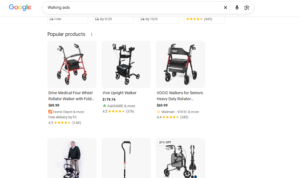
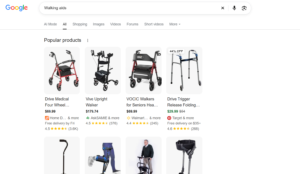
Google is testing a new design for product carousels in the SERP, including sections like “Popular products.” Previously, these carousels appeared in a single row of four to five products. In the new design, only three products appear in the row, and each box is larger in both width and height.

Here is the new design with three products.

new product carousel design with larger boxes

Here is the old design with four products.

new product carousel design with larger boxes

I also recorded a video of this. The design is a bit different: the products appear in a single row at first, but when you click on any product, the row changes to show three.

Google seems to be experimenting with the height and width of product cards in these carousels. Personally, I like both the new and the old designs.

The post Google tests new product carousel design with larger boxes appeared first on Search Engine Watch.

Source:: searchenginewatch.com