Kategorie-Archiv: SEO

Why Amazon is blocking Meta’s Muse shopping agent

Amazon has blocked Meta’s Muse from making purchases on customers‘ behalf, saying the AI agent accesses its store without permission and creates privacy and security risks. Users were seeing a warning citing Amazon’s Conditions of Use by September 20, according to GeekWire’s original report.

The immediate dispute concerns access to customer accounts. There’s also a commercial reason for Amazon to resist: an assistant that chooses products for someone can reduce the browsing through which Amazon sells advertising. That incentive is clear; it doesn’t establish that advertising caused this particular block.

Muse can complete the purchase

Meta introduced Muse on September 8 as an assistant that carries out tasks. It can operate a browser and fill in forms, asking the user for approval before making a purchase. Meta says it runs on a dedicated computer in the cloud.

Imagine asking an assistant to find a coffee machine under $150 and buy your preferred option. It could compare products, present a recommendation and complete checkout after you approve. The retailer still receives an order, but you may never browse its search results yourself. That changes both who handles the account and who gets to influence your choice.

Amazon objects to how Muse enters accounts

Amazon told GeekWire that Meta had not notified it before allowing Muse to shop there. It says the agent fails to identify itself and appears to capture and store customer credentials. Amazon also says Muse can reach order histories and account pages when prompted.

Meta’s technical documentation provides a more specific account of the password handling: credentials are stored separately from the AI agent and inserted into the browser when needed. The model itself cannot read them, Meta says. Keeping passwords away from the model is a safeguard, though the system still uses them to enter accounts. It doesn’t resolve Amazon’s objection to that access.

The legal position also needs care. Amazon sued Perplexity over its Comet assistant in November 2025, but the Ninth Circuit vacated a preliminary injunction on August 4. On the facts before it, the court found Amazon unlikely to succeed under the computer-access laws at issue because the user was accessing Amazon with an AI tool. The court expressly preserved Amazon’s ability to regulate access through user terms. That decision concerned Comet, not Muse.

How shopping agents could affect Amazon’s ads

Amazon’s Sponsored Products ads can appear within shopping results and on product pages. Advertisers pay for clicks. Their value depends on reaching people while they are choosing what to buy.

In the coffee-machine example, an assistant could select a product before the customer reaches Amazon. A competing seller’s paid placement would then have less opportunity to change that decision. The effect depends on how the assistant finds and presents products; using an agent doesn’t automatically eliminate advertising.

Amazon’s reported quarterly advertising revenue adds up to $68.6 billion for 2025. That includes sponsored ads, display and video advertising. It is the size of the wider business, not an estimate of revenue threatened by Muse. Neither the block nor that figure tells us how much advertising income shopping agents might displace.

Amazon wants a say in who completes the order

Amazon already operates a comparable service. Its Buy for Me feature lets customers ask Amazon to purchase selected products from other brands‘ websites. Amazon says brands can choose whether to participate. The customer confirms the purchase within Amazon’s app, while the brand handles fulfillment and returns.

That arrangement keeps Amazon involved in the product decision even when another store gets the sale. Muse could move that decision into Meta’s assistant. Amazon’s objection to unapproved access therefore aligns with its interest in keeping control over how shoppers reach products.

For retailers and marketers, this separates two questions that are often bundled together: whether an assistant recommends a product, and whether it can actually buy it. A brand could appear in an AI recommendation while its preferred retailer blocks the agent at checkout. Evaluating that sales channel requires checking both steps.

The post Why Amazon is blocking Meta’s Muse shopping agent appeared first on Search Engine Watch.

Source:: searchenginewatch.com
Firecrawl wants to pay publishers when AI agents use their content

Firecrawl has launched Alexandria, a service that connects AI agents to data providers and searchable collections through one interface. The company announced the launch on September 22 alongside a $75 million Series B led by Smash Capital.

Firecrawl says it plans to pay individuals, publishers and other organizations when AI agents use their knowledge. It already pays some providers through individual agreements, but the self-service system for new contributors has yet to open. Its public provider sign-up page is a waitlist.

AI agents can check the price before retrieving data

Alexandria lets an agent find a relevant data source, inspect what it offers and retrieve information from it. Firecrawl lists company financials from Fiscal.ai and podcast transcripts from Particle among the sources, alongside its own research and developer indexes.

The documentation separates discovery from retrieval. Finding tools is free; running one costs the credits listed for that tool. Each listing describes its provider, required inputs, expected response and price. Some providers also require an organization administrator to accept their terms before access is allowed.

Firecrawl’s Wikimedia deal predates Alexandria

The announcement cites Wikimedia Enterprise as an existing paid provider. Wikimedia announced that partnership on March 17, when it said Firecrawl was handling 2 million to 3 million requests for Wikipedia data each month.

Wikimedia described the previous process as repeatedly scraping pages using headless browsers and parsing their HTML. The planned replacement was direct access through its On-demand API, which supplies data in a consistent format. Firecrawl now says it pays for that direct access.

Wikimedia shows what an AI customer pays for

Wikimedia’s content remains available under free licenses. Its paid Enterprise service offers higher-volume access, more frequent updates and service guarantees. The arrangement shows how a provider can charge for making information easier to retrieve and maintain, even when the underlying material is already freely available.

That gives publishers a concrete service to consider offering: structured, maintained data that saves an AI developer the work of repeatedly extracting it from webpages. Whether it pays for that work depends on demand and the contributor’s share of the fees.

Publishers faced a similar information gap in Google’s AI contribution pilot, which SEW covered earlier this month. Alexandria’s public launch materials do not publish payout rates or a revenue split for new contributors. Developers can inspect what a data request costs, but prospective providers cannot yet use those prices to calculate what they would earn.

The post Firecrawl wants to pay publishers when AI agents use their content appeared first on Search Engine Watch.

Source:: searchenginewatch.com

From Search Engine Strategies to Answer Engine Strategies

When we relaunched Search Engine Watch in August, I wanted it to be useful to the people making decisions about search today. We’re putting original reporting, practical tests and clear explanations at the centre of that work.

It also means bringing people together. We’re developing Answer Engine Strategies as the next part of the relaunch, with our first online event planned for Q4 2026.

The event will be completely free. We won’t sell you anything, and speakers won’t be pitching you anything either. No AEO or GEO add-ons. We won’t sell your data or pass your contact details to speakers or sponsors.

The goal is to share the best of what practitioners have learned through their work over the past few months. Whether you work alone, run an agency or lead a team, I want to hear what you’ve discovered and the strategies that came out of it.

The name comes from Search Engine Strategies, and that connection is important to me.

Danny Sullivan’s 1996 Webmaster’s Guide documented tests in which he changed web pages and tracked how search engines responded. Search Engine Watch grew out of that work. In 1999, Search Engine Strategies brought practitioners together to learn from each other.

A lot of people helped build that community. Danny’s legacy, for me, is the willingness to investigate a system that businesses depended on and make that knowledge useful to others. I want us to carry that forward.

Today, AI search can assemble an answer that helps someone compare their options before they visit a website. For a business, being visible and getting a visit are different outcomes. We need to understand both, and what either contributes to the business.

These changes affect where we put our time and money.

What should a team change?

Which recommendations have evidence behind them?

How will we know whether the work is helping?

I want Answer Engine Strategies to be a place where people bring something they’ve discovered through doing the work.

I’ll be looking for speakers with case studies that have something interesting to teach us. That could be a result they couldn’t initially explain, a test that challenged an assumption, or a decision that changed how they approached a project. I want to hear what they did, see the evidence and understand what they learned.

The programme will take shape around the strongest of those cases. Some may give us a strategy worth trying. Others may show where familiar advice breaks down, or raise a question that deserves more investigation.

That is the thinking behind the move from Search Engine Strategies to Answer Engine Strategies. “Answer” reflects the shift we need to understand. “Strategies” stays because that is what I want us to work on.

The post From Search Engine Strategies to Answer Engine Strategies appeared first on Search Engine Watch.

Source:: searchenginewatch.com
Google tests new user perspectives results in AI Mode

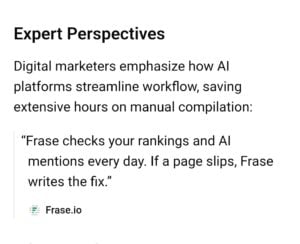
user perspectives results in AI Mode

Google is testing a new “user perspectives” section within AI Mode content, displaying results in a distinct format from the rest of the answer. Most of this content appears to be sourced from Reddit.

We’ve seen this multiple times now, fitting into a broader pattern of ongoing tests within AI Mode that we’ve been tracking.

Here is a screenshot of how it looks.

user perspectives results in AI Mode

user perspectives results in AI Mode user perspectives results in AI Mode

Showing this type of user perspective content could catch users‘ attention and be genuinely helpful, giving them real community-driven insights alongside the AI-generated answer.

The post Google tests new user perspectives results in AI Mode appeared first on Search Engine Watch.

Source:: searchenginewatch.com
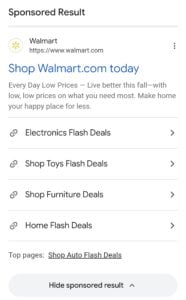
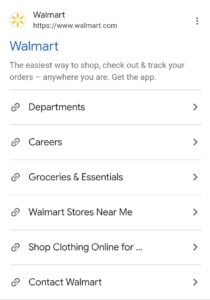
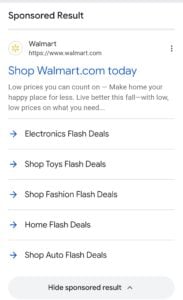
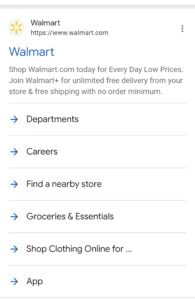
Google tests new sitelink design for both organic and ad results

new sitelink design for both organic and ad results

Google is now testing a new sitelink design appearing across both organic and ad results within the SERP. I spotted this today.

Recently, Google has been doing more testing with sitelinks, especially within sponsored results, but this particular design is appearing for both organic and ad results alike.

Here is a screenshot of how it looks.

new sitelink design for both organic and ad results

new sitelink design new sitelink design

Have you seen this type of sitelink design in your own SERP?

The post Google tests new sitelink design for both organic and ad results appeared first on Search Engine Watch.

Source:: searchenginewatch.com