Archiv für den Monat: September 2026

Google lowers Search Profiles to 10,000 followers, giving more publishers a way into Discover

Google is lowering the entry requirement for Search Profiles to 10,000 followers on YouTube, Instagram, X or TikTok. That sounds like a fairly ordinary eligibility update. The speed of the change makes it more interesting.

When Google officially launched Search Profiles on June 4, publishers and creators generally needed at least 100,000 followers on YouTube, Instagram or X. TikTok required 300,000. Just 104 days later, the main threshold is down to 10,000 across all four platforms.

That is a 90% reduction for YouTube, Instagram and X, and roughly a 97% reduction from TikTok’s original requirement.

Google is effectively moving Search Profiles from something reserved for very large publishers and creators toward something a much wider group of established websites can realistically use.

This is more about Discover than rankings

The important distinction for SEOs is that claiming a Search Profile does not directly improve Google Search rankings.

Google says so explicitly in its documentation. The distribution opportunity sits elsewhere.

People can follow a publisher or creator from their Search Profile. Google says users who follow a source are then more likely to see content from that source in Google Discover. Profiles can also surface through Knowledge Panels, Discover and direct profile URLs.

That makes the 10,000-follower threshold more consequential than a cosmetic profile update.

For an eligible publication, building followers on Google can now become another audience retention mechanism alongside newsletters, browser notifications and social followers.

It does not guarantee Discover traffic. It does give readers a direct way to tell Google that they want to see more from a particular source.

Google is now giving publishers two different ways to be chosen

Search Profiles also need to be separated from Google’s Preferred Sources feature. They overlap conceptually, but they influence different parts of Google.

Following a Search Profile can increase the likelihood that a publisher appears in that user’s Discover feed. Preferred Sources, meanwhile, can make a selected publication appear more often in Top Stories and can highlight it inside AI Overviews and AI Mode.

Search Engine Watch covered Google’s expansion of Preferred Sources in August, including the button publishers can now place directly on their websites. Taken together, Google is creating something search publishers have historically had very little access to: explicit audience preference signals.

Instead of relying entirely on Google’s ranking systems to decide whether a reader sees a publication again, publishers can increasingly ask readers to choose them.

For publishers that qualify for Search Profiles, promoting both mechanisms may therefore make sense. One can influence Discover, while the other operates across Search surfaces including Top Stories and Google’s AI experiences.

Search Profiles also get better article presentation

Google is also changing how publisher articles appear inside Search Profiles.

Article cards now use optimized image thumbnails and support longer headlines, which Google says should make individual stories easier to discover and read from a publisher’s profile.

Google has not published specific new thumbnail dimensions or headline character limits.

The company is also introducing multi-account support for media organizations. Publishers operating several brands can claim and manage Search Profiles for their sub-brands from a single Google login rather than maintaining separate accounts for each publication.

That change matters most to larger publishing groups, but it also signals that Google increasingly sees Search Profiles as publisher infrastructure rather than simply creator profile pages.

Google’s documentation has not fully caught up

There is one wrinkle for anyone trying to sign up immediately.

Google’s September 16 announcement says the threshold is now 10,000 followers, but Google’s Search Help documentation and Google for Creators pages were still showing a 35,000-follower requirement when checked around the announcement.

The newer announcement is explicit about the 10,000 figure, so the discrepancy appears to be a documentation lag rather than a different eligibility rule.

Search Profiles also officially remain limited to the United States for now. Google previously said it intends to expand them to additional countries.

For U.S. publishers with more than 10,000 followers on at least one supported platform, however, the practical conclusion is straightforward: Search Profiles have gone from a feature worth watching to one worth claiming.

And for publishers more broadly, Google’s direction is becoming clearer. Getting someone to visit once still matters. Increasingly, getting them to tell Google they want to hear from you again may matter too.

The post Google lowers Search Profiles to 10,000 followers, giving more publishers a way into Discover appeared first on Search Engine Watch.

Source:: searchenginewatch.com
Gemini 3.8 Live makes Google Search more useful and clicking websites less necessary

Google began rolling out Gemini 3.8 Live to Search Live on September 15, upgrading the model behind the Google app’s real-time voice conversations and troubleshooting help. The company says the model makes those exchanges more natural and handles language changes during a conversation.

Search Live already lets people ask questions aloud, show Google something through their camera and follow up without typing another search. Google expanded it to more than 200 countries and territories in March, powered at the time by Gemini 3.1 Flash Live. Web links and camera-assisted answers were part of that earlier rollout.

For publishers, the development worth watching is whether a more capable conversation gives users enough help to finish the task without opening those links.

What Gemini 3.8 Live brings to Search

Google says Gemini 3.8 Live can automatically recognize and switch between 97 supported languages during a conversation. It also processes visual information in near real time and can continue speaking while tools run in the background. These are capabilities of the underlying model; Search Live’s availability remains subject to its own supported regions and languages.

Google describes the standard model as suited to fast, high-volume voice interactions. Its separately announced Gemini 3.8 Live Extended Thinking is designed for more demanding tasks involving several reasoning steps.

Search Live is receiving the standard model, while the rollout announcement assigns Extended Thinking to Gemini Live and supported Google Workspace experiences. The benchmark results advertised for Extended Thinking should therefore not be treated as measurements of the Search Live upgrade.

Google’s model card also lists hallucinations, occasional delays and timeouts among the models‘ known limitations. A more fluent answer can still require checking.

A source link still needs someone to tap it

Google’s support documentation contains a detail publishers should pay attention to: with Continue in background enabled, Search Live can keep a conversation going while someone uses another app or locks their phone. Camera sharing stops in the background, but the spoken exchange can continue. The product supports a search session in which the user is no longer looking at the screen containing the web links.

That creates a plausible problem for how-to publishers. Someone who gets a working answer through conversation may have little reason to open the accompanying tutorial afterward. Improving the conversation could make that outcome more likely, although Google’s announcement provides no referral or click-through figures demonstrating an effect from this upgrade.

The useful editorial test would be to take troubleshooting questions a site already answers and run them through Search Live. Record which pages appear, whether the spoken response names its sources, how accurately it handles follow-up questions and whether completing the task requires opening a website. Repeat the sessions rather than treating one answer as a stable ranking.

Those observations would help a publisher identify where its guides offer something beyond the spoken answer: original photographs, precise compatibility information, downloadable resources or a tested solution the assistant gets wrong. They would not, by themselves, measure lost traffic.

There is little justification for rebuilding a site around a supposed Gemini-specific optimization trick. Google’s current guidance for generative search continues to emphasize accessible, useful, original content and explicitly says special AI markup is unnecessary. A model update is a good reason to test the experience before buying the optimization package.

Where to try the upgrade

Search Live is available through the Google app on Android and iOS in supported AI Mode regions and languages. Tap Live beneath the search bar to begin, or enter through Google Lens to start with the camera. Conversation transcripts can be revisited in AI Mode history.

The post Gemini 3.8 Live makes Google Search more useful and clicking websites less necessary appeared first on Search Engine Watch.

Source:: searchenginewatch.com

Google introduces Business Agent in YouTube ads that answer back

Google is testing Business Agent inside YouTube ads, allowing viewers to ask about products without leaving YouTube for a retailer’s website. The September 16 announcement also expands Merchant Center’s AI shopping reports and adds capabilities to Google’s checkout integrations.

For advertisers, the experiment puts some of a product page’s sales work inside the advertisement. A viewer could get answers about specifications or shipping while deciding whether the product deserves further attention. Google describes the intended result as more qualified traffic; its beta application provides no performance results to substantiate that promise yet.

Demand Gen gets the first turn

Google’s beta registration form spells out restrictions that its broader announcement leaves out. Retailers need an active Demand Gen campaign linked to Merchant Center product feeds, with a minimum of $10 a day. The test covers English-language, mobile in-stream ads in the United States. Shorts are excluded.

Google says its team will enable the experience on existing eligible campaigns without additional setup. Applying does not guarantee participation; advertisers will receive confirmation if they are accepted.

There is also a campaign-selection detail worth checking before signing up. The form says all linked Demand Gen campaigns will be included unless advertisers specify individual campaigns. Agencies planning a controlled trial should make that selection deliberately.

Business Agent itself was announced in January as a branded shopping assistant in Google Search. The YouTube test extends that existing product into video advertising. Google’s documentation describes the Search version as using Gemini models, Merchant Center information and the retailer’s website to answer shoppers‘ questions.

The new AI report won’t measure these ads

Alongside the advertising test, Google is making AI performance insights generally available in Merchant Center. The report covers accounts in Australia, Canada, India, New Zealand and the United States, with data limited to English-language shopping queries.

Retailers can find it under Analytics → Products → AI performance. It compares a brand’s visibility with its Merchant Center competitor set, using AI impressions and breakdowns for discovery, evaluation and ready-to-buy searches.

The important restriction for advertisers is that it covers organic AI results, including free listings, in AI Mode and AI Overviews. Paid advertising is excluded, so this dashboard cannot establish whether a YouTube Business Agent campaign is working.

There is another detail to catch before a visibility score reaches a client presentation: Google says share of voice can show 100% when Merchant Center has no defined competitors available. A zero can also reflect insufficient impressions. Neither number should be interpreted without checking the underlying data.

Checkout expands, with analytics still to come

Google is also updating the Universal Commerce Protocol, or UCP, integration hub in Merchant Center. Merchants using the hub can enable cart transfers to their websites and enhanced checkout-flow testing. Analytics and further capabilities are still described as coming soon. The additions are rolling out gradually in the U.S., with Australia and Canada expected to follow in early 2027.

Tapestry supplied a concrete example of UCP adoption in its own September 16 announcement. The company says U.S. shoppers can now purchase Coach and Kate Spade products directly through Google Search, including AI Mode, and the Gemini app. Its implementation supports single-item checkout through Google Pay, with explicit customer approval required for each transaction.

Those checkout integrations should not be confused with the YouTube experiment. The beta form describes answering product questions and delivering traffic to merchants; it does not announce purchasing inside the ads.

Your next ad audit should include the agent’s answers

For retailers considering the test, Google’s documentation suggests a practical starting point: check the product information the assistant will use. The existing Search version draws from Merchant Center and the company’s website, making both relevant to the quality of its answers.

Google’s optional conversational attributes provide another way to supply detail. They support product questions and answers, document links, related products and variant information. Merchants can add them through a supplemental feed, their primary feed or the Merchant API. Google also says information already supplied in descriptions, product highlights or product details does not need to be duplicated.

Product demonstrations deserve attention too. SEW recently covered Merchant Center’s product-level video option; Google’s specification allows videos that show an item from different angles or demonstrate it in use. That gives retailers a concrete way to explain details that a static product image may leave unresolved.

The useful test would examine whether the assistant answers buying questions correctly and whether the campaign produces additional profitable orders. For a footwear retailer, that could mean auditing sizing guidance and comparing completed purchases and returns against a suitable control. For an electronics seller, compatibility answers would deserve particular scrutiny.

Google is offering advertisers another place to persuade a customer. Before expanding the experiment, retailers should establish whether they are paying for better sales conversations—or simply giving their product-data mistakes a more convincing voice.

The post Google introduces Business Agent in YouTube ads that answer back appeared first on Search Engine Watch.

Source:: searchenginewatch.com
OpenAI’s Sponsored Agents turn ads into chats—and could reshape paid search

OpenAI is testing Sponsored Agents, a ChatGPT advertising format that lets people click an ad and start a conversation with an AI representative of the business. The company announced the pilot on September 16, with select US advertisers participating.

For paid-search teams, the potential change is where the persuasion happens: an advertiser could answer a prospective customer’s questions before getting them onto its website.

The sales conversation starts inside ChatGPT

OpenAI illustrates the format with a dining-table shopper asking about size, seating and maintenance. Users can explain their needs, ask follow-up questions and visit the business’s website when ready.

The sponsored exchange is labeled and kept separate from both the user’s original conversation and ChatGPT’s independent answers, according to OpenAI.

That also distinguishes it from the existing Ask ChatGPT option on ads. That feature shares an ad with the regular assistant so the user can ask about it; OpenAI says advertisers cannot influence those responses. A Sponsored Agent represents the business being advertised.

For users, the distinction matters. Asking an independent assistant whether a product is worth buying carries a different expectation from questioning the seller’s representative, even when both exchanges happen inside ChatGPT.

OpenAI’s advertising FAQ also distinguishes private chats from messages directed to businesses. Advertisers cannot read users‘ private ChatGPT conversations, but they can see messages users choose to send them directly through an ad.

Advertisers are responsible for the agent’s answers

There is a consequential detail in OpenAI’s Ad Tools Terms: even when OpenAI creates or configures a Sponsored Agent, the advertiser remains responsible for its content, configuration, actions and output “as if you had created it yourself.”

For a marketing team, that means the review process should extend beyond approving a headline and landing page. A useful pre-launch test would probe how the agent handles outdated offers, unclear product specifications and requests for promises the business cannot make.

Consider a shopper asking whether a product will arrive before a particular date. An agent that confidently invents a delivery commitment could undermine an otherwise successful campaign. Checking how it handles missing information would be as important as checking whether its answers sound persuasive.

Agencies evaluating the format would therefore have another potential responsibility: testing the sales conversation on the client’s behalf, including the answers the client would rather the agent did not improvise.

The paid-search implications depend on performance

OpenAI’s announcement does not provide Sponsored Agents conversion results, format-specific pricing or a date for wider availability.

The commercial argument will need more than evidence that people enjoy asking questions. An advertiser would need to establish whether those exchanges produce additional sales or qualified leads at an acceptable cost.

A campaign could plausibly generate fewer website visits while sending through better-informed buyers. It could also introduce an unnecessary step for someone already ready to purchase. Those possibilities call for measurement across the conversation, the subsequent visit and the eventual outcome—not a success claim based on chat starts alone.

For search marketers, that is the experiment worth watching. Sponsored Agents could expand campaign optimization into the answers given after the click. Whether that earns them a meaningful share of paid-search budgets will depend on how often the conversation leads to business.

The post OpenAI’s Sponsored Agents turn ads into chats—and could reshape paid search appeared first on Search Engine Watch.

Source:: searchenginewatch.com

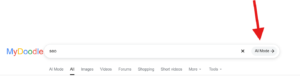
Google now showing AI Mode button within the search bar above results

Google ai mode button

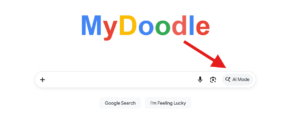
Google is now showing an AI Mode button within the search bar above search results. I don’t recall seeing this there before —currently, this button appears on Google’s homepage, and I spotted it while searching on Google. I couldn’t find anyone else mentioning this test, so I’m assuming this placement above the results search bar might be new.

Here is a screenshot with the search bar shown.

Here is a screenshot without it.

without ai mode

Here is a screenshot from Google’s homepage.

Google home page

This makes it easy for users to search as usual typing a query and hitting enter shows regular search results, but clicking the AI Mode button instead redirects users directly into AI Mode.

The post Google now showing AI Mode button within the search bar above results appeared first on Search Engine Watch.

Source:: searchenginewatch.com