Archiv für den Monat: September 2026

Google adds Dive deeper feature to Discover feed

Dive deeper feature to Discover feed

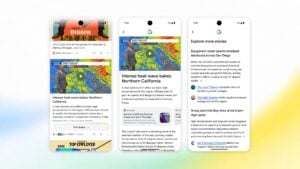
Google will now show a “Dive deeper” option within the Discover feed. When a user taps on it, they’ll be shown AI-generated topic content related to their original search.

Robby Stein posted about this new feature on X, writing:

“Today we’re experimenting with a new way to make exploring a topic and discovering related web content easier in Discover. By tapping ‘Dive deeper,‘ you’ll see a short topic overview with prominent links to related stories, community reactions & original reporting. We’ll test this experience on videos to start and experiment with multiple designs in the weeks ahead (example below) as we iterate to learn what works best.”

Here is a screenshot of how it looks.

This gives users a quicker way to explore a topic more deeply directly within Discover, surfacing related stories, community reactions, and original reporting in one place. According to Stein, Google is starting this test with videos first and plans to experiment with multiple designs as it continues to refine the feature.

Image Credit: unchartified

The post Google adds Dive deeper feature to Discover feed appeared first on Search Engine Watch.

Source:: searchenginewatch.com

Google Wants Highly Satisfied Chrome Android Users to Boost Its Play Store Rating

Google is experimenting with a new Chrome for Android prompt that asks users to rate the browser on the Google Play Store. The company wants to improve Chrome’s Play Store rating and narrow the perception gap between its browser and competing browsers.

The “Android app rating prompt” can appear while users browse in Chrome and includes a direct link to the browser’s Play Store listing. The prompt cautions users before they leave a review: “Reviews are public and include your account and device info.” Google is testing the feature behind a flag in Chrome for Android.

Image Credit: Venkat | Search Engine Watch

Asking users to rate an app is common, but Google has a specific goal for this Chrome experiment. According to a Chrome Platform Status entry spotted by us, the company wants to improve Chrome’s “app rating” and address the difference in how users perceive Chrome compared with other Android browsers.

The prompt targets users who report being highly satisfied with Chrome and asks them to leave a rating on the Play Store. Google says the feature aims to improve the app’s store rating and bridge the perception gap with competitors.

Play Store ratings can influence how users compare apps before installing them. Chrome competes with several other browsers on Android, so its score can factor into those comparisons.

Google has not said when or whether the prompt will reach all Chrome for Android users.

The post Google Wants Highly Satisfied Chrome Android Users to Boost Its Play Store Rating appeared first on Search Engine Watch.

Source:: searchenginewatch.com

OpenAI and Microsoft saw the publisher traffic problem coming, court filing says

OpenAI and Microsoft were discussing how AI products could replace visits to the publishers whose work helped train them, according to a summary-judgment brief unsealed Thursday in The New York Times copyright case.

The News Plaintiffs‘ Combined Summary Judgment Brief, filed September 17 in the Southern District of New York, is a submission from The New York Times and other news organizations. It is not a court finding. The plaintiffs are asking Judge Sidney Stein to rule that OpenAI and Microsoft infringed their copyrights and that the companies‘ fair-use defenses fail. OpenAI and Microsoft dispute that interpretation.

As Reuters reported, the filing quotes OpenAI’s head of ChatGPT, Nick Turley, describing publishers as facing an “existential threat” from products that were “largely substitutive” and would become more substitutive as they improved.

It also cites Microsoft Director of Applied Science Brent Hecht describing a “doom loop” in which the AI strategy could hurt both the models and the web. In another internal document cited by the plaintiffs, Hecht called large-scale AI scraping “the largest theft of labor in human history.”

Those statements are the kind of material the plaintiffs say undermines the companies‘ legal position. They are not a judicial determination that the companies violated copyright.

The filing ties AI substitution to lost clicks

The brief’s most useful evidence for publishers is a traffic comparison that connects the internal discussion to a measurable outcome.

According to the filing, Microsoft’s representative data comparing Bing Chat with Bing Web Search showed overall click-through-rate reductions of 87% to 93% for Times domains, 83% to 91% for the Daily News plaintiffs‘ domains, and 51% to 94% for Ziff Davis domains.

The ranges vary by publisher, and the figures come from the plaintiffs‘ presentation of Microsoft’s data. They are not a market-wide benchmark. They do show the mechanism the case is about: an answer product can satisfy the query before a user visits the site that produced the underlying reporting.

The plaintiffs also cite internal material saying AI systems reduce the need to visit websites and that prominent links do not guarantee a click. OpenAI and Microsoft have argued that model training transforms copyrighted material into new content and does not compete with or replace journalism.

Microsoft told Reuters that Satya Nadella’s testimony about users getting information inside an AI platform was consistent with its legal position and described broad changes in how people find and consume information. OpenAI did not immediately respond to Reuters‘ request for comment on the filing.

The brief argues that the damage extends beyond referral traffic to advertising, subscriptions, donations and the emerging market for licensing news content to AI systems. It points to publisher licensing arrangements involving several AI companies, although some financial details remain redacted.

Google is testing a price for AI answers

Google’s new AI Contribution Pilot is relevant to the publisher economics described in the filing, although it is separate from the lawsuit.

Digiday reported that Google is testing a Search Console-based program showing participating publishers a monthly payment when their content “significantly” contributes to AI-generated responses across Gemini, AI Overviews and AI Mode.

Google confirmed the program as an early-stage learning pilot, but the widget does not explain how each payment is calculated, according to Digiday.

Google’s June policy post describes a broader pilot for websites whose content contributes to the freshness and factuality of generative AI responses through grounding. It also says Google’s News AI pilot includes more than 200 publications globally.

Google’s pilot tests the revenue mechanism the filing says the market needs, but its early-stage status and opaque calculations leave the size of the exchange unresolved.

A publisher payment does not restore the lost click

Google’s pilot addresses compensation, while the filing highlights control of the audience. When an AI answer keeps the user inside the platform, a publisher may lose the chance to show ads, convert a subscription, collect a newsletter signup or build a direct relationship.

That makes the click-through data more useful than another abstract argument about whether AI output is “transformative.” It gives publishers a concrete way to evaluate what an answer engine has displaced.

The figures are limited to one company’s comparison and cannot isolate every cause of traffic change, but they put a price on the distribution shift.

SEW has also covered this product direction in OpenAI’s Sponsored Agents, where the commercial conversation begins inside ChatGPT and a website visit becomes an optional later step. For publishers, the question is whether the platform returns enough money or audience to fund the reporting that makes the answer useful.

Sources: News Plaintiffs' Combined Summary Judgment Brief (PDF). Additional reporting: Reuters and Digiday.

The post OpenAI and Microsoft saw the publisher traffic problem coming, court filing says appeared first on Search Engine Watch.

Source:: searchenginewatch.com
Google’s bot crackdown is messing with your SEO reports

Changes to how Google delivers search results are disrupting some SEO tools‘ data collection, making recent ranking charts harder to interpret. Sistrix’s September 16 status update confirms that collection is running more slowly while it adapts its systems.

Nozzle’s Derek Perkins told Search Engine Roundtable’s Barry Schwartz that the amount of data he could retrieve from Google had fallen by about 80%. That figure describes his collection results; it does not measure a decline in websites‘ rankings or traffic.

The effects appear uneven. Schwartz also reported Glenn Gabe’s comparison of a site whose traffic had recovered after a sharp fall. Ahrefs reflected the recovery, Semrush showed it with a delay, and Sistrix had not picked it up. That example illustrates a reporting lag, but cannot establish the reliability of each provider across its entire database.

Google’s redirects were an earlier obstacle

SEW previously covered Google’s rollout of opaque /goto redirects, which made collecting destination URLs more laborious. Tools had to follow those redirects to discover which websites appeared in the results.

Sistrix says it resolved the resulting processing delays by September 1. Its September 16 notice reports further changes without identifying the mechanism, so the latest slowdown should not automatically be blamed on the same redirects.

Google’s published spam policies explicitly include unauthorized scraping for rank checking under prohibited automated traffic. The policy establishes Google’s position, but does not explain this particular incident.

Missing data can outlast the disruption

Sistrix’s status history contains a detail worth checking before using these charts in a client report. After a separate disruption in August, the company said normal daily keyword updates had resumed, but data from the affected days could not be updated retrospectively. A provider can fix collection and still leave gaps in the historical record.

That makes the date of the last successful collection, and whether missing periods will be filled, essential questions for affected vendors. SEW’s comparison of SEO data suppliers explains why freshness and coverage matter when evaluating retrieved results. A dashboard that opens normally offers no assurance that every keyword was checked on schedule.

For your own website, compare a suspected drop with Search Console’s clicks and impressions and your recorded organic traffic over the same dates. Those metrics measure different things, but can help establish whether a visibility-chart movement coincided with a change in actual visits. Competitor charts deserve more caution when that corroborating data is unavailable, especially if the provider cannot confirm when it last collected the underlying rankings.

Source: Search Engine Roundtable.

The post Google’s bot crackdown is messing with your SEO reports appeared first on Search Engine Watch.

Source:: searchenginewatch.com

Google Ads lets brands use retailer audiences, but traffic stays on the retailer’s site

Google has published instructions for “commerce audience sharing through Google Ads.” The feature lets retailers and marketplaces share first-party data segments with brands and sellers. In plain English, a retailer can let a brand target people from the retailer’s own shopper data.

Google says campaigns using the shared audience must send traffic back to the commerce partner’s website. The audience can be used in Performance Max, Search, Standard Shopping, Demand Gen and Video campaigns, but the brand cannot send that audience wherever it chooses.

Search Engine Roundtable reported the new help document. Google’s broader Commerce Media through Google Ads documentation says the program is limited to participating merchants. Interested brands must contact their commerce partners or Google Ads account team.

How Google Ads audience sharing works

The retailer must link the brand’s Google Ads account to its Google Ads data-sharing account and Merchant Center account. Once approved, shared segments appear in Audience Manager with a “Shared” badge. Brands can add them to eligible campaigns and combine them with their own first-party data.

The retailer controls which segments are shared and can specify the approved campaign domain. Google says retailers receive impression, click, conversion and spend metrics from partner campaigns. Brands receive audience details, product information and conversion data from the retailer’s website.

Google’s campaign setup instructions add several practical restrictions. Campaigns need at least 10 approved SKUs. Google recommends a campaign duration of at least 30 days and a daily budget of $40 or more. Final URL expansion and text customization must remain disabled.

The retailer keeps the destination

The brand gets a retailer’s shopping signal and conversion feedback, but not a portable audience it can activate elsewhere. The retailer decides which audience is available, approves the domain and configures the purchase and add-to-cart goals.

That may suit sellers already dependent on a marketplace. A direct-to-consumer brand would need to decide whether the retailer’s conversion data is worth giving up control of the destination.

Google is connecting retailer audiences, product feeds and purchase reporting to brand-funded campaigns across its advertising surfaces. The setup is useful where the retailer owns the conversion path, but it is not a replacement for a brand’s own Customer Match or remarketing audiences. Google does not publish a list of participating merchants, so availability remains a partnership question rather than a setting most advertisers can switch on.

The post Google Ads lets brands use retailer audiences, but traffic stays on the retailer’s site appeared first on Search Engine Watch.

Source:: searchenginewatch.com