Archiv für den Monat: Oktober 2026

Google, Booking.com and Expedia unveil a draft rulebook for AI hotel bookings

The Universal Commerce Protocol (UCP) project has released its first lodging booking draft, with Google, Booking.com, Expedia and major hotel groups helping shape a common specification for AI-assisted reservations.

The September 25 announcement says the draft has been merged into the project’s repository and opened for public feedback. It credits a Lodging Tech Council including Amadeus, Booking.com, Expedia, Google, Hilton, Marriott and Trip.com.

The documentation remains a work in progress, with potentially breaking changes ahead.

What happens after an assistant finds a room

The booking capability takes property and rate identifiers from an earlier search process. The business then checks inventory, calculates binding prices and attaches cancellation terms. A confirmed reservation is created when the booking session is completed.

That adds technical detail to the plans SEW previously covered for hotel bookings within Google Search. This release opens the shared specification to scrutiny; the announcement provides no consumer rollout date.

The business remains the merchant of record. Unless the AP2 Mandates extension is supported, the user must finalize the booking manually through a trusted interface.

The full price and the payment schedule

The lodging draft requires the full stay liability to be presented before confirmation, including mandatory charges collected at the property. Stay totals cover the entire duration rather than a single night.

The separate Payment Terms extension represents what is owed and when through payment schedules. Its documentation gives lodging as an example: a business can offer full payment at booking or a first-night payment followed by the balance at check-in.

Each schedule needs a buyer-facing description of when and how payment is due. If selecting a term changes the total, the returned checkout must reflect the change and the platform must display the updated response.

For a traveler comparing rates, the amount collected today can therefore be shown alongside the complete financial commitment.

Developers are asking about failed requests and changed terms

In the announcement’s replies, contributor KukretiShubham asks how implementations should avoid two reservations when an API completion request times out and the customer finishes the same session through a website.

The contributor also asks how earlier approval should be invalidated if a refundable room becomes non-refundable, or payment switches from later to immediate, while the total stays unchanged.

These are requests for clarification and worked examples in the public discussion. The thread supplies no demonstration of a duplicate reservation occurring.

The AP2 Mandates documentation describes signed proof that a user authorized a specific checkout state and funds transfer. That binds authorization to the terms being approved. The contributor is asking for a lodging-specific example of how a changed policy should trigger renewed approval.

Our take

The same room at the same price can represent a different purchase when its cancellation terms or payment date change. Those details affect what a hotel can promise in an offer and what the guest ultimately agrees to buy.

The public draft gives hotel booking providers a concrete basis for reviewing that handoff. The most useful implementation evidence will be how systems preserve the approved rate and recover a reservation’s outcome when completion is delayed.

The post Google, Booking.com and Expedia unveil a draft rulebook for AI hotel bookings appeared first on Search Engine Watch.

Source:: searchenginewatch.com
Google turns Gemini in Chrome into a billboard on Chrome Web Store

Google has been actively promoting Gemini in Chrome since the AI assistant began rolling out to users. Now, the company is using the Chrome Web Store homepage to put the tool in front of even more users.

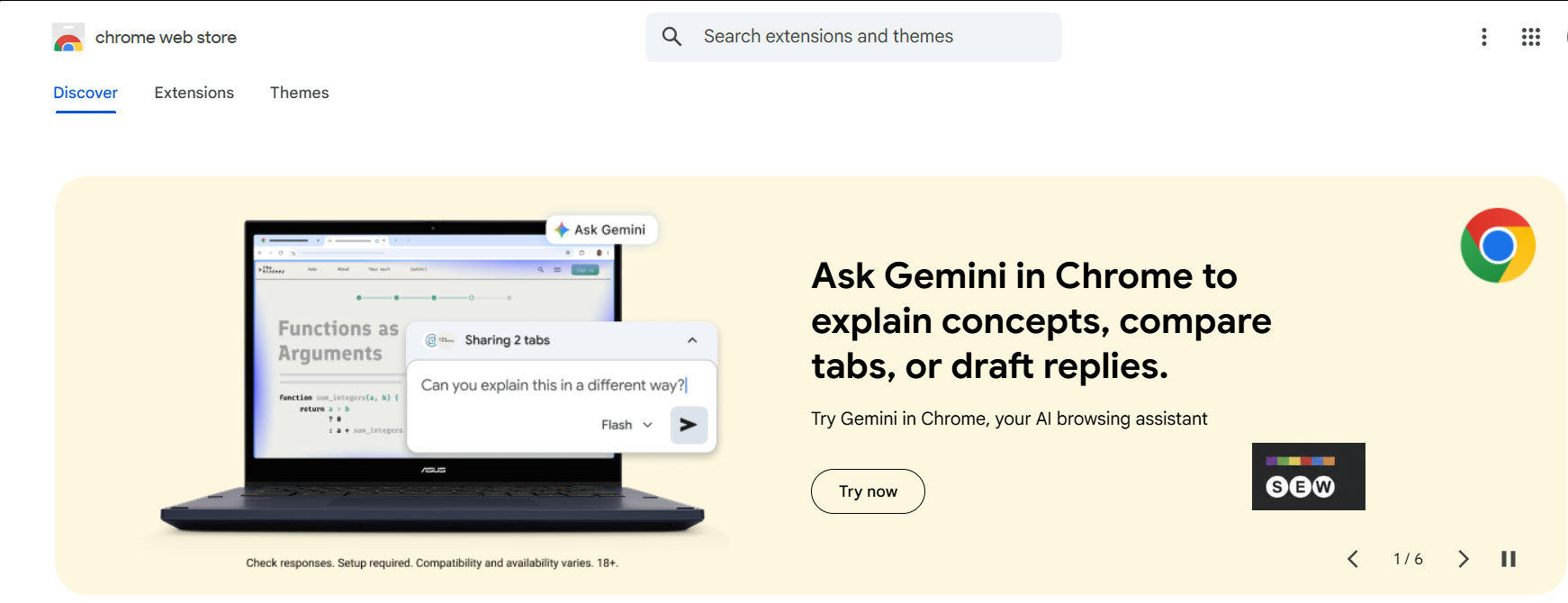
The promotion appears as the first slide in the site’s rotating carousel. It features the Chrome logo next to a callout that reads:
“Ask Gemini in Chrome to explain concepts, compare tabs, or draft replies.”

The banner describes Gemini in Chrome as “your AI browsing assistant” and includes a “Try now” button. Google is highlighting three everyday use cases: explaining concepts, comparing multiple open tabs, and drafting replies. The copy also makes it clear that Gemini is part of Chrome itself, rather than a separate extension users need to install.

Image Credit: Venkat | Search Engine Watch

Clicking “Try now” takes users directly to Google’s Gemini in Chrome landing page. The destination URL includes utm_source=owned, utm_medium=chrome-web-store and utm_campaign=GiC-promo, indicating that Google is tracking the Chrome Web Store as a distinct promotional source for the feature.

We spotted the banner while visiting the Chrome Web Store from another browser, such as Opera.

Google’s Gemini in Chrome page currently highlights features such as asking questions about webpages, comparing information across open tabs, summarizing content and YouTube videos, and using Gemini alongside other Google products.

The Chrome Web Store promotion therefore appears to be another way for Google to push Gemini in Chrome directly to people browsing its extension marketplace.

The post Google turns Gemini in Chrome into a billboard on Chrome Web Store appeared first on Search Engine Watch.

Source:: searchenginewatch.com

Google tests new review treatments within sponsored results

new review treatments within sponsored results

Google is testing new ways to display website reviews within sponsored results. Today, we spotted two variations.

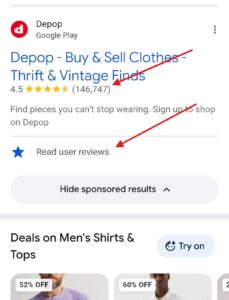
In the first, Google shows the website’s review rating alongside the website name directly within the ad.

Here is a screenshot of this.

In the second variation, the total review count and rating appear below the ad’s title, along with a “Read user reviews” sitelink.

Here is a screenshot of this.

new review treatments within sponsored results-1

This is a positive change for websites with strong ratings, since prominently displaying reviews like this could help build user trust and potentially increase click-through rates.

The post Google tests new review treatments within sponsored results appeared first on Search Engine Watch.

Source:: searchenginewatch.com
YouTube will let other creators make money reacting to your videos

YouTube plans to let creators earn advertising revenue and fan payments from live reactions to other people’s long-form videos. Original uploaders will receive attribution and added view credit in YouTube Studio, with control over which of their videos can be reacted to.

The expansion of Watch With was announced on September 23, with rollout starting later in 2026. For publishers considering whether to allow reactions, the announcement leaves an important measurement question open: how much of that audience will reach their own content?

The reacting creator keeps the live ad revenue and fan funding they earn. YouTube specifies no revenue split for the original uploader, and leaves both the calculation of view credit and the default permission setting unexplained in its announcement.

Shorts already offers a way to measure return traffic

YouTube’s existing Shorts remix tools provide a useful comparison. Remixed videos include attribution linking to the original work, and uploaders have a reporting route for views received through visual remixes.

In its remix documentation, YouTube directs creators to their reach reports and the “Remixed video” traffic source to see those views. That lets an uploader examine whether another creator’s use of their footage sends viewers back to them.

A comparable traffic report for Watch With would help publishers assess the proposed expansion.

Publishers need to see where reaction viewers go next

The host’s commentary and relationship with viewers supply part of the attraction of a reaction stream. Allowing that format gives an original publisher another potential route to an audience, without having to host every broadcast itself.

Its value will vary with the publisher’s business model. A channel selling sponsorship around its own shows needs to know whether reaction viewers subsequently watch those shows. A publisher using YouTube to build a subscription audience needs to track whether that attention produces subscribers or visits to its website.

That is relevant to the publishers building audiences on YouTube as search referrals become less dependable. Watch With could help introduce their work to another host’s followers, but the terms announced so far give them little detail for judging that return.

A useful rollout would let uploaders distinguish views credited during someone else’s broadcast from viewers who arrive on their own videos or channel. YouTube’s existing Shorts reporting gives publishers a concrete feature to look for when Watch With expands.

The post YouTube will let other creators make money reacting to your videos appeared first on Search Engine Watch.

Source:: searchenginewatch.com
Meta’s Muse moves into small business, from ad campaigns to suspicious expenses

Meta has expanded Muse, its personal AI agent, with new skills and connectors aimed specifically at small businesses. The September 29 update adds business-focused workflows and a wider set of connections to the services small businesses already use.

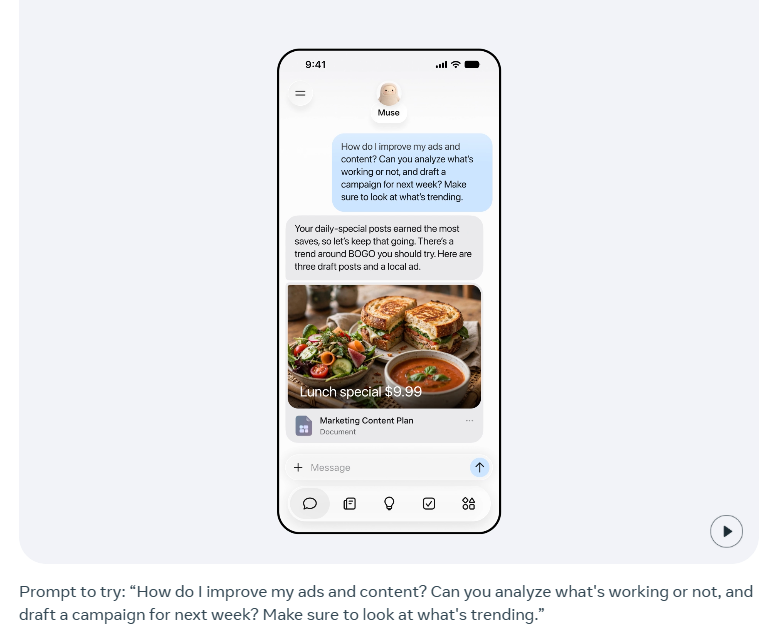
One example in Meta’s announcement is reviewing advertising and content performance, then drafting a campaign for the following week. Other suggested tasks include preparing a growth plan from sales and campaign data, and examining monthly financial performance for unusual expenses.

What Meta added to Muse

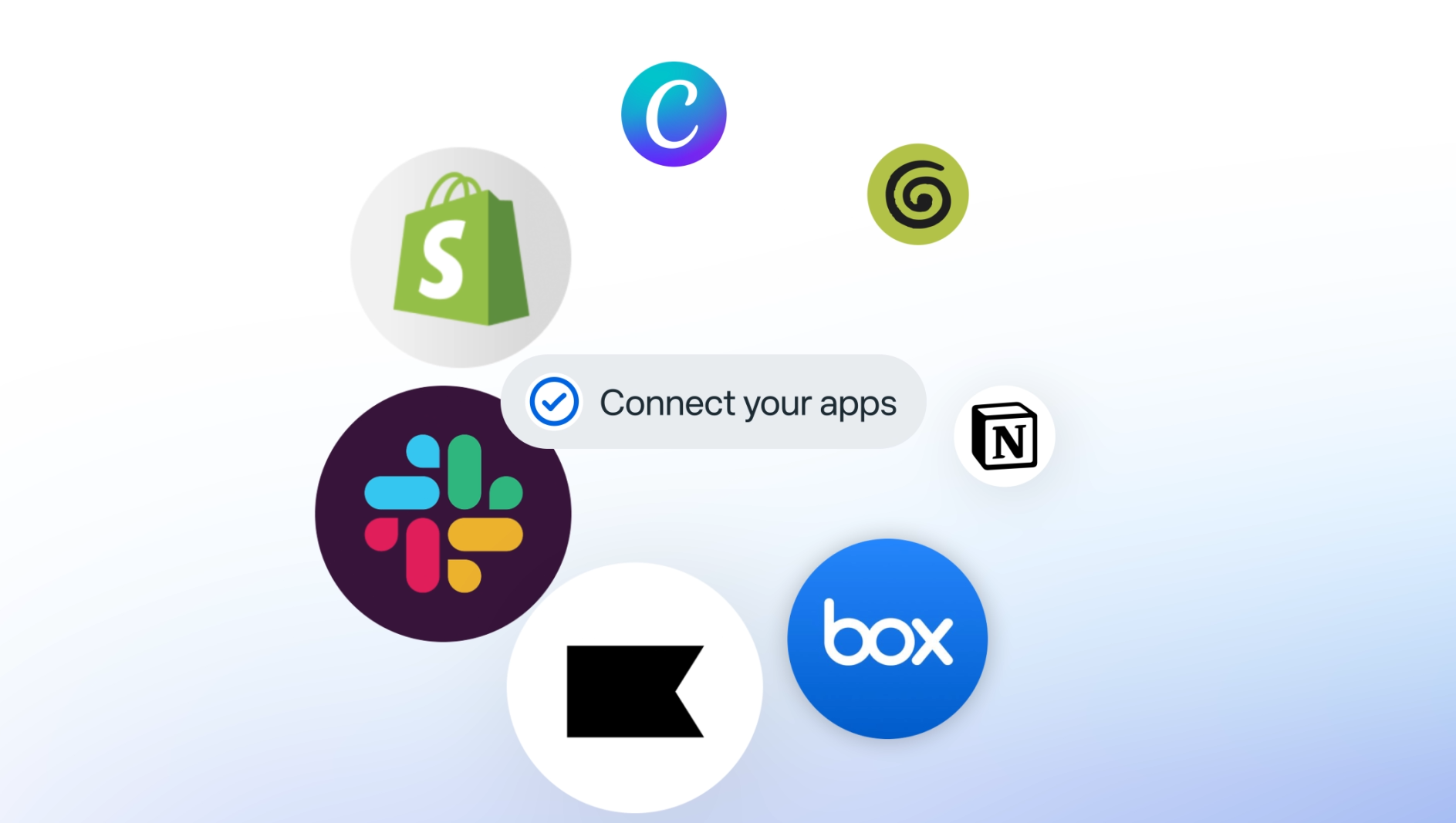
The biggest change is the number of business tools Muse can now work with. Meta says businesses can connect Facebook and Instagram business accounts alongside services including Asana, Box, Canva, Dropbox, Figma, Granola, HighLevel, Intuit QuickBooks, Klaviyo, Lovable, Notion, Shopify, Slack, Stripe and Zoom.

Once connected, Meta says Muse can use information from those services to work on business goals rather than simply answer questions about them. Muse also supports custom connectors for services that are not yet supported directly.

What can a small business ask Muse to do?

Meta gives several examples of the new workflows. One is a request to analyze a year’s sales, campaigns and social activity and produce a growth plan for the following year. Another asks Muse to review email, calendar and news information and identify work that needs attention.

Meta also suggests asking Muse to analyze advertising and content performance, draft a campaign for the following week and look at current trends.

For financial work, Meta gives the example of asking Muse to review the business’s financial performance for the month and identify expenses that appear unusual. These are all examples supplied by Meta, and SEW has not done independent tests of Muse’s performance.

You still approve important actions

Muse is designed to take action, but Meta says it does not give the agent unrestricted control. The company says nothing publishes, sends or spends without the user’s approval. It also says Muse provides an audit trail showing what it has done and what it plans to do.

Users can choose which services Muse connects to and how much access it receives. Meta says that access can be changed or a service disconnected later.

Meta also says Muse conversations are not shared with its advertising systems. That is a specific claim about conversations, rather than a complete explanation of how every connected service handles business data.

Access across the wider web can also encounter restrictions. SEW previously reported on Amazon blocking Muse’s shopping agent, illustrating the limits an external service can place on an agent’s activity.

Where it’s available and costs

Meta lists availability in the US and Canada for adults aged 18 and over, with no date announced for additional markets. Muse has a free usage allowance. Its subscription documentation lists Power at $20 a month and Max at $100 a month for higher allowances, with benefits and availability varying by region and account. Users who exhaust their free allowance can also wait for it to refresh.

What this means for small businesses

For a small team, the appeal is having an agent gather information and prepare a proposed campaign while the owner does other work. The approval step still leaves someone responsible for checking the offer, audience, claims and budget.

However, a practical first trial would be one campaign with a defined reporting period and a clear deliverable. Compare the preparation time saved with the time spent correcting and reviewing the result. That would tell an owner more about Muse’s usefulness than the number of apps it connects to.

The post Meta’s Muse moves into small business, from ad campaigns to suspicious expenses appeared first on Search Engine Watch.

Source:: searchenginewatch.com