Kategorie-Archiv: SEO

Instinct lands $1 billion to build an AI assistant that actually runs your errands

Instinct has raised $1 billion in new funding as the AI company expands its personal agent beyond digital tasks and into real-world errands, including making phone calls to businesses on a user’s behalf.

The funding values Instinct at $10 billion, according to Reuters. The company says its agent can help with tasks such as trip planning, groceries, tickets and cancelling subscriptions, while its Concierge service can call businesses that do not offer online booking.

For users, the more important question is what happens when an agent can actually commit them to something.

What can Instinct Concierge do?

Instinct announced its Concierge service earlier in September, describing an agent that can make phone calls and handle tasks such as restaurant reservations and joining a dentist’s cancellation list.

That moves the agent beyond finding information or preparing a recommendation. It can interact with another business and potentially create a real-world commitment.

That distinction makes the approval process important.

Bookings require user approval

Instinct’s task documentation describes a phone-only booking workflow in which the agent calls the business, reports what happened and does not commit to a booking without the user’s approval. The user is expected to review the details and confirm the booking and its terms before anything is agreed, booked or paid for. This example is based on a community report rather than an independently verified test.

For example, a user could ask the agent to call a restaurant that only accepts reservations by phone. The agent can establish whether a table is available and report back the proposed time and any relevant conditions. The user then decides whether to accept those terms.

This is an important distinction from giving an agent unrestricted authority to make bookings. A phone call could produce a different time, a deposit requirement or cancellation conditions that were not known when the task was started.

The agent still makes decisions

Instinct says it has added privacy and security measures including isolated sandboxes, short-lived local credentials and an active detection system designed to identify subtle hallucinations before the agent responds or executes an action. Those are company claims and not results from independent testing.

There have also been reports of users encountering unexpected behavior when agents interact with booking services. The Atlantic reported an example involving an apparent reservation made without the user’s intended approval, but this is an individual reported incident and not evidence of how Instinct generally behaves.

The same permission question is emerging across the wider agent market. For example, Amazon blocking Meta’s Muse shopping agent. This shows that an agent can have permission from its user but still encounter restrictions imposed by the service it is trying to use.

What the funding means for users

The $1 billion raise gives Instinct additional resources to expand its agent, but the more significant change for users is the widening range of actions it can attempt on their behalf.

As AI agents move from researching tasks to carrying them out, the useful question is no longer simply what an agent can do. It is which actions require approval, what information the user sees before approving them, and what happens when the agent gets something wrong.

That is where Instinct’s approval-first approach will matter in practice as Concierge expands.

The post Instinct lands $1 billion to build an AI assistant that actually runs your errands appeared first on Search Engine Watch.

Source:: searchenginewatch.com
Google tests Try on button directly in SERP carousels

try on

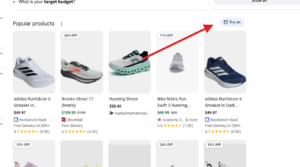
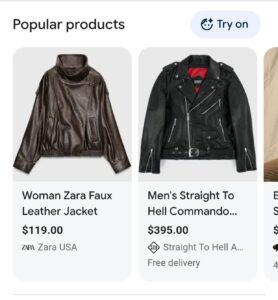
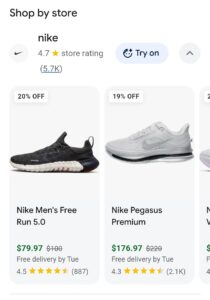
Google is testing a new placement for its “Try on” button within SERP carousels. Previously, this button only appeared after a user opened the carousel. Today, while searching for an ecommerce query, I noticed Google showing the “Try on” button directly within the SERP, rather than only inside the opened carousel.

Here is a screenshot of how it looks.

Try on button Try on button

Showing the “Try on” button above the carousel, visible before even opening it, is a notable change from how this feature previously worked.

The post Google tests Try on button directly in SERP carousels appeared first on Search Engine Watch.

Source:: searchenginewatch.com
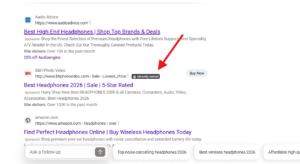
Bing tests Minority-owned label on sponsored ads

Minority-owned

Bing is testing a new “Minority-owned” label on sponsored ads. This looked new to me I’ve seen other labels on ads before, like “Small business,” but not this one, so I’m treating this as a new sighting.

Here is a screenshot of this.

Have you seen the “Minority-owned” label appear on sponsored ads in your own Bing searches?

The post Bing tests Minority-owned label on sponsored ads appeared first on Search Engine Watch.

Source:: searchenginewatch.com
Google wants users to see if they can spot a scam before it happens

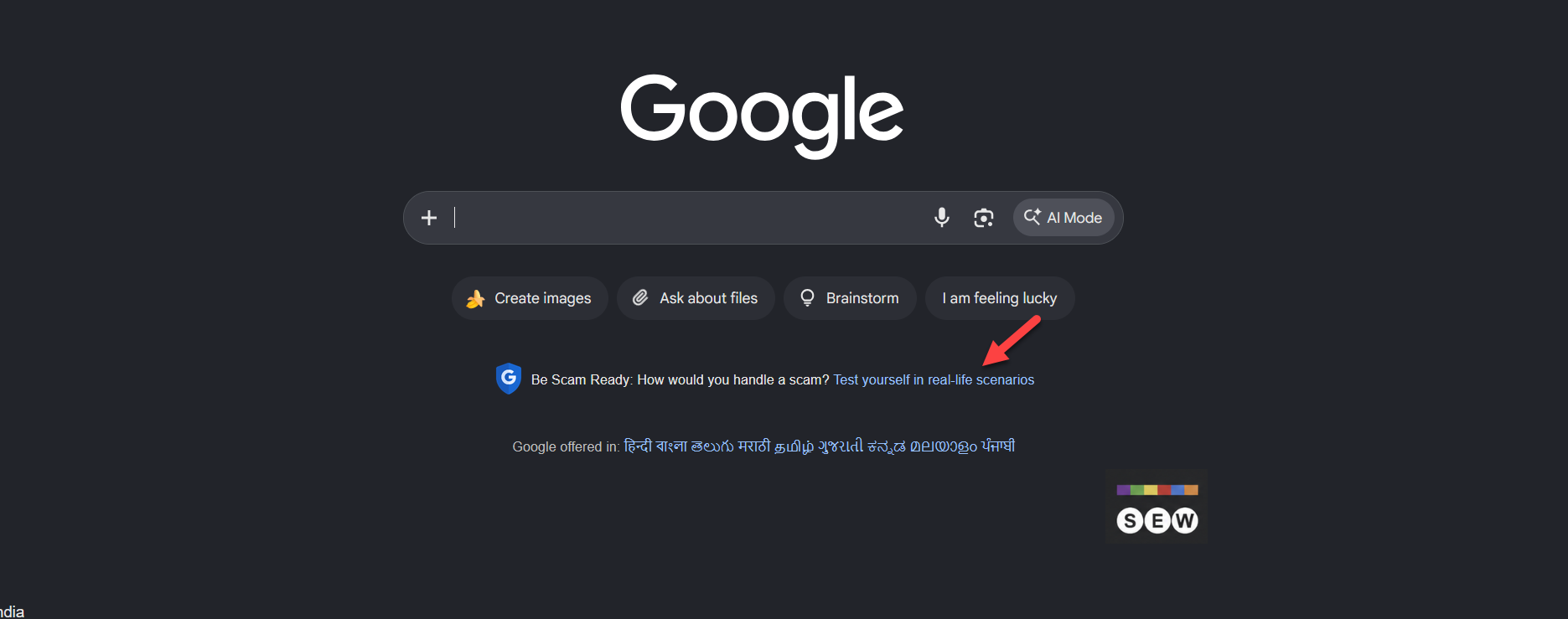
Google is raising awareness about online scams by promoting its “Be Scam Ready” game on the Google Search homepage in India.

Google is currently showing a Be Scam Ready promotion below the search box, accompanied by a blue shield icon and the message: “Be Scam Ready: How would you handle a scam?” The “Test yourself in real-life scenarios” call to action opens the game page, where users can work through interactive scam scenarios.

Image Credit: Venkat | Search Engine Watch

Be Scam Ready is not a new game. Google has already used it as part of its broader scam-awareness efforts. It places users in simulated scam situations and asks them to decide what they would do next, giving them a chance to learn about common tactics without facing the consequences of a real scam.

The game covers tactics scammers use to create urgency, exploit trust, and persuade users to share personal information or take risky actions. Working through the scenarios lets users see how those tactics may appear in different situations.

Google has promoted products, services, and other initiatives from the Search homepage before, so the placement itself is not unusual. What stands out is the focus: a safety experience intended to help users recognize scam tactics and spend a few minutes learning what warning signs to watch for.

The post Google wants users to see if they can spot a scam before it happens appeared first on Search Engine Watch.

Source:: searchenginewatch.com
Google removes useful EU search features, then asks Europeans to blame Brussels

Google’s search chief is defending the removal of useful features from European Search, saying enforcement of the EU’s Digital Markets Act has left users with a worse product. The redesign gives comparison sites prominent results with photos, prices and ratings, while individual hotels and airlines get a separate placement that depends on the comparison-site unit appearing.

In a post accompanying his interview with Pietro Valetto, Nick Fox listed the loss of current product-price checks, direct links to Google Maps for directions and hotel filters for travel dates. He argued that the accumulated changes leave Europeans with a substantially worse Search experience than users elsewhere.

Comparison sites keep the richer listings

Google’s aggregator documentation describes a result unit for online travel agencies, comparison shopping services, metasearch engines and directories. The highest-ranked provider is expanded by default. For a hotel query, its listings can include pictures, prices and star ratings.

Clicks within that unit go directly to the aggregator’s website. Users can switch to another participating provider, but only one aggregator unit appears at a time.

For flight and transport searches, aggregators supply results through real-time APIs. Google also instructs participants to keep pricing and availability current. Prices therefore remain part of the documented European search experience, even as Google complains about features it has withdrawn.

Individual hotels and airlines have a supplier unit alongside it. Google says that placement appears only when the aggregator unit appears. Direct suppliers can qualify through information Google crawls from their websites; feeds can enhance their results.

Hotels still have to compete for the booking click

The design gives comparison platforms a chance to present a shortlist before the user leaves Google. For a hotel seeking direct bookings, a supplier link competes with that ready-made selection, and the dedicated supplier placement depends on the intermediary unit being shown.

That is a concrete difference in how businesses reach customers. It also explains why removing features from Google’s own travel experience need not remove prices or booking options from the page: participating intermediaries can supply them instead.

Fox’s criticism reflects Google’s position in a wider DMA dispute, which also includes sharing search data with competing engines. For travel businesses, the immediate question is how bookings divide between direct websites and intermediaries under the new layout. The documentation establishes the different placements; it supplies no booking or traffic results.

The post Google removes useful EU search features, then asks Europeans to blame Brussels appeared first on Search Engine Watch.

Source:: searchenginewatch.com