Kategorie-Archiv: SEO

Claude Sonnet 5.5 promises lower AI bills without a price cut

Anthropic has released Claude Sonnet 5.5, saying that the model can complete work faster while using fewer tokens than its predecessor. In its own testing, the company says that can reduce the cost of a task by up to 30%.

The reduction is not in terms of cost per token as the prices for tokens remain unchanged: $2 per million input tokens, $10 per million output tokens, $0.20 per million cache-read tokens and $2.50 per million cache-write tokens.

Improvements on Sonnet 5.5

Anthropic says token efficiency is one of Sonnet’s 5.5 advantages when it comes to completing the same work compared to Sonnet 5. In coding workflows, the company says early testers also saw fewer steps and tool calls.

On Anthropic’s reported benchmarks, Sonnet 5.5 scored 70.6% on Terminal-Bench 4.0, compared with 10.3% for Sonnet 5. Anthropic describes Terminal-Bench as an evaluation of agentic coding performance

It demonstrates better judgment across long-horizon work, catches data errors by re-checking source materials, and avoids over-relying on web search tools compared to Sonnet 5.

There are strong improvements in image understanding and visual reasoning. One example Anthropic lists is playing Pokémon Red operating solely from screenshots.

It is also the first Sonnet model integrated with Anthropic’s elevated cybersecurity safeguards and automated fallbacks previously reserved for flagship Opus models.

I tested Sonnet 5.5 against Sonnet 5

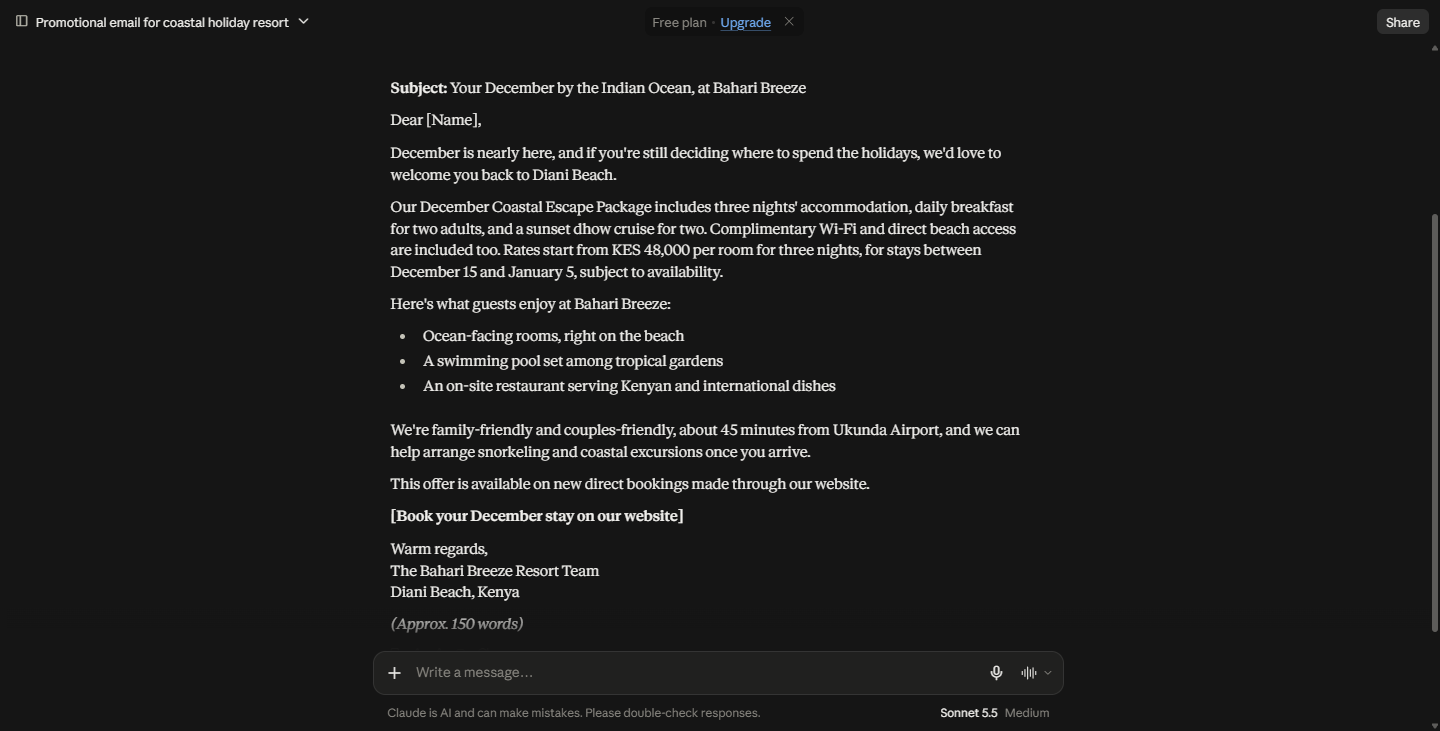
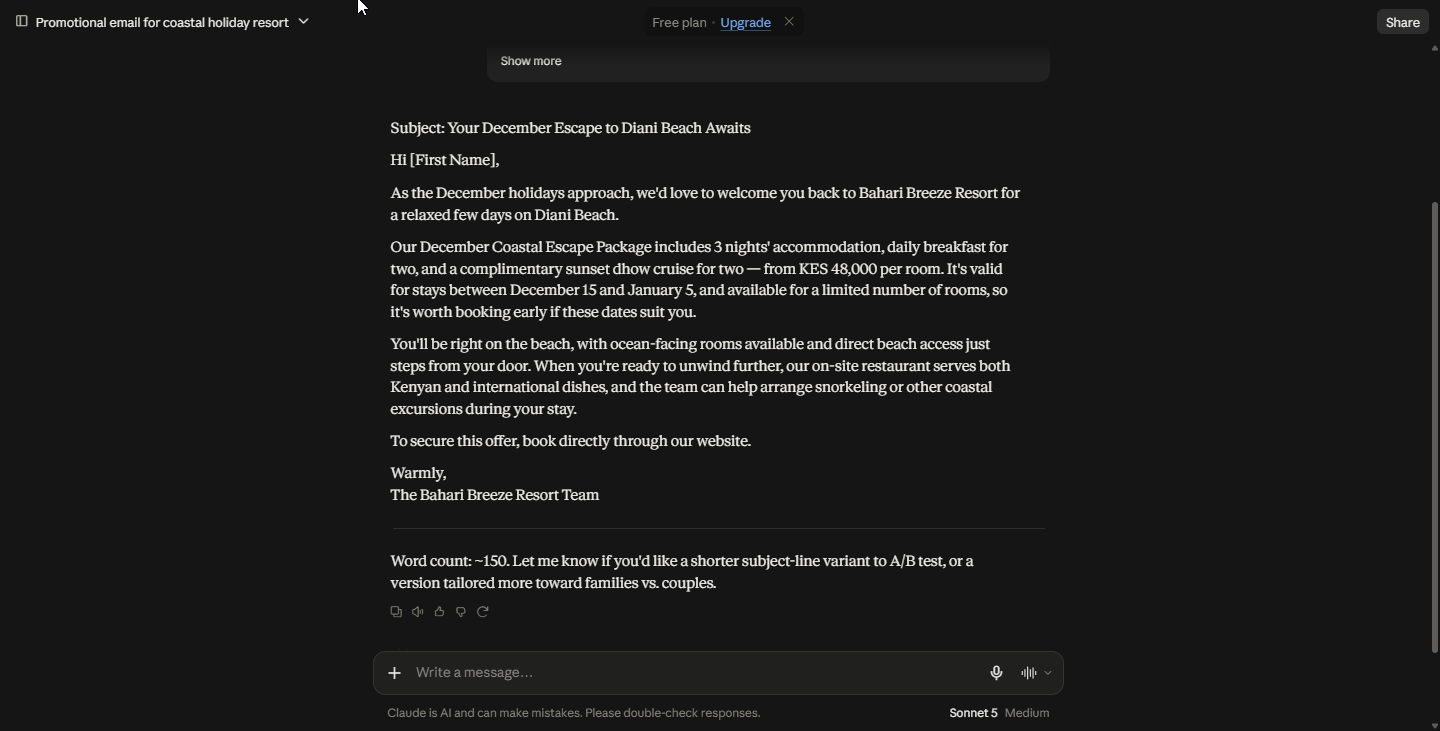
To see whether Anthropic’s speed and efficiency claims were visible in a simple marketing workflow, I gave Sonnet 5 and Sonnet 5.5 the same 150-word promotional-email brief for a fictional coastal hotel.

Both completed the task in two seconds, and neither produced a materially different result: both incorporated the core information supplied in the brief. Claude’s free interface did not expose token usage, so the test could not independently verify Anthropic’s claim that Sonnet 5.5 uses fewer tokens or costs less per task. Neither model reached the free-tier usage limit during the test.
Anthropic provides its own example of the model’s knowledge-work performance. The company says it gave Sonnet 5.5 a public company’s quarterly earnings materials and call transcripts, together with a slide template, and asked it to create a 10-slide operating review. From the response, two experts judged the first draft ready to send as is.

On external-company testing, Anthropic cites that Slack says it performed better than Sonnet 5 on almost all of its offline Slackbot evaluations while using about 14% fewer output tokens. Zendesk says its support tickets were processed 20% faster, while Box reports that Sonnet 5.5 was 2.4 times faster and used 12% fewer total tokens in its testing. These are company-reported results, rather than independent SEW tests.

Key takeaway

Because our consumer-interface test couldn’t verify token usage, the real question isn’t just whether Sonnet 5.5 is faster. It is whether it uses fewer tokens while producing an output that still meets the same quality bar for the task you actually run.

For marketers considering the upgrade, the useful measurement is therefore not simply the model’s listed token price. Compare the cost and token consumption of the actual tasks you run, alongside output quality and completion time, if your interface or API exposes those measurements.

The post Claude Sonnet 5.5 promises lower AI bills without a price cut appeared first on Search Engine Watch.

Source:: searchenginewatch.com
Bing tests Recommended products heading in organic results

recommended products-1

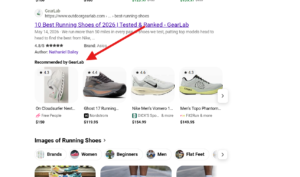
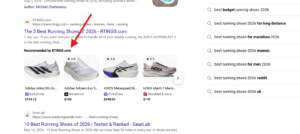
Bing is testing a new “Recommended products” heading within organic results. Previously, Bing just showed a product grid with no heading at all, but now we’re seeing this label appear above product results within the organic section.

Here is a screenshot of this.

recommended products-1

I think this is a good addition. If a user searches for something on Bing and sees a product labeled “Recommended,” they may be more inclined to click on it, which could help boost CTR for that particular product.

The post Bing tests Recommended products heading in organic results appeared first on Search Engine Watch.

Source:: searchenginewatch.com
Google Merchant Center adds new mileage_allowance sub-attribute for German vehicle listings

mileage_allowance

Google Merchant Center has added a new optional mileage_allowance sub-attribute to the installment attribute, “for vehicle listings in Germany. This allows merchants to specify the maximum mileage included in a financing or leasing contract in their product feed.

We found this via Feedonomics.

Here is how it will look.

With this new sub-attribute, merchants can specify the maximum annual distance a vehicle can be driven under a financing or leasing contract without incurring additiona per-kilometer or per-mile charges.

Points to remember

1. Must match the landing page

The mileage allowance submitted in Merchant Center must match what’s listed on the vehicle’s product landing page.

2. Select the value based on the monthly rate

If multiple mileage options are available, such as 10,000 km, 15,000 km, or 20,000 km, merchants should submit the mileage option that corresponds to the specific installment amount being submitted.

The mileage allowance should be submitted with km or miles.

This is a useful addition for automotive advertisers listing lease or financing deals, giving them a way to communicate mileage terms clearly and accurately alongside pricing details in their feed.

The post Google Merchant Center adds new mileage_allowance sub-attribute for German vehicle listings appeared first on Search Engine Watch.

Source:: searchenginewatch.com

Google AI Mode now showing more blog carousels

blog carousels

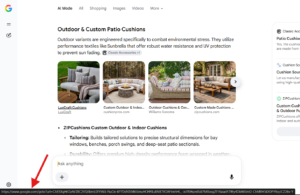
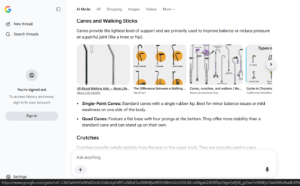
Google AI Mode is now showing more article carousels than in the tests we covered earlier. Recently, we saw AI Mode sending users directly to article websites, and then we spotted AI Mode showing product carousels and blog carousels together. I spotted AI Mode showing even more blog carousels.

When a user clicks on an article in the carousel, the article’s link appears below the carousel, and the user is then redirected to the blog.

Here is a screenshot of this.

blog carousels

This is a good sign for websites that publish blog content regularly. They can now earn visibility in these carousels within AI Mode instead of depending only on the text links in the answer.

The post Google AI Mode now showing more blog carousels appeared first on Search Engine Watch.

Source:: searchenginewatch.com
Google tests AI price-check buttons in Local Results Pack

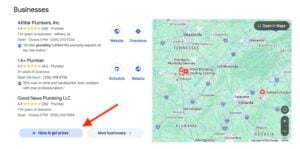
Have AI get prices

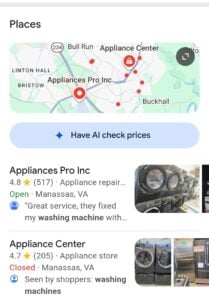
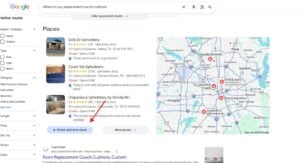
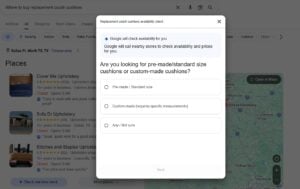
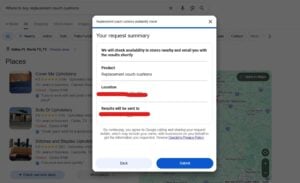
Google is testing new AI-powered buttons within the Local Results Pack. On desktop, the button reads “Have AI get prices,” while on mobile, it reads “Have AI check prices.”

The desktop version was spotted by Nathan Gotch, who posted about it on LinkedIn. The mobile version was spotted by me.

Here are both screenshots.

 AI price-check buttons in Local Results Pack

I also remember posting a similar version back on May 27, which you can see in my X post from that time.

I’m assuming both buttons work the same way, though I couldn’t fully test the mobile button myself since I was in Incognito mode. Based on the screenshot I shared back in May, it seems likely both versions function the same.

The post Google tests AI price-check buttons in Local Results Pack appeared first on Search Engine Watch.

Source:: searchenginewatch.com