Kategorie-Archiv: SEO

Google wants travelers to book hotels without leaving Search

Hotels should treat Google’s proposed AI booking service as a distribution channel to measure on its own merits. Calling the reservations “direct” tells them too little about the cost of acquiring a guest or their chances of bringing that guest back.

Google’s Universal Commerce Protocol, or UCP, is being extended to let travelers book rooms within experiences such as AI Mode in Search. Google says participating businesses will retain their transactions and customer data. Its lodging page still invites businesses to a waitlist and says detailed onboarding and specifications are coming.

A booking inside Google can still belong to the hotel

Google’s proposed arrangement has real attractions. In its lodging FAQ, the company says the participating business remains the merchant of record and its own terms govern the reservation. Google also describes checking prices and availability against the business’s system before enabling the final booking button.

The official Hilton mockup makes the division visible: the hotel’s name appears at the top, the payment area says “Pay Hilton,” and the small print assigns payment processing and customer support to Hilton. Google labels the image a concept. It illustrates the intended arrangement, not a booking we completed.

A guest who has chosen a room has little reason to welcome another form or a slow mobile checkout. If Google can complete that reservation with fewer failures, the hotel may gain a sale it would otherwise have lost. Protecting a website visit at the expense of a profitable reservation would be a poor marketing objective.

The more difficult question concerns the next trip. A hotel can receive a guest’s details after a sale without becoming the place that guest returns to when choosing accommodation. The proposed booking flow gives Google another opportunity to be useful at precisely that moment.

Hotels have heard this pitch before

The lodging expansion was announced on May 19, 2026. The underlying commercial proposition is older.

In an October 2017 explanation of its Book on Google integration, hotel technology provider Mirai described reservations completed inside Google using hotel or online travel agency inventory. It also raised the question of whether a sale made in that interface should count as direct. The company was selling an integration, so its account is useful evidence of the arrangement, not an independent assessment of its success.

That history matters because removing the click to a hotel website is not, by itself, an AI breakthrough. The stronger case for the current proposal is that a conversational assistant could help someone choose a suitable room and then complete the reservation. Whether travelers find that useful, and whether hotels earn more from it, requires evidence from actual use.

There is no need to assume every Google shopping experience will keep every customer inside Google, either. SEW has separately documented limited AI Mode behavior that sends shoppers straight to retailer websites. Hotel booking integrations deserve to be assessed specifically, rather than folded into a prediction that all outbound clicks will disappear.

An open protocol does not guarantee an independent sales channel

UCP’s open design is a substantive point in its favor. Its technical documentation describes businesses exposing capabilities that compatible platforms can discover and use. The aim is to reduce the need to build a separate connection for each platform. UCP itself should not be confused with a Google-only checkout product.

For a hotel or its booking technology provider, that could make an integration useful beyond one search service. It weakens the argument that adopting UCP necessarily means committing the business exclusively to Google.

Commercial dependence can nevertheless grow without exclusive technology. If guests repeatedly start and complete their room searches in Google, the hotel depends on appearing in that experience even when the connection underneath is portable. Another assistant’s ability to access the same inventory would help only if enough travelers chose to use it.

Google also explicitly says UCP integration will not affect how it ranks properties or rates. Integrated offers get a direct booking option. Hotel marketers should therefore question any claim that implementing UCP buys a ranking advantage. The promised benefit concerns the booking process.

Judge the channel by the guests it brings back

I would want a hotel’s UCP bookings reported separately from reservations completed on its own website. Google’s FAQ says its transaction events can distinguish the channels. Combining them under a reassuring “direct” total would conceal whether the hotel was building its own demand or relying more heavily on Google.

The comparison should follow profit after acquisition and integration costs, including cancellations. It should also track what happens when those guests book again. A channel that introduces new guests who later return through the hotel’s own website can justify a very different investment from one that repeatedly acquires customers the hotel already knew.

Neither outcome can be read from a checkout mockup. A rise in Google-completed reservations could reflect additional business, displaced website bookings or a mixture of both. Counting the reservations alone would not separate them.

The post Google wants travelers to book hotels without leaving Search appeared first on Search Engine Watch.

Source:: searchenginewatch.com
Google Trends for keyword research: What our 4-country test revealed

Google Trends shows you how interest in a search term moves over time, across different regions and against related queries. It reports relative interest on a 0 to 100 scale so it’ll be difficult to tell the search volume, intent or how many people are actually looking. A term can look strong and still be small.

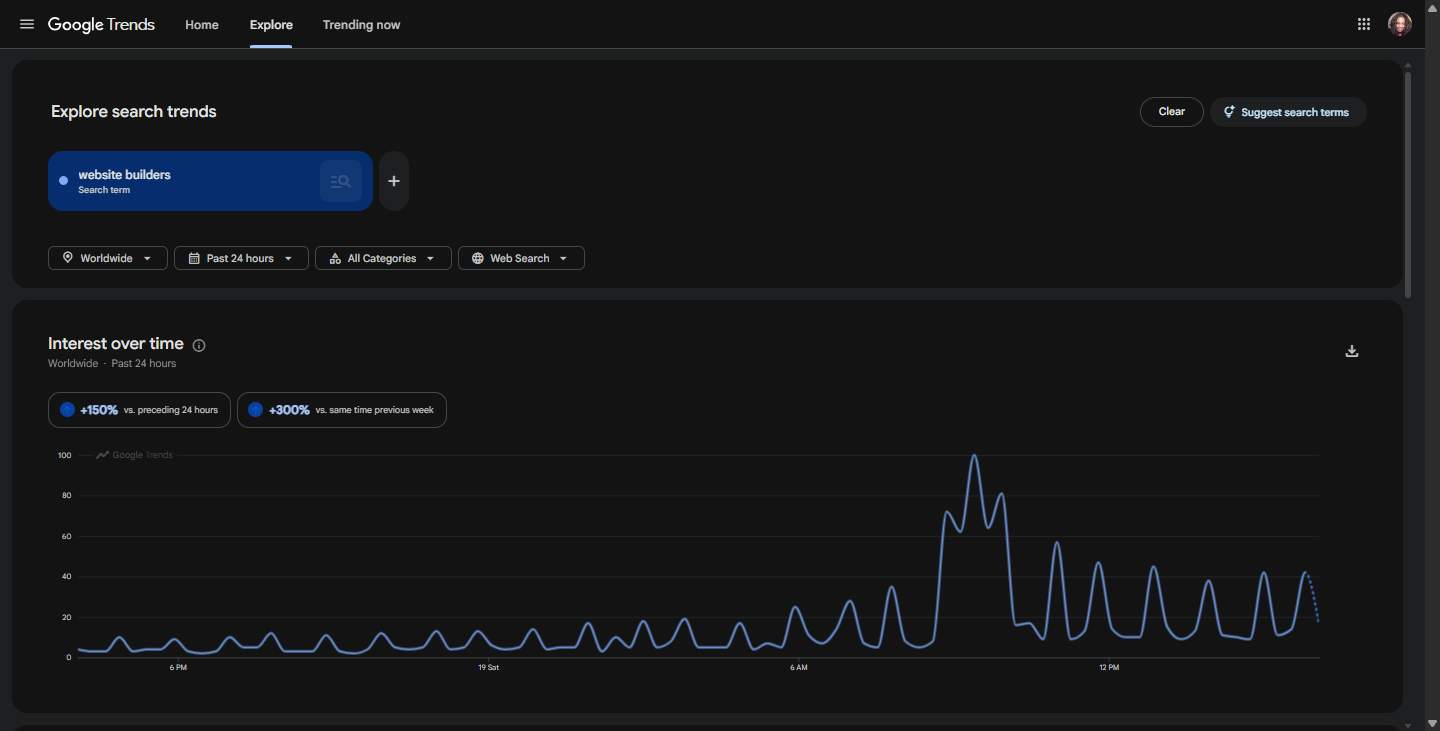
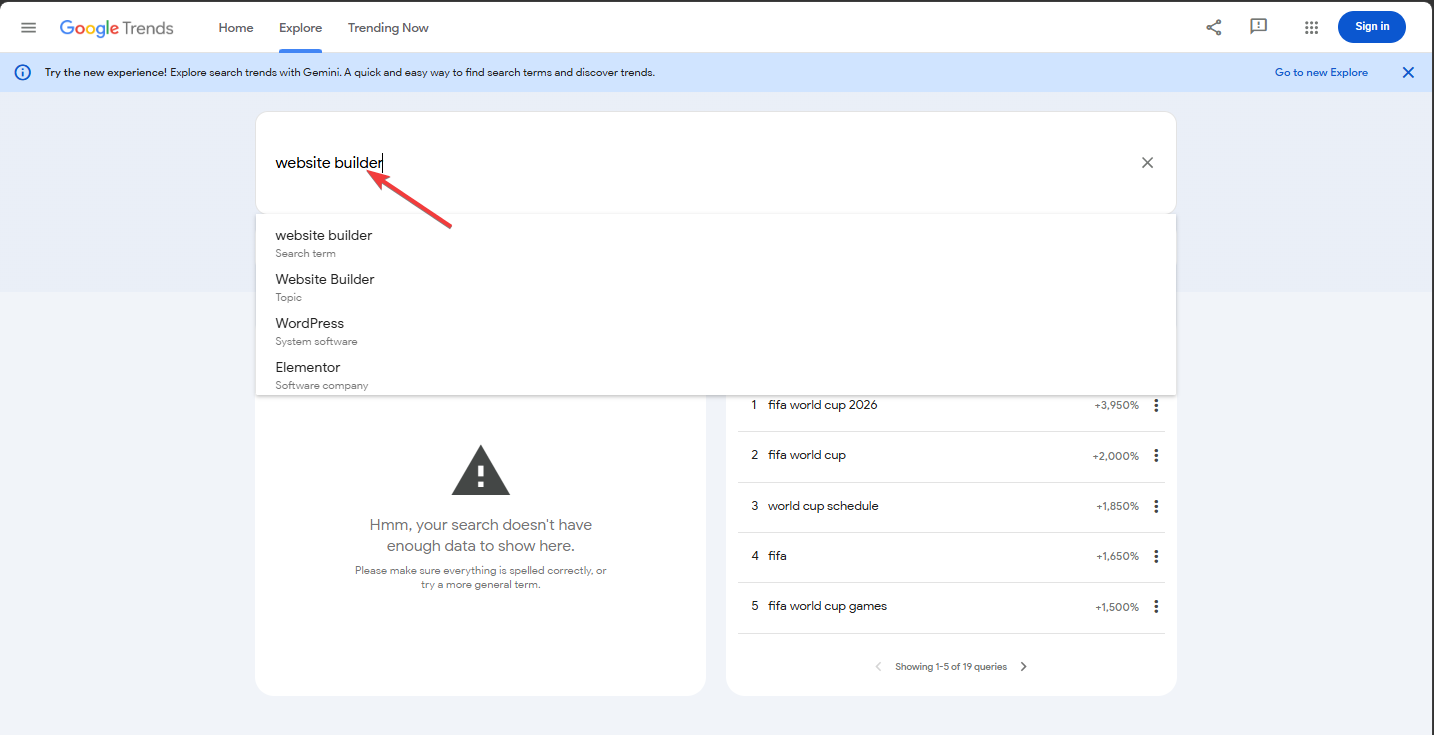
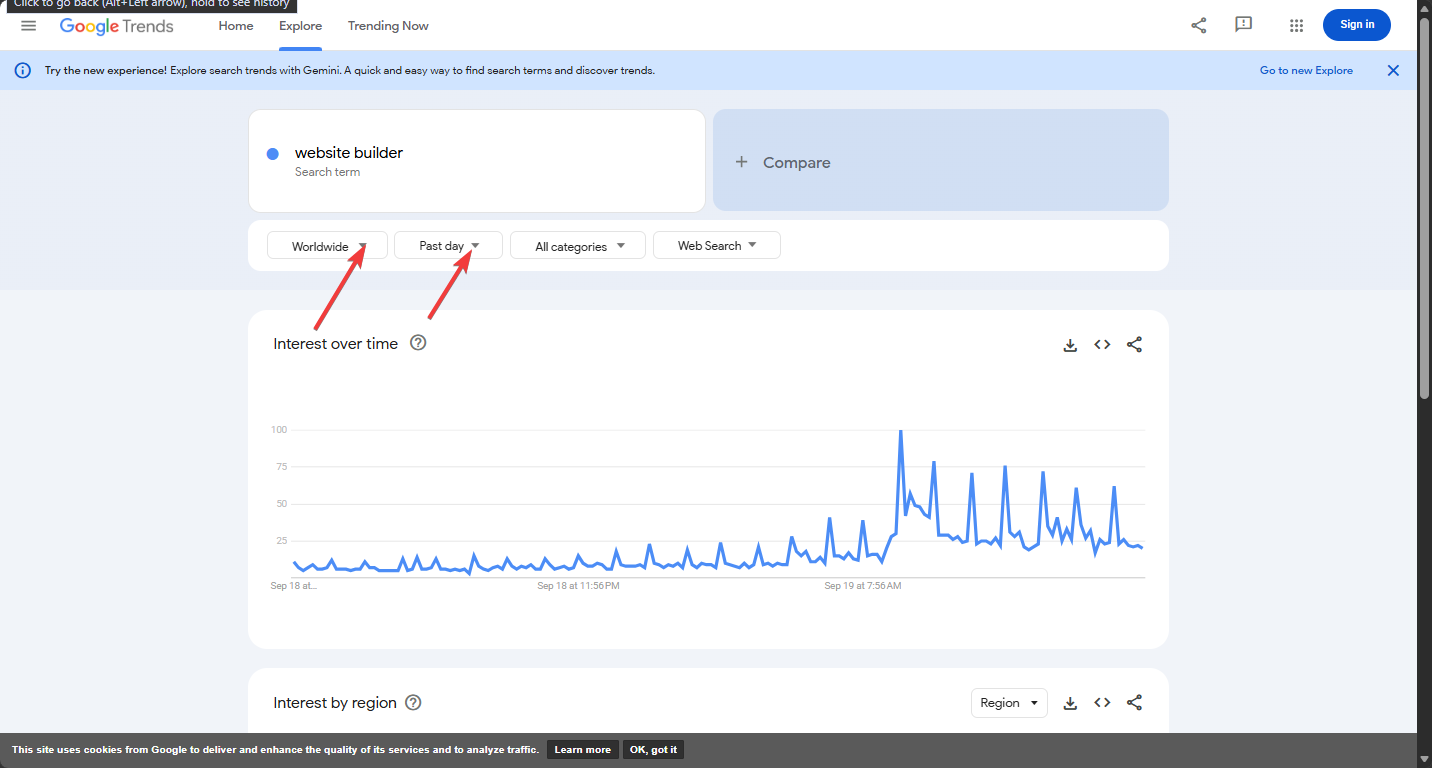
I tested it on one subject: website builders. On September 18, 2026, the term wasn’t trending, so I built the test from scratch on the Explore page. I started with a worldwide view of the past 24 hours, all categories and web search, then changed one setting at a time: geography then time period. I also pulled the related queries to find other terms worth comparing.

I started with the worldwide view, which looked solid, and used it as my baseline. The United States and United Kingdom held up. In Canada and Australia, which related terms showed up depended on the time window. Here’s how to run the same test, what changed my read and the content ideas I built from it.

How to use Google Trends for keyword research

  1. Open Google Trends and go to Explore.
  2. Enter your main keyword. If the dropdown offers both a search term and a topic, note both, since you’ll compare them later.
  3. Set a starting point: one country, one date range, all categories and web search.
  4. Add up to four related terms to compare, for five in total.
  5. Read the chart as relative interest on a 0 to 100 scale. It isn’t search volume, so a term can look strong and still be small.
  6. Change one setting at a time (region, then time period, then search term versus topic) and note whether your read of the keyword changes.
  7. Continue adjusting the filters to get a multi-angle view of search interest across different regions and timeframes.

Establishing a baseline

I started with the default categories: Region set to worldwide, timeframe as past 24 hours, all categories and search as web search.

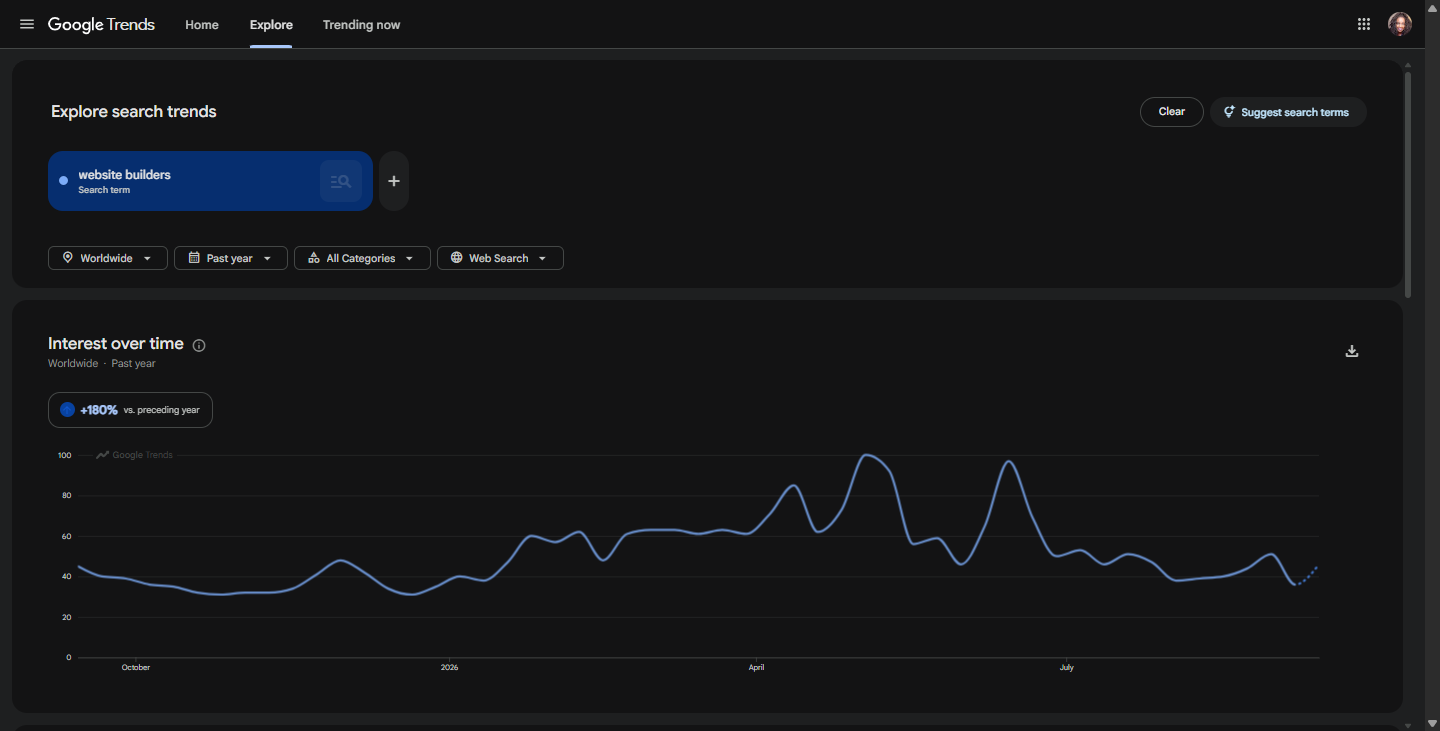
From this view, the term maintains steady, recurring search interest throughout the day. For the past year view, the search interest grew significantly compared to the previous year and a sharp peak between April and May 2026.

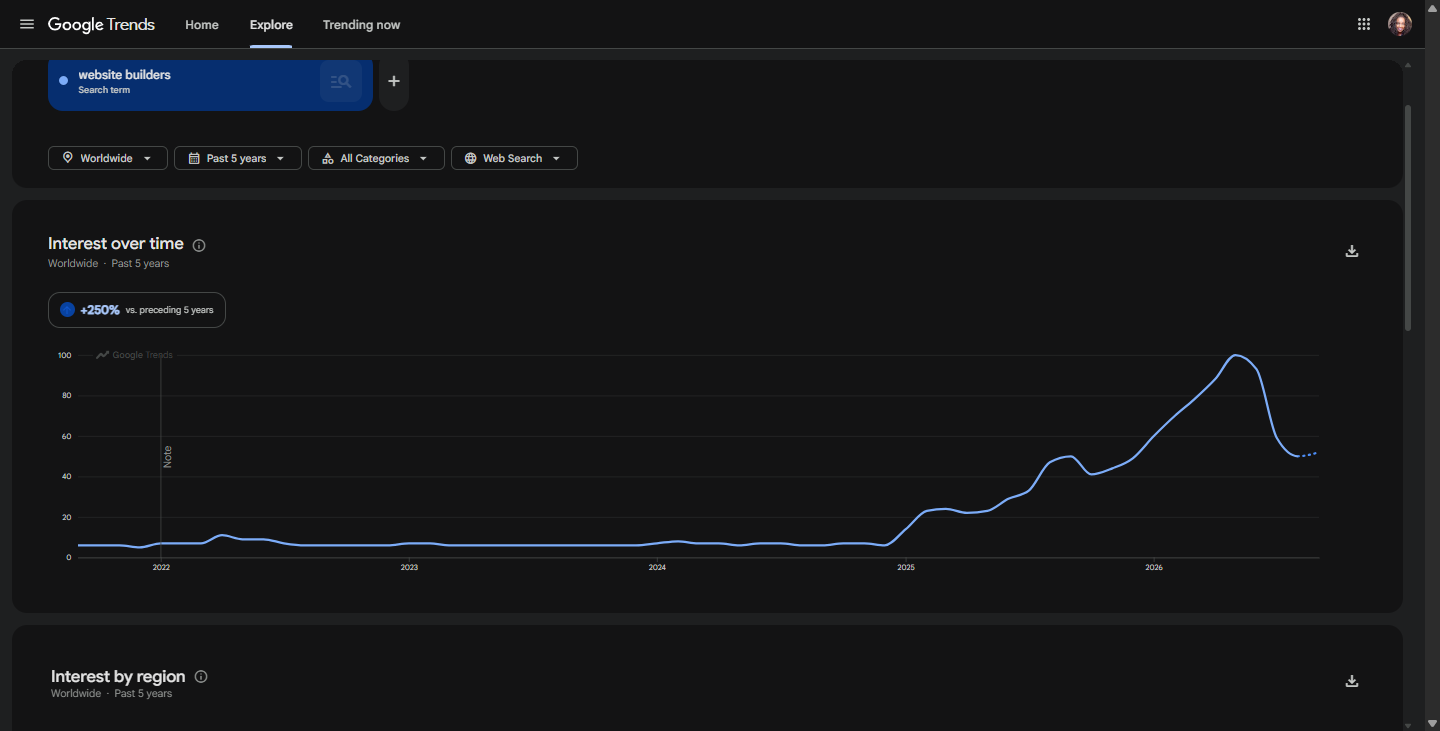
For the five-year view, overall search interest increased by 250% compared to the preceding 5-year period.

This establishes a baseline increase in relative search interest. And while we established a baseline, it’s important to note that trends‘ percentage changes are relative. While a term can post triple-digit growth, its interest score could be lower which means it’s growing off a small base, not going mainstream.

Trend across regions

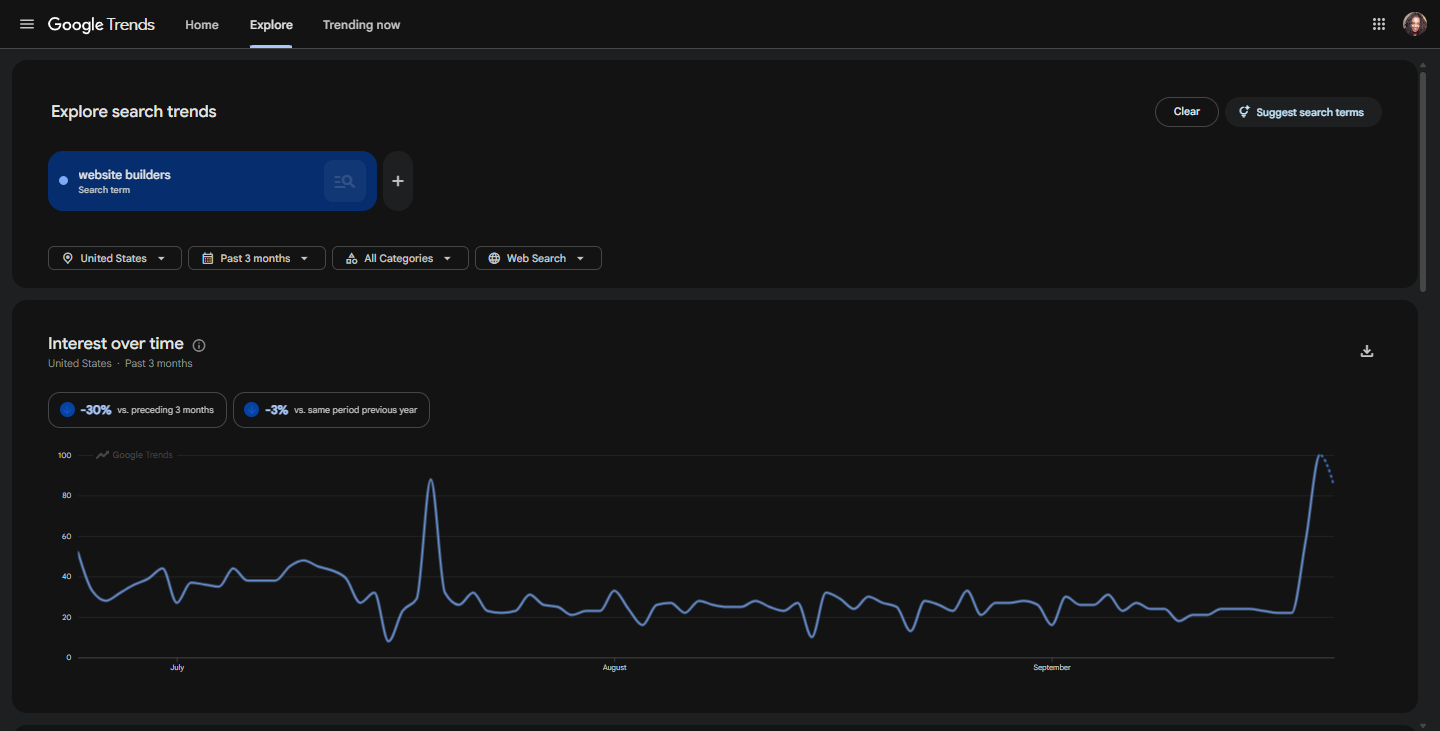
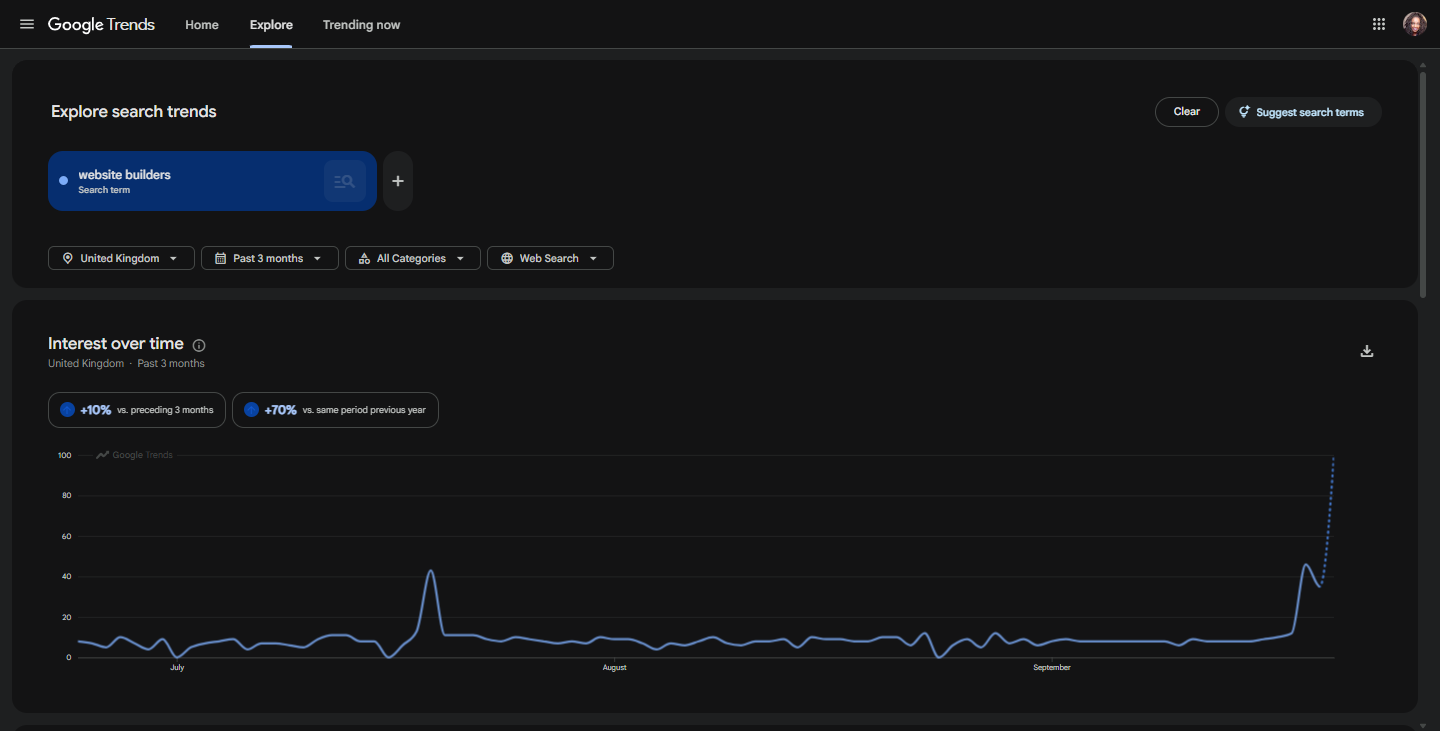
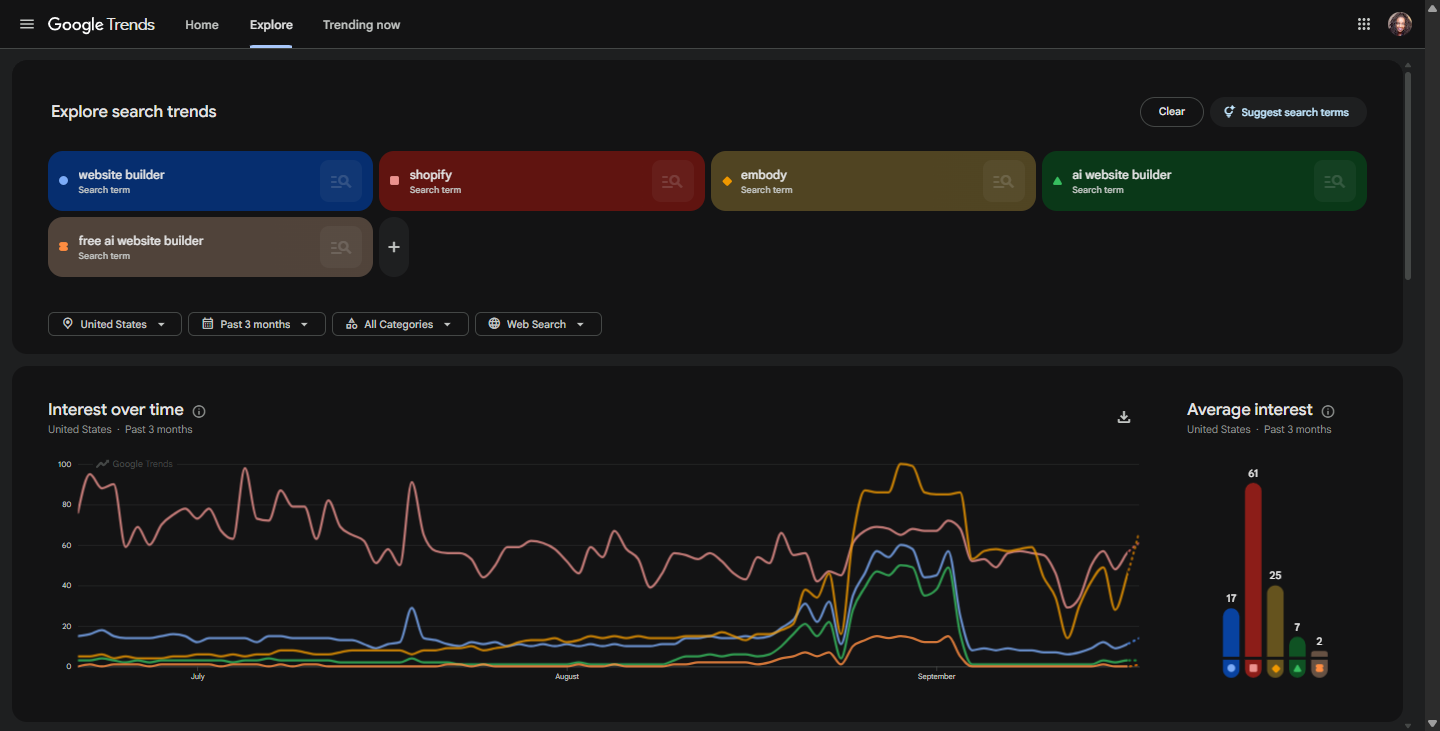
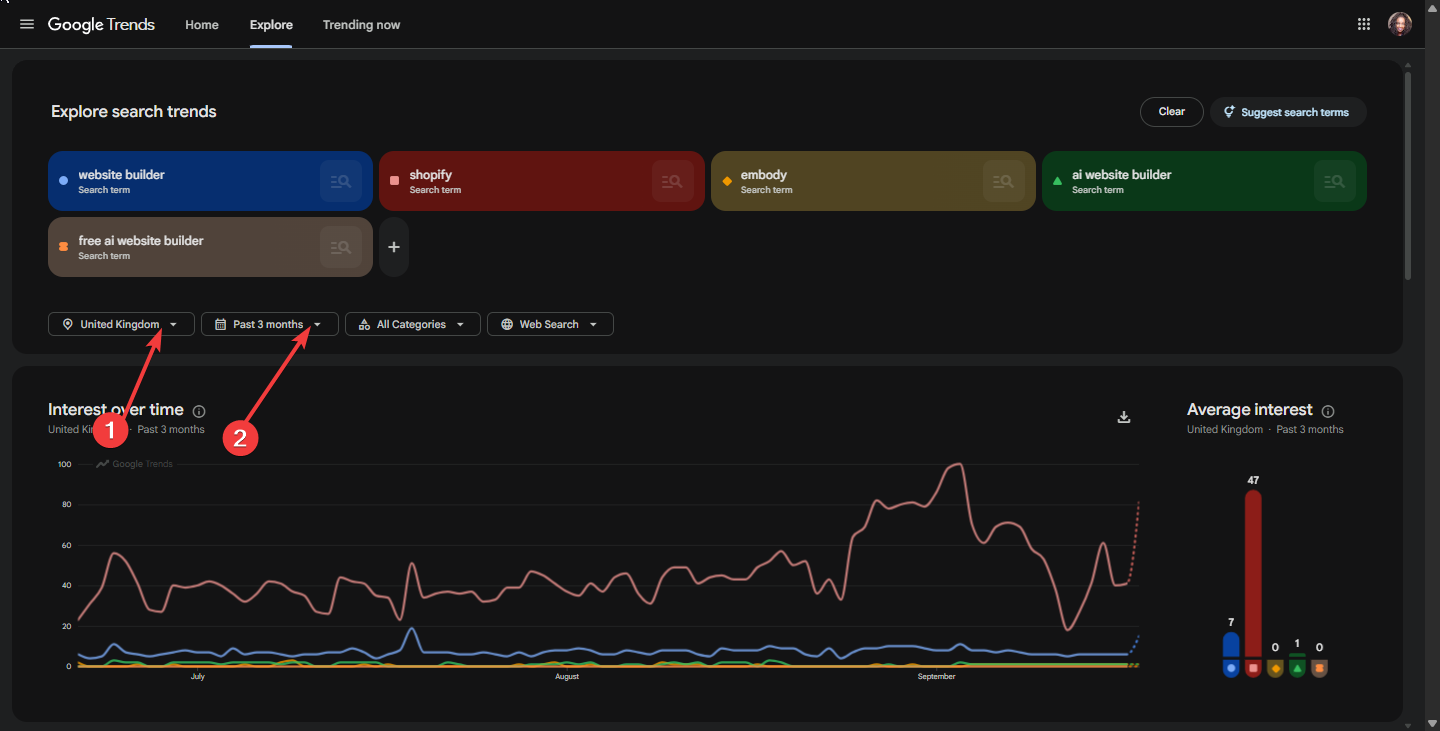
For this tests, I chose four regions: The United States, The United Kingdom, Australia and Canada.In the United States, search interest remained mostly stable even though the interest had dropped 3% in the same period previous year for the three-month view.

In the United Kingdom under the same setting, the search interest had ballooned up to 70% compared to the same period in the previous year and up 10% in the lst three months.

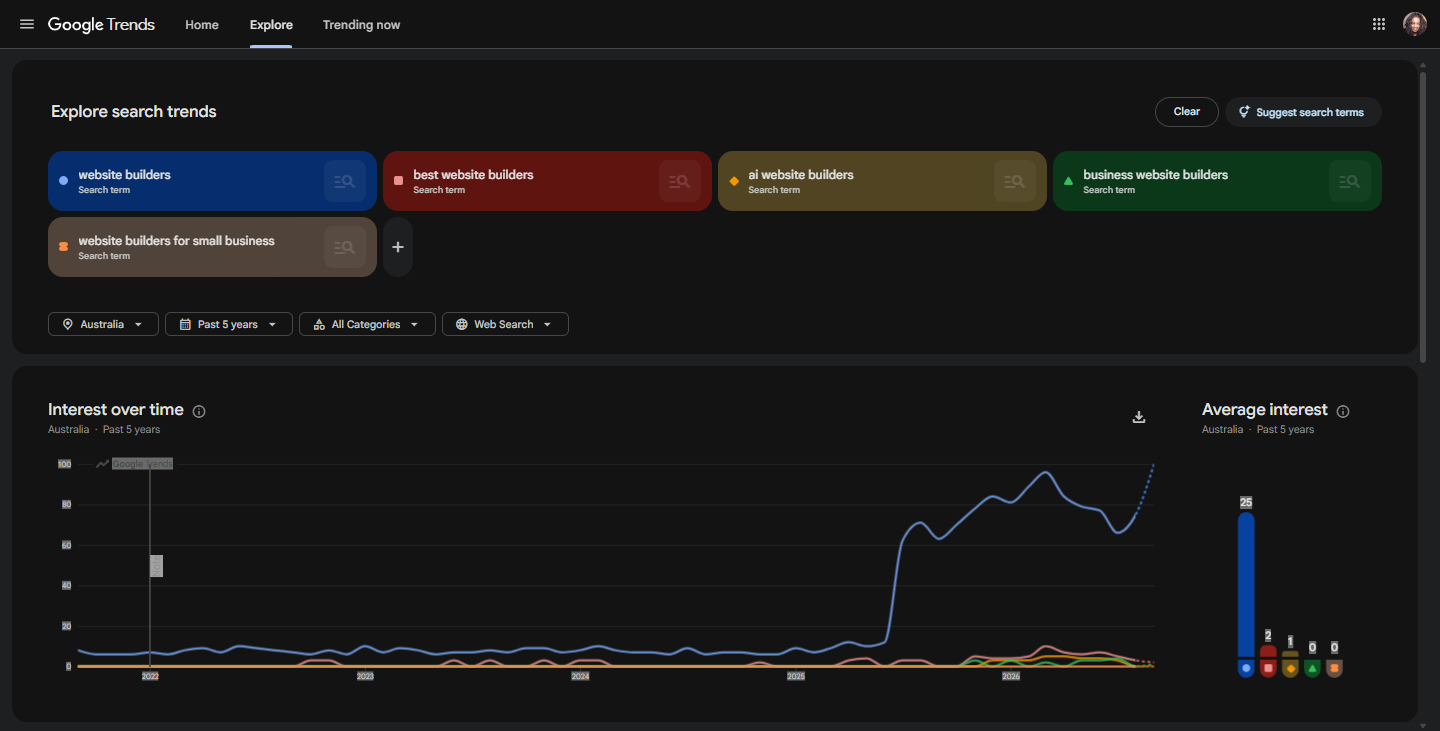
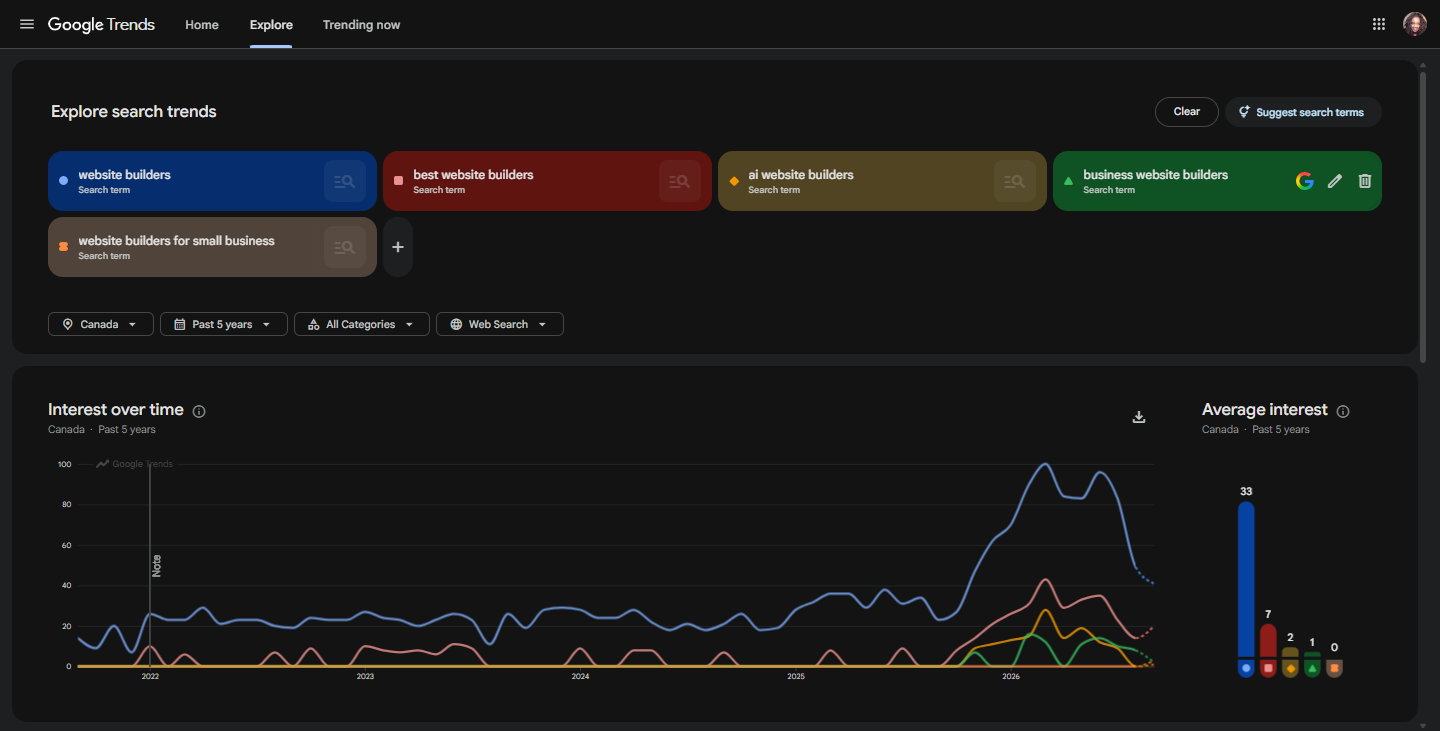
Australia had a 90% jump compared to the same time last year and Canada had a 200+% increase compared to the same time in the past year but a drop of 70% in the last three months.

Trend over time

Having established relative search interest in the four select regions, it was time to adjust the time frame and see whether the search interest held up. This is how it performed over time in the last three months, past year and past five years across the four regions compared to a previous equivalent period.

Region Past 90 days Past Year Past Five Years
The United States Down 3% Up 120% Up 200%
The United Kingdom Up 70% Up 250% Up 250%
Australia Up 90% Up 350% Up 250%
Canada Up 200% Up 250% Up 60%

While these percentages show a mostly upward trajectory within a region, they don’t reveal which market is bigger. A dramatic surge on a Google Trends chart simply means interest is growing faster relative to that specific country’s total search. Even when a spike in the number looks strong, it doesn’t necessarily make the region a strong market.

Related queries: Does the search interest level hold up?

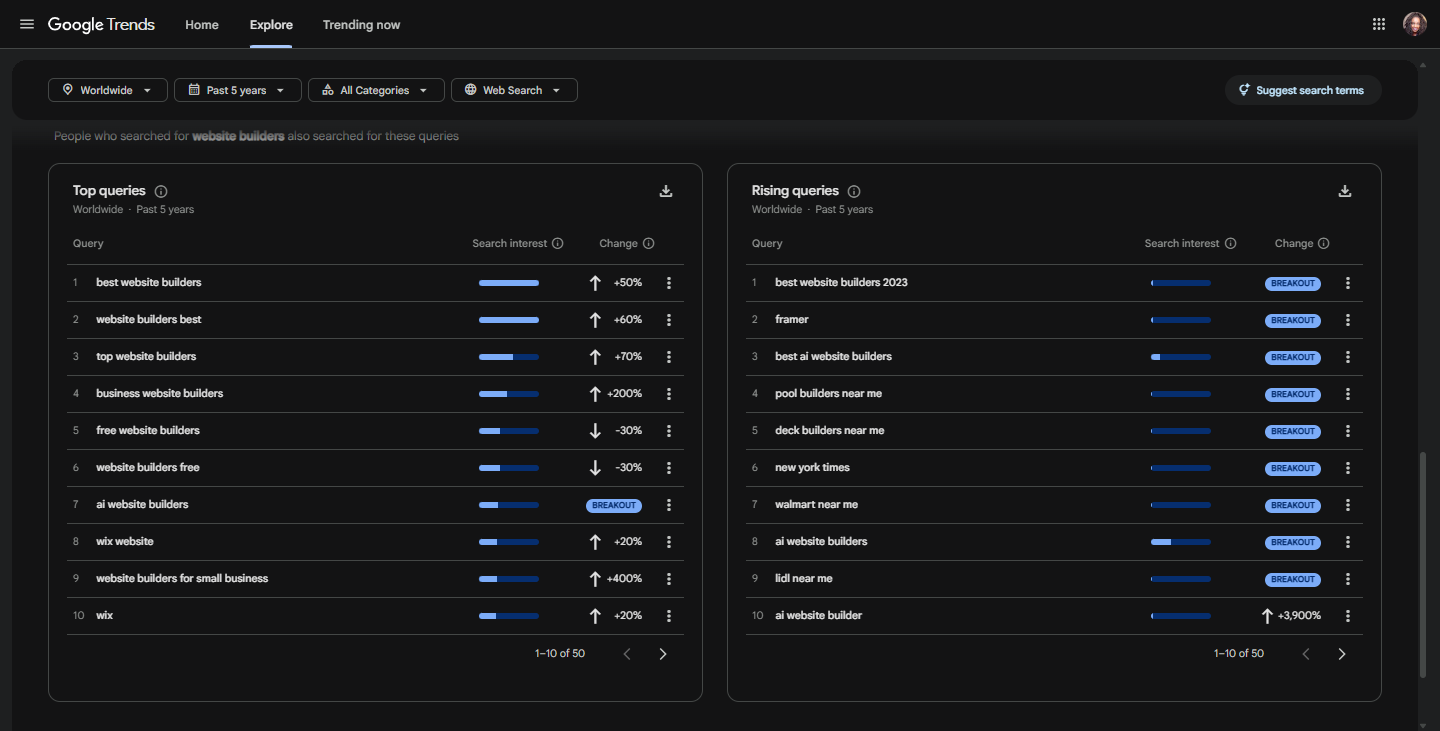
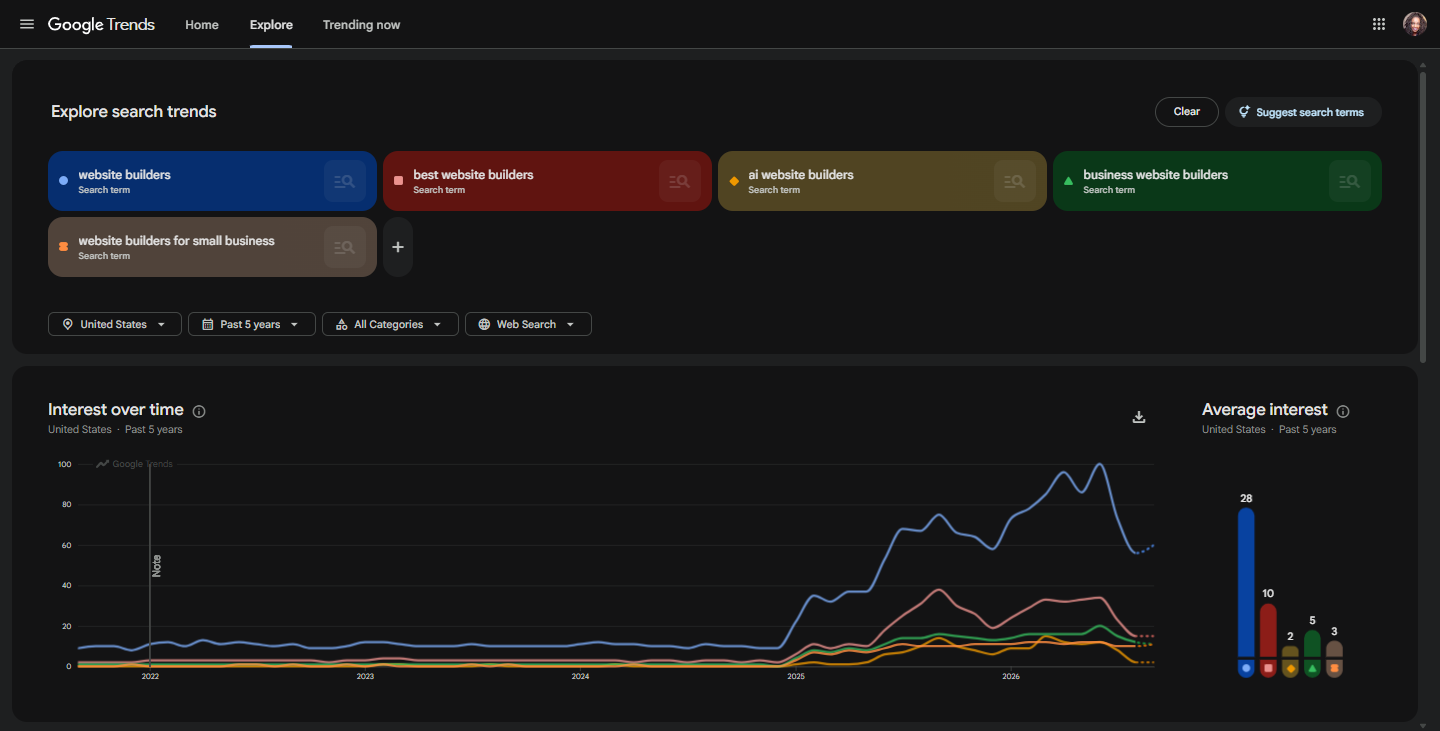
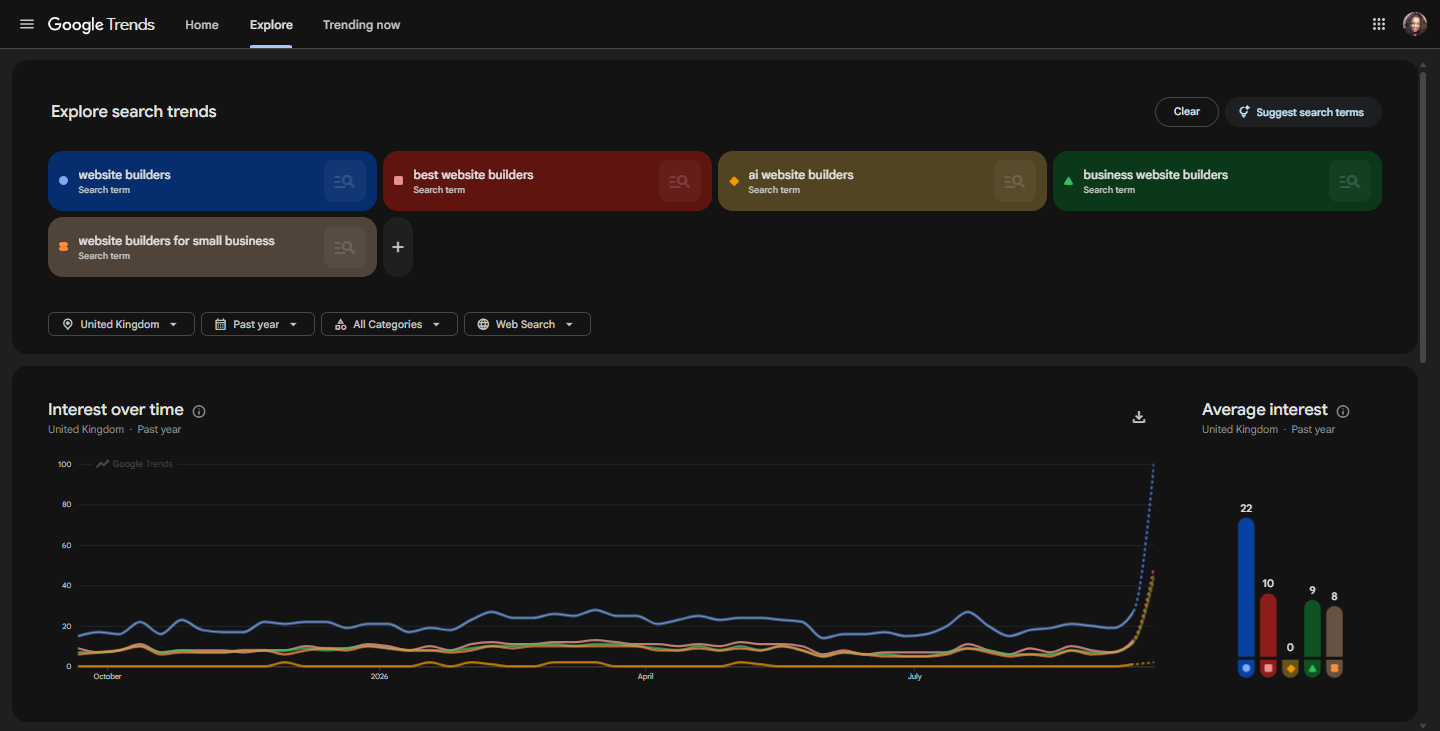
With the baseline set, I turned to related queries to find more specific terms to test. For the related terms, I scrolled down to the top queries list and picked four terms that had an interest score of above 50%. These were: best website builders, ai website builders, business website builders, and website builders for small business. Google Trends also flagged AI website builders as a breakout query, meaning it was rising particularly quickly rather than simply being a high-interest term. Trends also flags high-interest rising queries, which need their own scrutiny. For how to vet a breakout query before you act on it, see our companion piece on Google Trends for trending products.

Regionally, performance varied significantly. The search terms best website builders and business website builders saw relatively higher search interest in the United States and United Kingdom compared to Australia and Canada across the three months, past year and past five years.

Similarly, website builders for small business only generated enough search interest to register in the United States and United Kingdom across all timeframes.

In Australia, interest across all related search terms remained minimal, with only website builders capturing enough volume to register on the five-year chart.

Canada is where the setting changed my read. It showed broader activity, with best website builders and ai website builders surfacing over the past year, while business website builders gained traction on the five-year view.

The read that changed the picture

The worldwide chart made website builders look like a fairly straightforward keyword to investigate. Search interest was consistent, the longer-term view showed growth, and the US and UK continued to show activity when I tested related queries.

A global view can tell you that people are searching for a subject, but it can hide how uneven that interest is across individual markets. A term can look consistent worldwide while the related searches that reveal what people actually want from that subject behave very differently by country and timeframe. If I had stopped at the worldwide chart, I could have treated the related terms as broadly applicable. Testing geography and timeframe showed that some of those ideas were much more market-specific.

Further, if a related query appears on a five-year chart but not a three-month chart, the safer conclusion is that the shorter timeframe did not provide enough data for Google Trends to register it, not that nobody searched for it.

Term US UK Canada Australia
Best website builders Registered on all windows across all time frames Registered on all windows across all time frames Registered in the past year and five-year mark Registered in the five-year mark
Business website builders Registered on all windows across all time frames Registered on all windows across all time frames Registered in the past five-year mark Did not register across any time frame
Website builders for small business Registered on all windows across all time frames Registered on all windows across all time frames Did not register across any time frame Did not register across any time frame
Ai website builders Registered on all windows across all time frames Registered in the past five-year mark Registered in the past year and five-year mark Registered in the past five-year mark

It’s important to note that while the timeframes suggest there was no search interest for the related search terms, it doesn’t necessarily mean zero search interest. A term registering only on the five-year chart may just reflect longer windows aggregating more data capturing enough overall volume to reach Google Trends‘ threshold.

What to take from this exercise

A keyword can look strong until you change the lens. The worldwide view showed that the term website builders had steady and consistent search interest. Changing one setting at a time showed how much that view was hiding. The US and UK largely held up across the related terms, but in Canada and Australia, which terms registered depended on the time window.

What I learnt isn’t that one region outperforms another, it was that regional and timeframe filters showed where that interest was and where it wasn’t. Each change either confirms your read or breaks it, and you only find out by making it. Compare related terms, check more than one region and look at more than one time window before you act on a keyword. And while these findings can be useful, keep in mind that Google Trends only shows relative interest, not search volume or intent. Further a term that doesn’t register isn’t necessarily one nobody searches.

The post Google Trends for keyword research: What our 4-country test revealed appeared first on Search Engine Watch.

Source:: searchenginewatch.com
Google tests new clickable anchor text in AI Overview that redirects to AI Mode

Google is now testing clickable anchor text within AI Overview. When a user clicks on this text, they’re redirected to AI Mode with their previous query carried over. This is different from an earlier test we covered, where clickable text redirected to a new query within the regular SERP instead.

Gagan Ghotra spotted this and shared it on X.

He wrote: “in AI Overviews answers Google is now testing showing anchor links which instead of taking to a webpage takes to AI Mode.

Another day – Another Tactic! from Google to push users from usual search results to AI Mode”

Here is the video he shared.

This is yet another example of Google finding new ways to push users toward AI Mode, this time directly through anchor text embedded within AI Overview answers.

The post Google tests new clickable anchor text in AI Overview that redirects to AI Mode appeared first on Search Engine Watch.

Source:: searchenginewatch.com
Google drops free listings and carousels from the European Economic Area

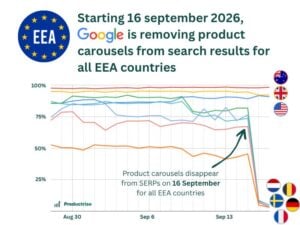
Google has dropped free listing and carousel formats from the European Economic Area (EEA). This change is part of actions taken under the European Commission’s Digital Markets Act (DMA), which compelled Google to make these changes in the region.

Adriaan Dekker posted about this on LinkedIn, crediting Gabriel Baumgarten for spotting it.

He wrote: “Heads up for anyone running Shopping in the EEA. Free listings from Google Shopping look to be disappearing in the EEA. The space is going to price comparison services (CSS) instead. This is part of Google’s DMA compliance after the €460M EU fine in July. Google has been reshaping Search results all month, new aggregator units for hotels, flights and products, and it already pulled the vacation-rental unit on September 8. The compliance deadline is September 25, so expect more movement.”

Here is the screenshot of this.

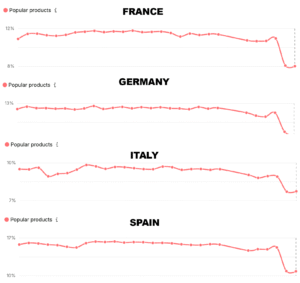
Hugo Huijer also wrote about this on LinkedIn, sharing a screenshot as well. He wrote: “Over the past two days, Google’s ‘popular products‘ carousels — the organic product blocks that appear for commercial queries have almost entirely disappeared from search in the European Economic Area. ~90–100% drops in EEA countries, among which we have sufficient data for Germany, France, Belgium, Sweden, and the Netherlands.”

drops free listings and carousels

Search Engine Roundtable also shared screenshots on this and asked Ginny Marvin: “Is this true? EEA gets no free shopping listings?” Marvin didn’t respond directly to Barry, but pointed him toward this article for more context.

products-google-search-dropping-

This is a significant shift for merchants relying on free Shopping listings within the EEA, with visibility for organic product carousels dropping nearly entirely in several major countries. With the DMA compliance deadline set for September 25, more changes to how Google displays Shopping and related results in the region are likely still to come.

The post Google drops free listings and carousels from the European Economic Area appeared first on Search Engine Watch.

Source:: searchenginewatch.com
Google tests new design for last two sponsored results

new design for last two sponsored results

Google is testing another new design for sponsored results. Now, Google is showing the last two sponsored websites in a row using a different design than the others. Sometimes Google displays four sponsored results in a row on mobile the first two with one design, and the last two with a different one.

I spotted this today, where the last two sponsored results shared a distinct design. We’ve seen this same design before in other Google tests.

This appears to be part of Google’s ongoing series of design tests for sponsored results, currently limited to just the last two sponsored listings shown.

Here is a screenshot of this.

new design for last two sponsored results

Showing a different design for these last two results could help catch users‘ attention, since a visual distinction may draw more focus compared to a uniform layout across all four listings.

The post Google tests new design for last two sponsored results appeared first on Search Engine Watch.

Source:: searchenginewatch.com