Kategorie-Archiv: SEO

Google introduces Business Agent in YouTube ads that answer back

Google is testing Business Agent inside YouTube ads, allowing viewers to ask about products without leaving YouTube for a retailer’s website. The September 16 announcement also expands Merchant Center’s AI shopping reports and adds capabilities to Google’s checkout integrations.

For advertisers, the experiment puts some of a product page’s sales work inside the advertisement. A viewer could get answers about specifications or shipping while deciding whether the product deserves further attention. Google describes the intended result as more qualified traffic; its beta application provides no performance results to substantiate that promise yet.

Demand Gen gets the first turn

Google’s beta registration form spells out restrictions that its broader announcement leaves out. Retailers need an active Demand Gen campaign linked to Merchant Center product feeds, with a minimum of $10 a day. The test covers English-language, mobile in-stream ads in the United States. Shorts are excluded.

Google says its team will enable the experience on existing eligible campaigns without additional setup. Applying does not guarantee participation; advertisers will receive confirmation if they are accepted.

There is also a campaign-selection detail worth checking before signing up. The form says all linked Demand Gen campaigns will be included unless advertisers specify individual campaigns. Agencies planning a controlled trial should make that selection deliberately.

Business Agent itself was announced in January as a branded shopping assistant in Google Search. The YouTube test extends that existing product into video advertising. Google’s documentation describes the Search version as using Gemini models, Merchant Center information and the retailer’s website to answer shoppers‘ questions.

The new AI report won’t measure these ads

Alongside the advertising test, Google is making AI performance insights generally available in Merchant Center. The report covers accounts in Australia, Canada, India, New Zealand and the United States, with data limited to English-language shopping queries.

Retailers can find it under Analytics → Products → AI performance. It compares a brand’s visibility with its Merchant Center competitor set, using AI impressions and breakdowns for discovery, evaluation and ready-to-buy searches.

The important restriction for advertisers is that it covers organic AI results, including free listings, in AI Mode and AI Overviews. Paid advertising is excluded, so this dashboard cannot establish whether a YouTube Business Agent campaign is working.

There is another detail to catch before a visibility score reaches a client presentation: Google says share of voice can show 100% when Merchant Center has no defined competitors available. A zero can also reflect insufficient impressions. Neither number should be interpreted without checking the underlying data.

Checkout expands, with analytics still to come

Google is also updating the Universal Commerce Protocol, or UCP, integration hub in Merchant Center. Merchants using the hub can enable cart transfers to their websites and enhanced checkout-flow testing. Analytics and further capabilities are still described as coming soon. The additions are rolling out gradually in the U.S., with Australia and Canada expected to follow in early 2027.

Tapestry supplied a concrete example of UCP adoption in its own September 16 announcement. The company says U.S. shoppers can now purchase Coach and Kate Spade products directly through Google Search, including AI Mode, and the Gemini app. Its implementation supports single-item checkout through Google Pay, with explicit customer approval required for each transaction.

Those checkout integrations should not be confused with the YouTube experiment. The beta form describes answering product questions and delivering traffic to merchants; it does not announce purchasing inside the ads.

Your next ad audit should include the agent’s answers

For retailers considering the test, Google’s documentation suggests a practical starting point: check the product information the assistant will use. The existing Search version draws from Merchant Center and the company’s website, making both relevant to the quality of its answers.

Google’s optional conversational attributes provide another way to supply detail. They support product questions and answers, document links, related products and variant information. Merchants can add them through a supplemental feed, their primary feed or the Merchant API. Google also says information already supplied in descriptions, product highlights or product details does not need to be duplicated.

Product demonstrations deserve attention too. SEW recently covered Merchant Center’s product-level video option; Google’s specification allows videos that show an item from different angles or demonstrate it in use. That gives retailers a concrete way to explain details that a static product image may leave unresolved.

The useful test would examine whether the assistant answers buying questions correctly and whether the campaign produces additional profitable orders. For a footwear retailer, that could mean auditing sizing guidance and comparing completed purchases and returns against a suitable control. For an electronics seller, compatibility answers would deserve particular scrutiny.

Google is offering advertisers another place to persuade a customer. Before expanding the experiment, retailers should establish whether they are paying for better sales conversations—or simply giving their product-data mistakes a more convincing voice.

The post Google introduces Business Agent in YouTube ads that answer back appeared first on Search Engine Watch.

Source:: searchenginewatch.com
OpenAI’s Sponsored Agents turn ads into chats—and could reshape paid search

OpenAI is testing Sponsored Agents, a ChatGPT advertising format that lets people click an ad and start a conversation with an AI representative of the business. The company announced the pilot on September 16, with select US advertisers participating.

For paid-search teams, the potential change is where the persuasion happens: an advertiser could answer a prospective customer’s questions before getting them onto its website.

The sales conversation starts inside ChatGPT

OpenAI illustrates the format with a dining-table shopper asking about size, seating and maintenance. Users can explain their needs, ask follow-up questions and visit the business’s website when ready.

The sponsored exchange is labeled and kept separate from both the user’s original conversation and ChatGPT’s independent answers, according to OpenAI.

That also distinguishes it from the existing Ask ChatGPT option on ads. That feature shares an ad with the regular assistant so the user can ask about it; OpenAI says advertisers cannot influence those responses. A Sponsored Agent represents the business being advertised.

For users, the distinction matters. Asking an independent assistant whether a product is worth buying carries a different expectation from questioning the seller’s representative, even when both exchanges happen inside ChatGPT.

OpenAI’s advertising FAQ also distinguishes private chats from messages directed to businesses. Advertisers cannot read users‘ private ChatGPT conversations, but they can see messages users choose to send them directly through an ad.

Advertisers are responsible for the agent’s answers

There is a consequential detail in OpenAI’s Ad Tools Terms: even when OpenAI creates or configures a Sponsored Agent, the advertiser remains responsible for its content, configuration, actions and output “as if you had created it yourself.”

For a marketing team, that means the review process should extend beyond approving a headline and landing page. A useful pre-launch test would probe how the agent handles outdated offers, unclear product specifications and requests for promises the business cannot make.

Consider a shopper asking whether a product will arrive before a particular date. An agent that confidently invents a delivery commitment could undermine an otherwise successful campaign. Checking how it handles missing information would be as important as checking whether its answers sound persuasive.

Agencies evaluating the format would therefore have another potential responsibility: testing the sales conversation on the client’s behalf, including the answers the client would rather the agent did not improvise.

The paid-search implications depend on performance

OpenAI’s announcement does not provide Sponsored Agents conversion results, format-specific pricing or a date for wider availability.

The commercial argument will need more than evidence that people enjoy asking questions. An advertiser would need to establish whether those exchanges produce additional sales or qualified leads at an acceptable cost.

A campaign could plausibly generate fewer website visits while sending through better-informed buyers. It could also introduce an unnecessary step for someone already ready to purchase. Those possibilities call for measurement across the conversation, the subsequent visit and the eventual outcome—not a success claim based on chat starts alone.

For search marketers, that is the experiment worth watching. Sponsored Agents could expand campaign optimization into the answers given after the click. Whether that earns them a meaningful share of paid-search budgets will depend on how often the conversation leads to business.

The post OpenAI’s Sponsored Agents turn ads into chats—and could reshape paid search appeared first on Search Engine Watch.

Source:: searchenginewatch.com

Google now showing AI Mode button within the search bar above results

Google ai mode button

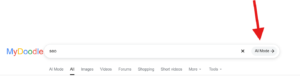
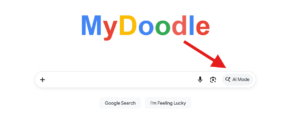
Google is now showing an AI Mode button within the search bar above search results. I don’t recall seeing this there before —currently, this button appears on Google’s homepage, and I spotted it while searching on Google. I couldn’t find anyone else mentioning this test, so I’m assuming this placement above the results search bar might be new.

Here is a screenshot with the search bar shown.

Here is a screenshot without it.

without ai mode

Here is a screenshot from Google’s homepage.

Google home page

This makes it easy for users to search as usual typing a query and hitting enter shows regular search results, but clicking the AI Mode button instead redirects users directly into AI Mode.

The post Google now showing AI Mode button within the search bar above results appeared first on Search Engine Watch.

Source:: searchenginewatch.com
Bing tests showing view counts in Shopping tab results

view counts in Shopping tab results

Bing is now testing view counts within its Shopping tab results, as shown in the screenshot below. It’s unclear exactly how Bing is calculating these numbers, but this felt new when I spotted it.

Here is a screenshot of this.

Showing view counts could be useful for users, though showing clicks or visits instead might actually be more helpful in terms of gauging real interest or trust in a product listing.

The post Bing tests showing view counts in Shopping tab results appeared first on Search Engine Watch.

Source:: searchenginewatch.com

Bing tests new human verification method before showing results

Bing tests new human verification method before showing results

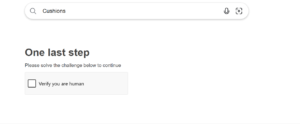
Bing is now testing a new verification method on its search results. When a user searches for something, this verification screen appears before showing the results. The verification title reads “One Last Step,” with a subheading below it saying “Please solve the challenge below to continue,” followed by a verification check confirming the user is human.

Since I explore Bing daily, this was the first time I’ve seen this, so it felt new to me.

Here is a screenshot of this.

This fits into a broader pattern of search engines adding more verification steps to filter out bots and automated scraping something we’ve also seen tested recently on Google.

The post Bing tests new human verification method before showing results appeared first on Search Engine Watch.

Source:: searchenginewatch.com