Google plans Agent Compute Engine preview with isolated computers for AI agents

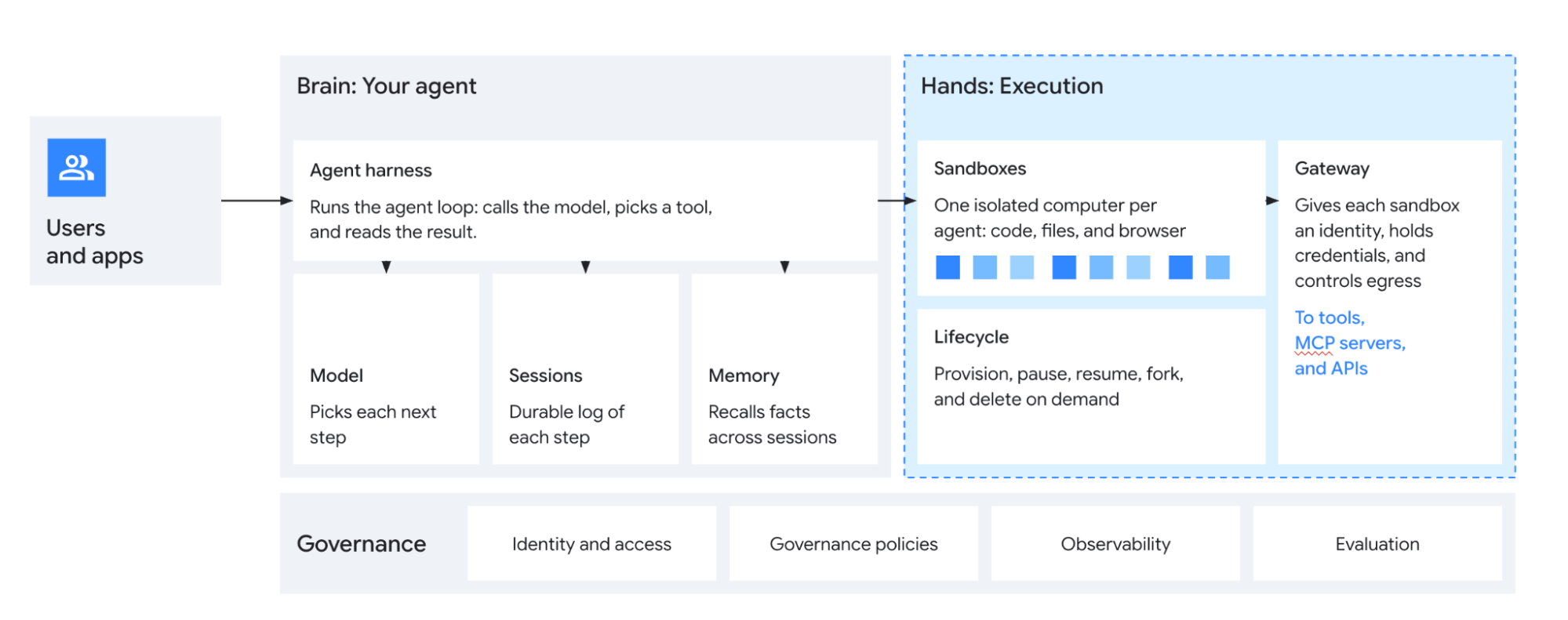
Google diagram separates the agent harness and model from execution sandboxes and their gateway

Google has announced Agent Compute Engine, a service that gives AI agents hardware-isolated virtual computers. Customer preview access will arrive in the coming months; Google says the infrastructure already powers Gemini’s work-task agents.

The October 22 announcement describes small virtual machines, or microVMs, with their own operating-system environments. Agents can use them to execute code, operate browsers and maintain workspaces across sessions.

Idle agents keep their work between tasks

Google’s technical explanation separates the software that chooses an agent’s next action from the sandbox that runs its commands. This lets the system detect when execution has stopped.

Google separates the agent’s decision-making software from the environment that executes its commands. Image: Google

When an agent waits for a model response, user input or another system, its microVM can pause. A saved snapshot preserves the state for its next action, rather than rebuilding the working environment or continuously allocating active compute.
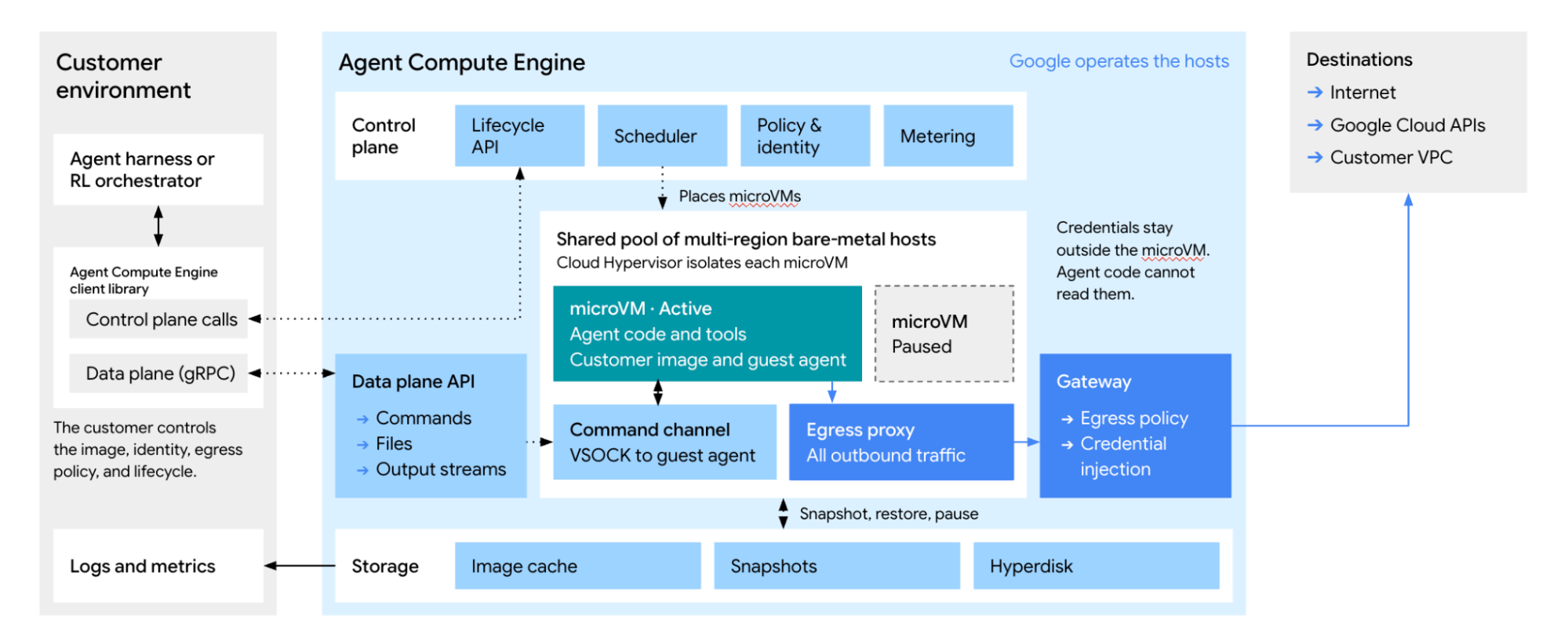
Agent Compute Engine architecture showing active and paused microVMs, snapshots and an external gateway
The architecture keeps snapshots and persistent storage alongside microVMs that can pause between tasks. Image: Google

Copy-on-write memory sharing also lets agents share unchanged operating-system and software components. Separate memory is allocated for the portions each agent modifies, reducing duplication across environments.

Service credentials stay outside the sandbox

Google keeps long-lived credentials outside the execution environment. An external gateway checks the agent’s identity and outbound-access policies before inserting the credential needed for a permitted service request.

That design limits what hostile code inside a sandbox can steal: a compromised environment should not contain the user’s stored API keys or OAuth refresh tokens. Access to external services still depends on the gateway’s configured policies.

Source: Google Cloud

The post Google plans Agent Compute Engine preview with isolated computers for AI agents appeared first on Search Engine Watch.

Source:: searchenginewatch.com
ChatGPT ads reach 89 countries after expansion into 26 new markets

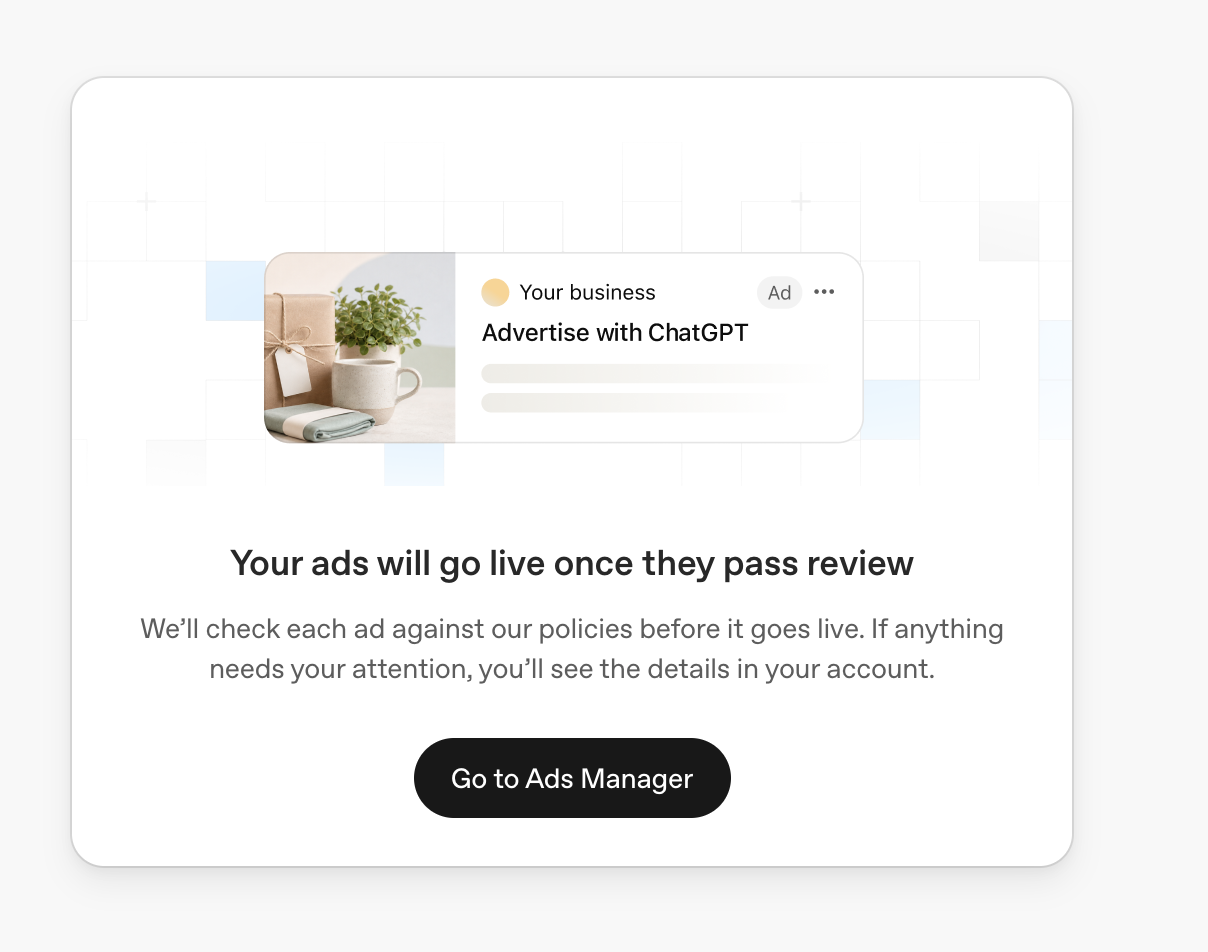
ChatGPT Ads onboarding notice says ads will go live once they pass review

OpenAI has expanded ChatGPT ads to 26 more countries, bringing the total to 89. Its October 21 announcement also says more than 100,000 advertisers have run campaigns since the service launched.

The expansion includes 14 Latin American markets, among them Argentina, Chile, Colombia and Peru. Nigeria, South Africa and Pakistan are also joining, with advertisers able to buy through technology partners or the self-service Ads Manager.

The new markets follow OpenAI’s 31-country European expansion in August, which included Germany, France and Spain.

For advertisers entering these markets, the immediate constraint is account eligibility. OpenAI’s country list determines who can open a self-service account, while separate targeting restrictions can limit where a new account’s campaigns run.

New accounts may start with their home country

The availability rules require the legal entity advertising and receiving the bill to be based in a supported country. An advertiser whose legal entity is based in an unsupported country can register interest for future access.

Even in supported markets, some new self-service accounts initially advertise only in their home country. International targeting opens after identity verification and the required spending on campaigns at home; selecting overseas locations cannot bypass that restriction.

An agency planning a regional launch therefore needs to check the billing entity’s location and the account’s permitted targets before assigning countries to campaigns. A saved campaign draft can still contain locations where the account cannot deliver ads.

First campaigns can start as soon as they qualify

OpenAI also warns that a first campaign may lack scheduling controls before publication. Ads created during signup can begin serving after review when account, billing, budget and other delivery requirements are satisfied.

OpenAI’s onboarding notice explains when submitted ads can go live. Image: OpenAI

Advertisers with a fixed launch date should avoid publishing a campaign merely to reveal its scheduling controls.

Ads remain limited to Free and Go

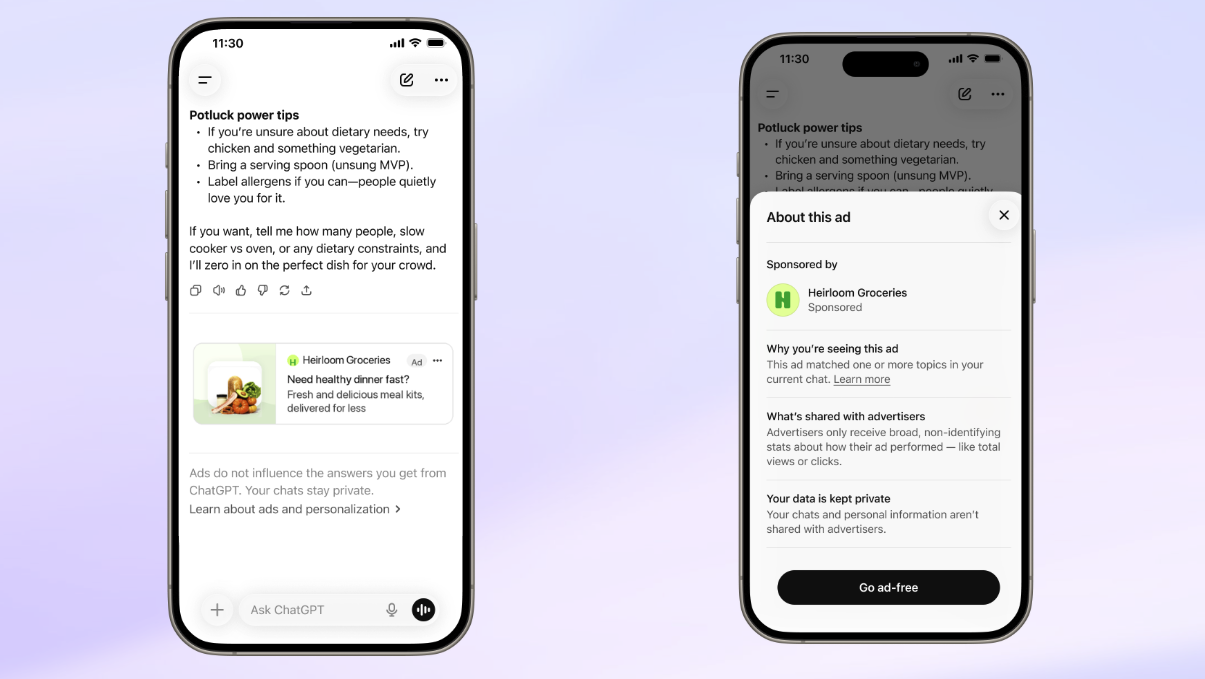
OpenAI’s user-facing guidance says paid placements appear on Free and Go, with other subscription tiers remaining ad-free. Advertisers receive aggregate performance information rather than access to users‘ conversations.

OpenAI example of a sponsored grocery ad beneath a ChatGPT response and its disclosure panel
OpenAI’s documentation illustrates a labeled ad and the information users can inspect about it. Image: OpenAI

Users can disable personalization while still receiving ads based on their current conversation. OpenAI says further formats, buying options and measurement capabilities are planned, without announcing availability dates in this expansion.

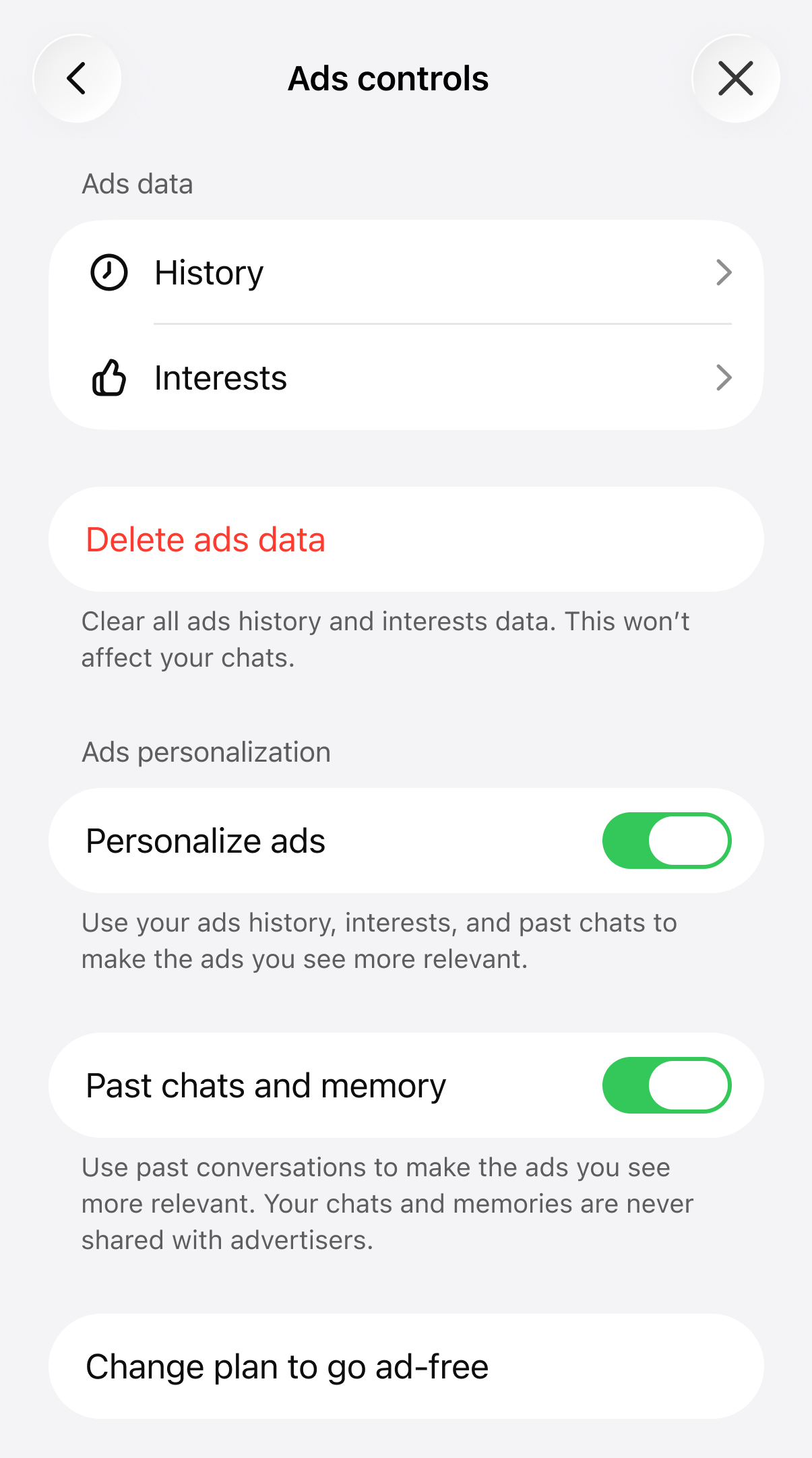
ChatGPT iOS ad controls showing toggles for personalized ads and past chats and memory
Ad controls let eligible users change whether past chats and memory contribute to ad personalization. Image: OpenAI

Source: OpenAI

The post ChatGPT ads reach 89 countries after expansion into 26 new markets appeared first on Search Engine Watch.

Source:: searchenginewatch.com
Google adds existing AI and snippet controls to its Search sharing guide

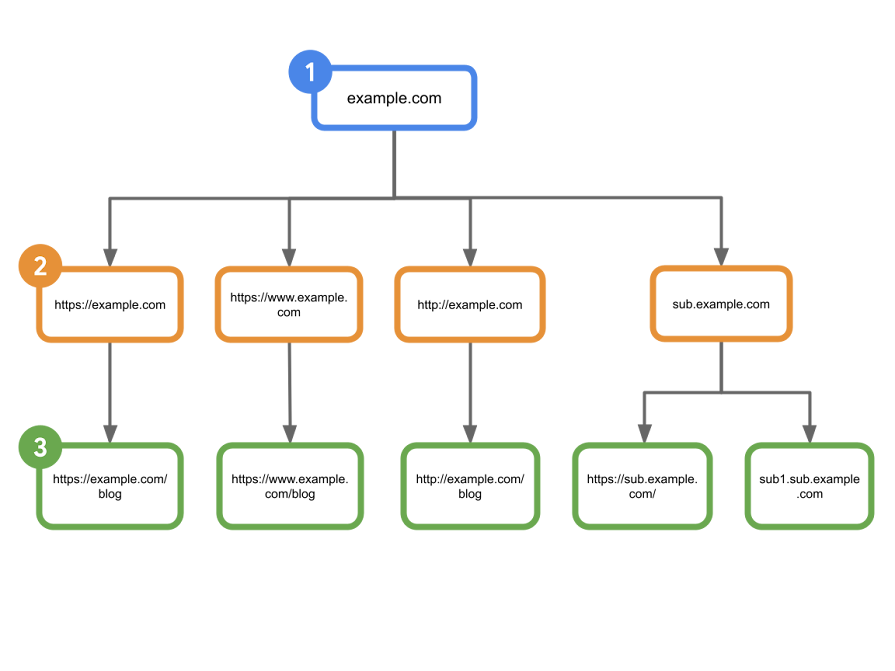
Google diagram showing a top-level domain above its child properties and narrower URL paths

Google has revised its Search sharing guide to include the existing Search generative AI control and more ways to restrict search previews. The October 21 update brings those options alongside indexing and removal controls for site owners.

Google’s documentation changelog describes a refresh of available choices, rather than a feature launch. It names robots meta tags, data-nosnippet and X-Robots-Tag among the additions to the guide.

The AI control preserves eligibility elsewhere in Search

The Search generative AI control sits under Settings in Search Console. Google says it reached all websites worldwide on August 31, so the new documentation does not change who can use it.

Choosing exclusion removes a property’s content and links from the covered AI features, including AI Overviews, AI Mode and generative features in Discover. Google says that choice is not a ranking or inclusion signal for other parts of Search.

Publishers give up impressions and traffic from those AI features when they opt out. The control also leaves AI training unchanged; Google directs publishers to Google-Extended for training restrictions.

Check the property’s inherited setting before changing it. A narrower property can follow a parent property’s choice unless an owner overrides it.

Google’s diagram shows the parent and child properties through which an AI-control choice can be inherited. Image: Google

Page-level restrictions solve different publishing problems

For a publisher that wants to restrict AI use while retaining ordinary search visibility, applying noindex would also remove the page from conventional results. That is a broader consequence than selecting the AI control.

A page’s preview can be restricted more precisely through robots settings and snippet rules. Google’s specifications allow data-nosnippet on supported HTML elements to keep selected passages out of snippets.

The broader nosnippet rule suppresses a page’s text snippet and prevents its content from being used as direct input for AI Overviews and AI Mode. Non-HTML resources can receive supported rules through the X-Robots-Tag HTTP header.

Google must be able to crawl a page to read its indexing instructions. Its noindex guidance warns that blocking the crawl with robots.txt could leave a URL in results.

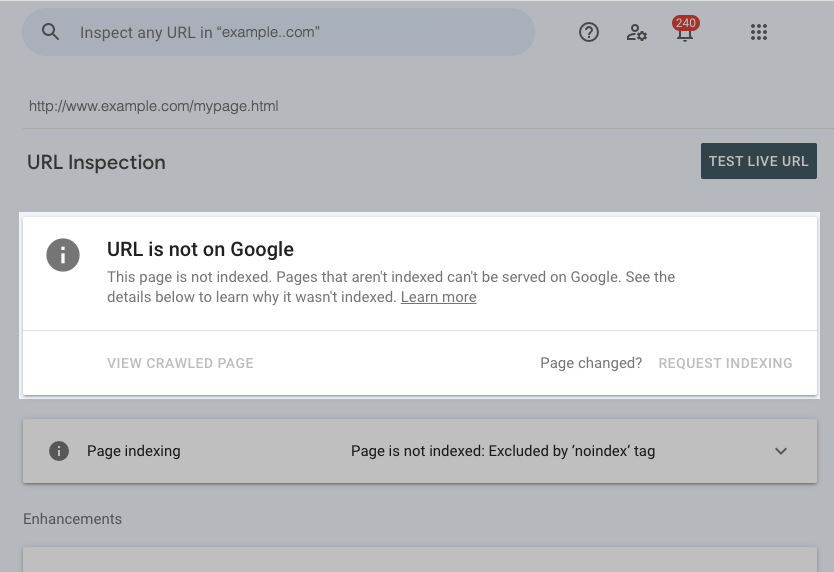
Google URL Inspection documentation example showing a page excluded by a noindex tag
Google’s URL Inspection example shows a page excluded from the index by noindex. It is a documentation example, not a live SEW test. Image: Google

After changing an indexing rule, use URL Inspection to check Google’s stored status and compare it with a live test. The two views can differ while Google processes a recent change.

Source: Google Search Central

The post Google adds existing AI and snippet controls to its Search sharing guide appeared first on Search Engine Watch.

Source:: searchenginewatch.com
Anthropic gives Agent Skills to the Agentic AI Foundation

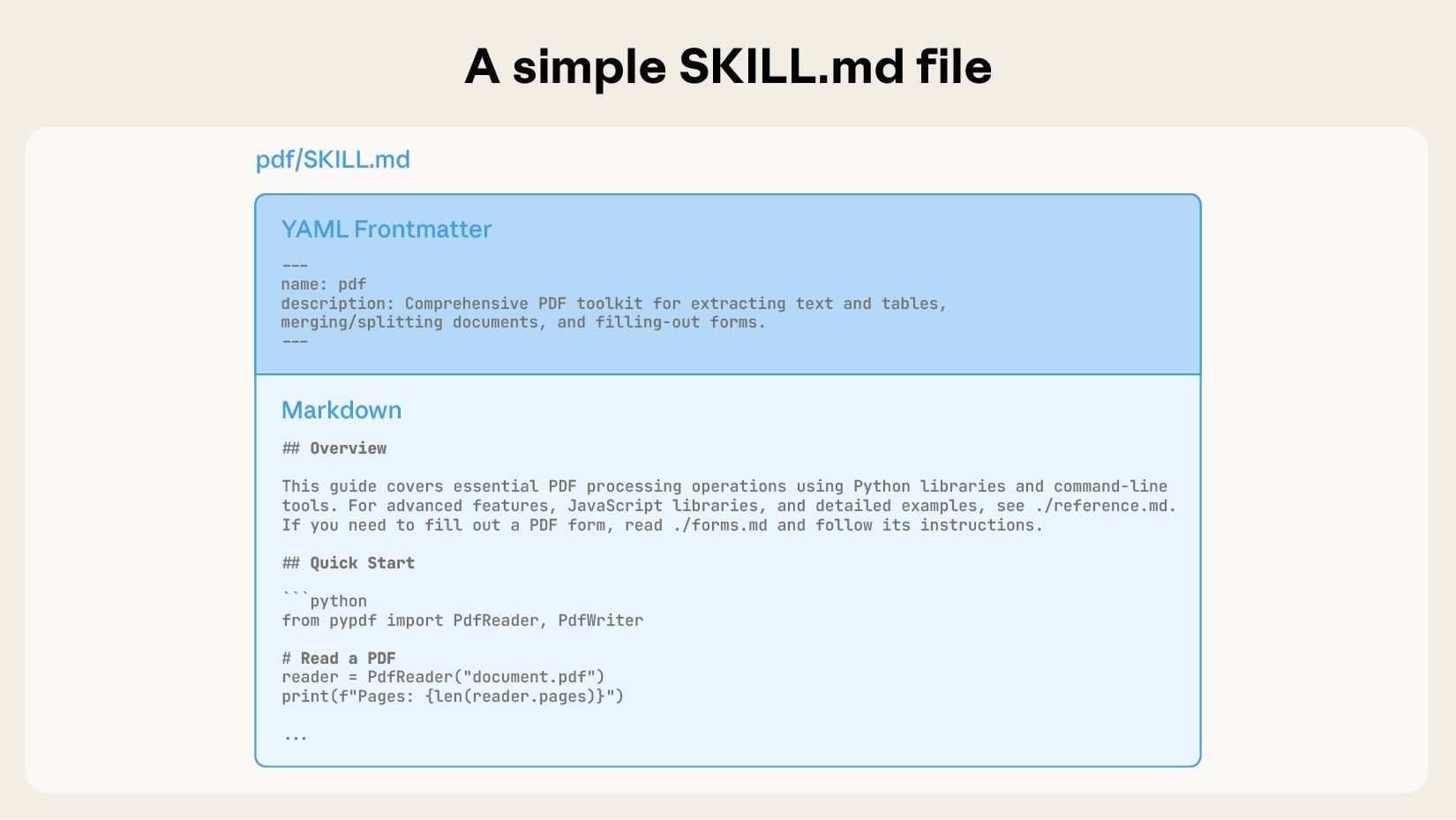
Example SKILL.md file with YAML metadata followed by Markdown instructions

Anthropic is donating Agent Skills to the Linux Foundation’s Agentic AI Foundation. The October 22 transfer covers the format’s branding, GitHub organization and website.

A skill packages reusable instructions in a SKILL.md file, with optional scripts and reference files.

Anthropic’s earlier explanation shows the metadata and instructions inside a skill file. Image: Anthropic

Using or contributing to the standard remains open without foundation membership. David Soria Parra and Mahesh Murag will serve as lead maintainers.

Skills load instructions when a task needs them

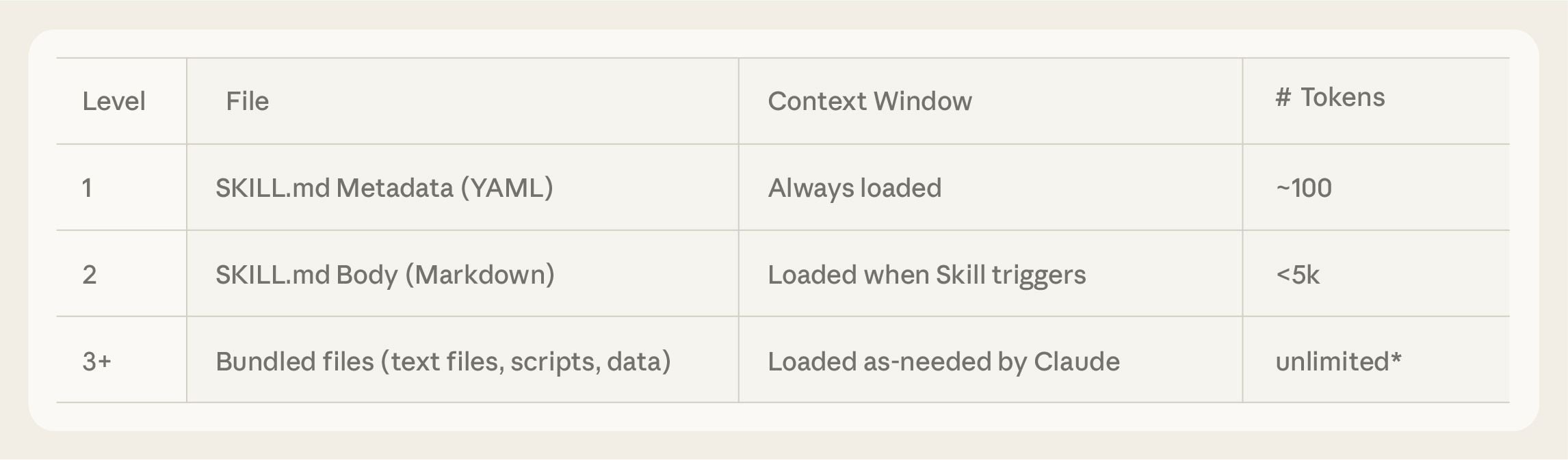
The format’s documentation describes a staged loading process: an agent initially reads a skill’s name and description, opens its full instructions when the task matches, then retrieves additional files as needed.

Table showing when skill metadata, instructions and bundled resources enter an agent's context
Skill names and descriptions load before the full instructions and supporting resources. Image: Anthropic

Skills can describe research procedures using SEO MCP servers, which connect an agent to external tools and data.

Software requirements travel with the workflow

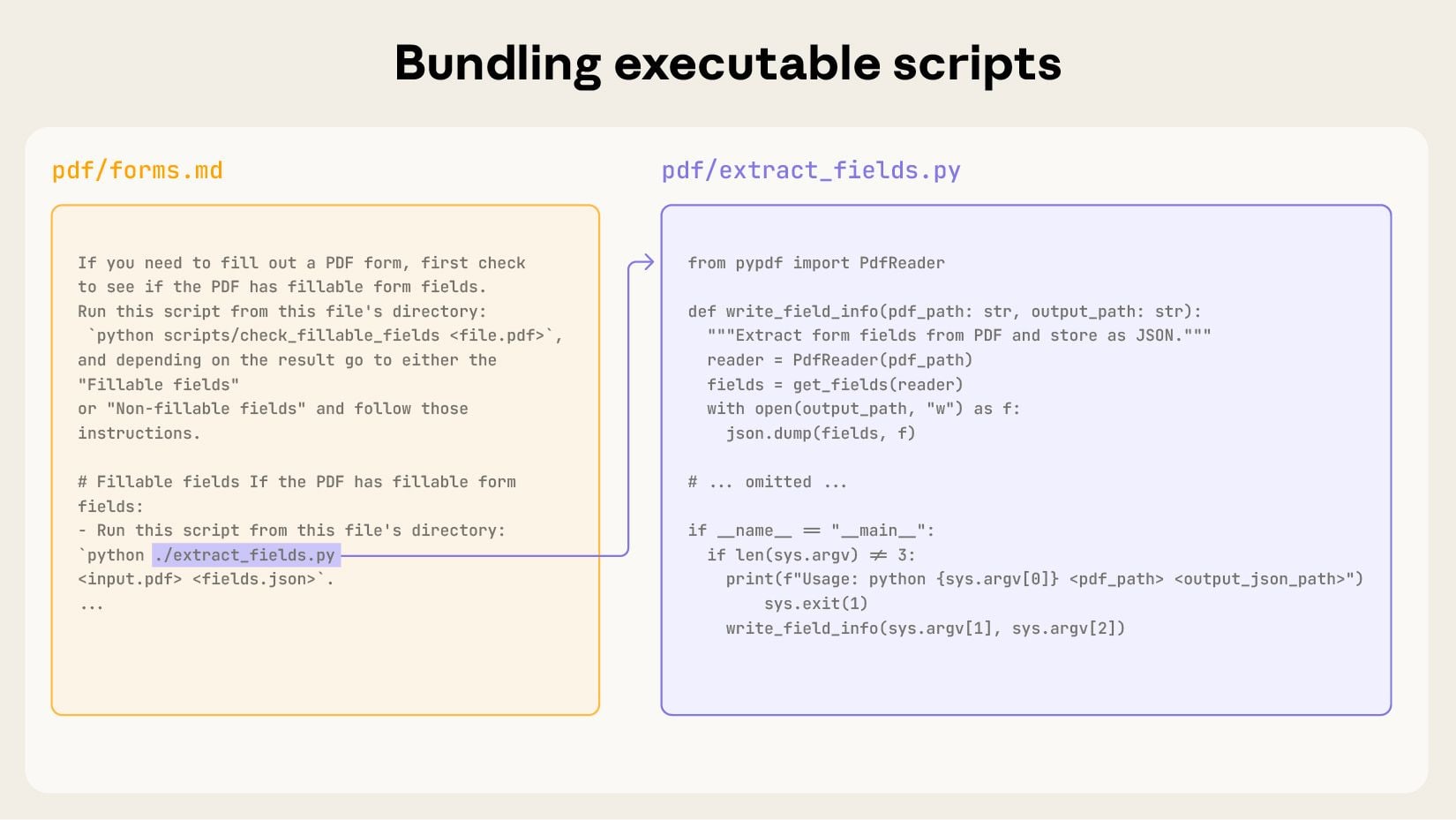
The Agent Skills specification allows a compatibility field for requirements such as installed software and network access. A skill containing a Python script therefore needs an agent environment that can execute that script.

Anthropic example linking skill instructions to a Python script for extracting PDF fields
A skill can bundle executable code, as in Anthropic’s PDF-processing example. Image: Anthropic

Tool permissions vary: the experimental allowed-tools field has different support across implementations. A procedure that runs in one product can therefore require different permissions in another.

Anthropic’s security guidance recommends auditing unfamiliar scripts, dependencies and network connections before installing a skill, because malicious code or instructions can expose data.

The proposed foundation roadmap includes versioned releases, a formal proposal process and security guidance.

Source: Anthropic

The post Anthropic gives Agent Skills to the Agentic AI Foundation appeared first on Search Engine Watch.

Source:: searchenginewatch.com
LinkedIn brings its B2B audiences to CTV ads in Google’s DV360

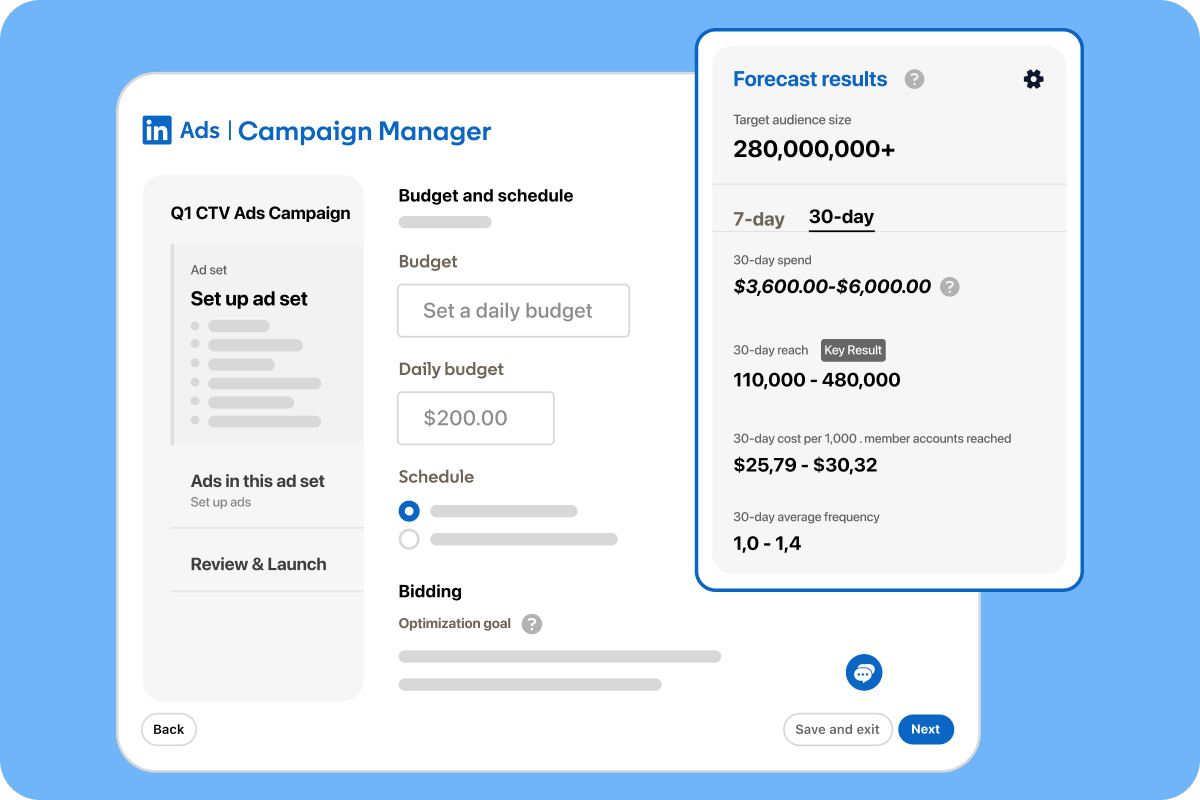
LinkedIn's illustrative Campaign Manager screen with CTV campaign budget and forecast controls

LinkedIn has made its professional audiences available for connected-TV advertising through Google’s Display & Video 360, according to AdExchanger’s October 22 report.

The integration lets advertisers use job titles and company information to reach business buyers watching streaming television. LinkedIn product executive Jae Oh told AdExchanger that advertisers had wanted more choice over which buying platform they use.

LinkedIn already offers CTV buying inside Campaign Manager and through other demand-side platforms, or DSPs. DV360 adds another route for teams that manage programmatic campaigns outside LinkedIn.

LinkedIn’s Campaign Manager illustration shows its direct buying route. The displayed budget and forecast are examples, not DV360 campaign terms. Image: LinkedIn

LinkedIn packages its audiences into private deals

LinkedIn’s existing DSP instructions explain how it builds a professional audience and combines it with streaming-TV inventory in a private marketplace deal, using Microsoft’s Monetize platform.

A representative supplies a Deal ID that the advertiser activates in its DSP. That lets the buyer keep transactions, campaign controls and reporting within its existing workflow, as LinkedIn’s product page explains.

The setup guide still names only The Trade Desk and Amazon Ads Agent. Buyers need their representatives to confirm DV360’s eligibility and costs, rather than apply the guide’s US managed-account restrictions to the new route.

LinkedIn's existing CTV partner illustration showing The Trade Desk and Amazon DSP beside a television viewer
LinkedIn’s existing DSP illustration shows The Trade Desk and Amazon. Its public setup guide also still lists those partners rather than DV360. Image: LinkedIn

Measurement depends on the buying platform

LinkedIn’s documented iSpot audience-reach verification is limited to The Trade Desk. A DV360 proposal should therefore specify which independent reach and brand-lift reports are included, separately from standard campaign delivery reporting.

Source: AdExchanger

The post LinkedIn brings its B2B audiences to CTV ads in Google’s DV360 appeared first on Search Engine Watch.

Source:: searchenginewatch.com