Google is testing a new design for the Knowledge Panel in the SERP, with some minor changes compared to the current layout.
This was first spotted by Ben Fisher, who posted about it on LinkedIn.
He wrote: “This KP design has been flipping for three days now. A signal that one pane design may become permanent.”
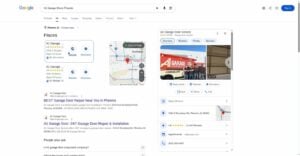
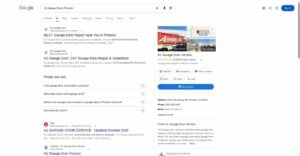
Here is the screenshot he shared of the new design.
Here is the screenshot he shared of the old design.
Since Fisher says the design has been flipping back and forth for three days, Google may be getting close to settling on one version. It looks like the new design could roll out more widely soon. I think it might also help businesses get more clicks and calls, though that is only my guess.
More than 10 million people in the US and Canada have set up a Muse AI agent, Mark Zuckerberg said during Meta’s October 21 earnings call, about six weeks after launch.
Zuckerberg put daily use at about 25% of people who had set up the agent.
Shopping leads Muse’s early uses
Chief Financial Officer Susan Li said shopping was used by more than a quarter of Muse’s weekly active users.
Muse launched on September 8 with a browser running on a dedicated cloud computer. It can search for products, fill out forms and prepare purchases, with the customer approving sensitive actions.
Meta’s launch artwork for Muse, announced on September 8. Image: Meta
Meta announced plans to bring Muse to its AI glasses at Connect in September. Image: Meta
Meta plans transaction fees and paid subscriptions
Zuckerberg said Meta expects businesses to pay fees on transactions Muse facilitates. Paid subscriptions would cover heavier use, advanced models and additional business features; he gave no merchant fee schedule.
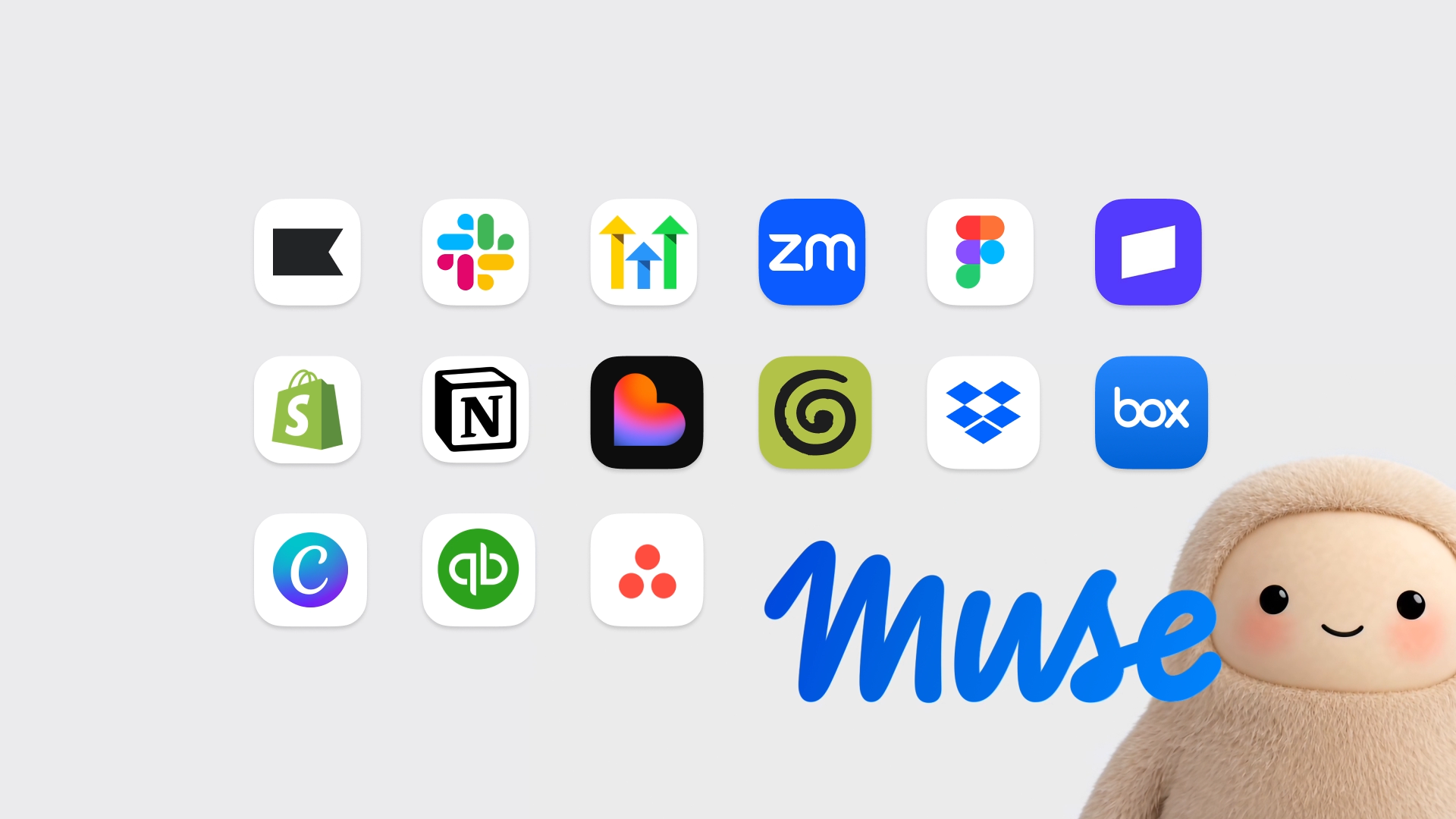
The business product expanded on September 29, adding Facebook Pages, Meta ad accounts and Instagram professional analytics alongside services such as Shopify and QuickBooks.
The September 29 business expansion added account connections and business workflows to Muse. Image: Meta
Those small-business connections let Muse analyze sales, prepare campaigns and flag unusual expenses. Meta says owners approve actions that publish, send or spend and can inspect the agent’s activity.
Meta expects to improve cost efficiency more than tenfold over the next year, as computing demands constrain broader rollout.
Google is testing a sticky heading for sponsored results in AI Mode. Previously, Google only used this on the regular SERP, where the “Sponsored results” heading stays pinned at the top as you scroll through the ads. Now I’m seeing it in AI Mode as well.
Here is a screenshot of this.
A sticky heading in both AI Mode and the regular SERP is a good thing. It keeps the “Sponsored” label visible while users scroll, which makes it clearer to them that they are looking at paid results.
Netflix has introduced a conversion pixel and expanded its Conversion API to accept more than 20 types of conversion events. Advertisers can use that data for measurement and audience targeting.
The October 20 announcement, covering the US and Canada, also sets November as the start of expanded audience access through The Trade Desk.
Conversion data supports lift tests and audience building
The pixel and API let advertisers test Netflix’s first-party attribution, conversion-lift and A/B measurement tools. The same conversion data can also supply audience segments for targeting.
Those reports answer different questions. Attribution assigns advertising credit for a recorded sale or lead; conversion lift estimates the additional outcomes caused by advertising, accounting for purchases that would have happened anyway.
For a campaign judged on sales, compare the reported purchase event with completed orders in your own records. Combining product-page visits and completed purchases into one success measure would obscure which outcome the campaign delivered.
Trade Desk audience targeting starts in November
The Trade Desk confirms that buyers will be able to activate their own customer audiences and third-party data on Netflix through Kokai in November.
Its marketplace includes more than 4 million audience segments from over 300 providers, covering commerce, behavior, demographics and geography.
Reporting availability differs by buying platform. Yahoo DSP buyers can now measure single-publisher attribution across their programmatic Netflix campaigns.
Netflix describes The Trade Desk’s reach, frequency and attribution reporting as coming soon, without a launch date. Buyers planning November campaigns should confirm which reports will be available when audience targeting begins.
PHP patches released on October 21 fix two critical vulnerabilities that can let attackers run code on a web server without logging in. WordPress owners need their hosting provider to install a fixed PHP build.
The fixed releases are 8.5.12, 8.4.27, 8.3.36 and 8.2.35, according to PHP’s security advisory. Updating WordPress, its theme or its plugins does not update the PHP software running underneath them.
PHP says every web deployment is at risk
The flaws, CVE-2026-109618 and CVE-2026-109619, affect installations serving web requests. PHP identifies Apache’s mod_php configuration as the highest risk, with a demonstrated attack that runs before application code starts.
Linux distributions and long-term-support vendors received patches ahead of release. A host may therefore have applied a vendor fix without moving to one of the upstream version numbers listed above.
Ask your host for the exact patched build
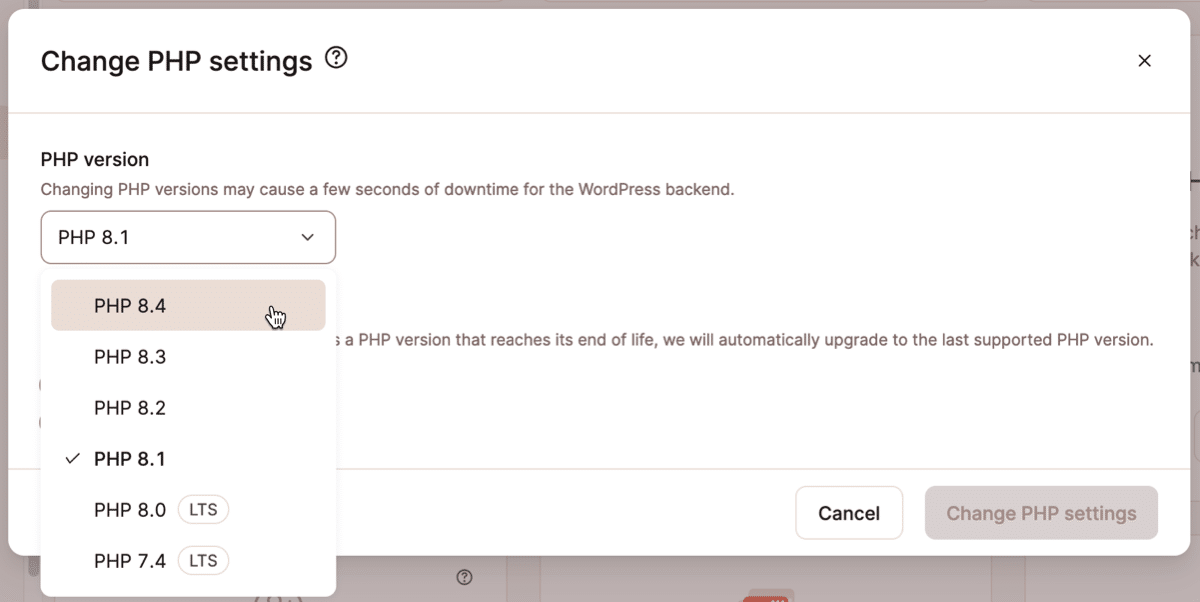
Ask which PHP build serves your site and which security advisory confirms that it fixes both vulnerabilities. A reply such as “PHP 8.4” identifies the branch but leaves the patch level unanswered.
Kinsta’s example selector shows PHP branches, without their patch levels. Confirm the exact patched build with the host. Image: Kinsta
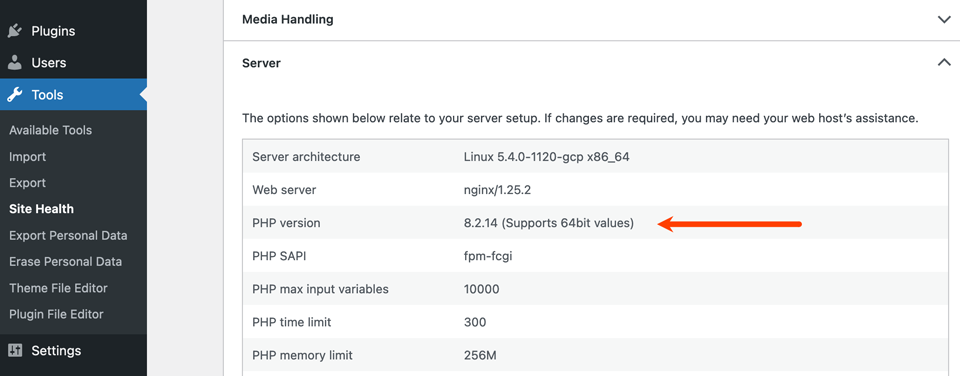
You can find the displayed version in Tools > Site Health > Info > Server, under PHP version, as WordPress’s guidance explains. Include the full value in your support request.
Kinsta’s older example shows where Site Health lists the full PHP version. The displayed 8.2.14 is not a fixed release for these flaws. Image: Kinsta
Site Health’s version check compares PHP with WordPress’s recommended version. A good result can therefore appear before these emergency patches are installed. The host’s package record is the relevant confirmation for a backported fix.
Isolation may be necessary until the patch is installed
CERT-EU advises considering isolation of internet-facing applications if immediate patching is impractical. WordPress’s maintenance screen still runs through PHP, so ask the host about serving a static notice outside the affected application.