Reddit adds campaign forecasts and a score for ad recommendations

Reddit adds campaign forecasts and an optimization score to its advertising tools, giving media buyers a way to compare proposed plans and review campaign recommendations. The company announced the changes on October 20 and says both features are rolling out to all advertisers through October.

The update also extends campaign budget optimization across more objectives, allowing Reddit to distribute a campaign’s spending among its ad groups.

The planner compares budgets before a campaign starts

Reddit’s campaign planner projects reach, impressions and costs. Advertisers can compare versions with different budgets, audiences, objectives and placements. A plan can then become a draft campaign.

Reddit’s campaign planner example shows a proposed plan, rather than a measured advertiser result. Image: Reddit

A useful comparison starts with a question narrow enough for the forecast to answer. Holding the audience and objective constant while changing the budget shows the estimated effect of that spending change. Changing the audience, budget and objective together produces a different media plan, but makes it harder to identify which setting explains a difference in projected costs.

Saving the version selected before launch would give a buyer a reference for later reporting. Actual delivery can then be compared with the original estimate, rather than a forecast recreated after the campaign has run.

The score offers recommendations during campaign setup

The campaign optimization score rates a setup from zero to 100% and supplies recommendations during campaign creation and editing.

Reddit says advertisers with scores of at least 80% had a 19.6% lower blended cost per acquisition than lower-scoring advertisers in its internal July to September data. It provides no sample size or detailed adjustment method alongside that comparison, and labels the results not typical. Reddit describes the figures as historical averages that vary by campaign.

The comparison groups advertisers by score, so differences in their audiences, offers and conversion definitions can also affect acquisition costs. An advertiser evaluating a recommendation would need the result for its own conversion goal, with the change and measurement period recorded, to judge how that recommendation performed.

Budget automation changes how ad groups compete for spend

Campaign budget optimization is available for Awareness and consideration and Traffic objectives. Sales, Lead generation and App promotion remain in beta. Advertisers set their budgets and bids at campaign level while Reddit shifts spending between ad groups.
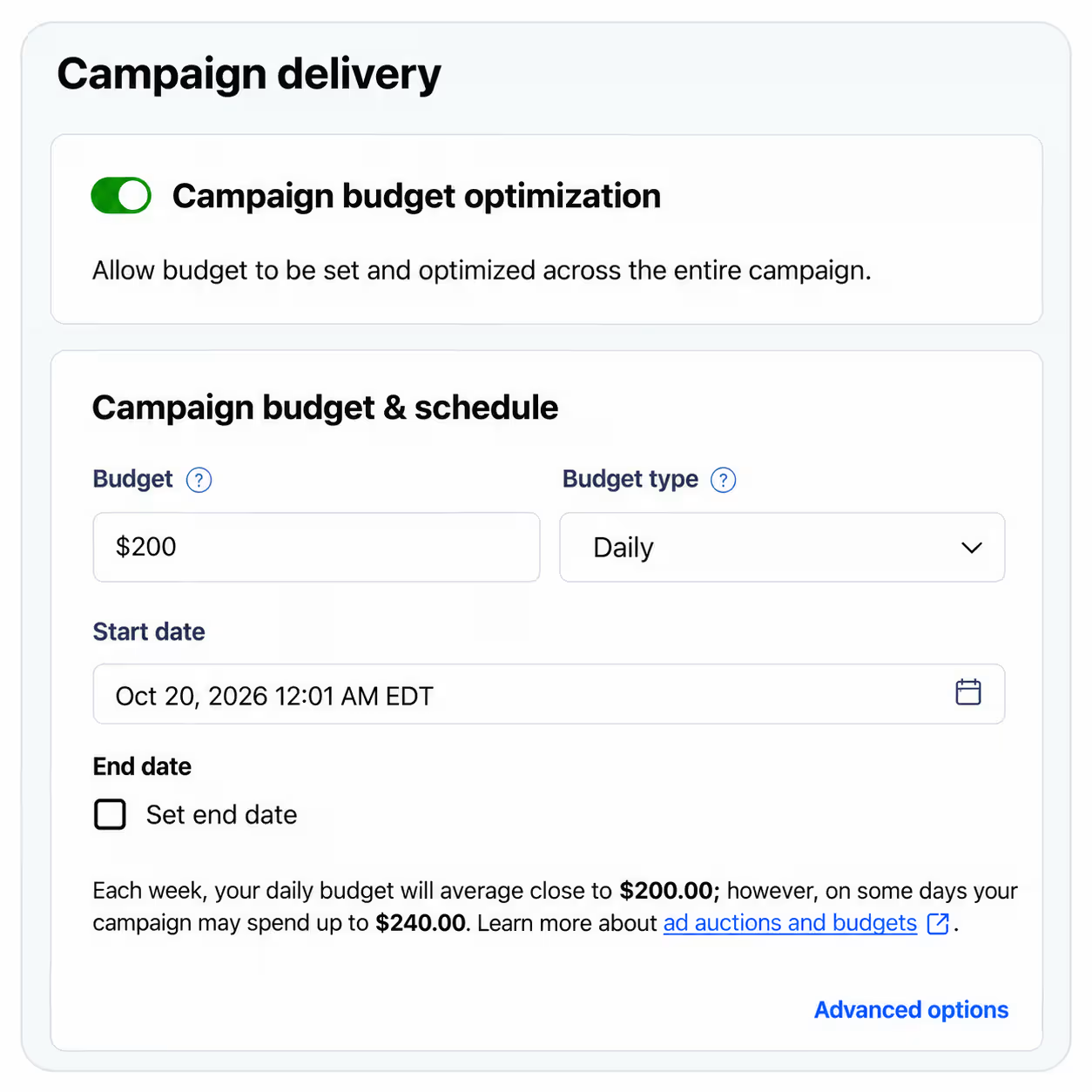
Reddit supplied campaign budget optimization and delivery example
The campaign budget tool allocates spending among ad groups, according to Reddit. Image: Reddit

That gives buyers two different comparisons to make. The planner compares possible campaigns before spending begins, while campaign budget optimization allocates money inside the campaign that actually runs. A forecast for one proposed audience does not specify how much each ad group will receive once automated allocation is active.

For a lead generation campaign, the final allocation is worth reading alongside the lead records. If an ad group receives more spending, the relevant follow-up is whether the additional leads meet the business’s qualification criteria. Tracking that result separately from the platform’s acquisition count keeps the advertiser’s sales outcome visible when reviewing the allocation.

Source: Reddit

The post Reddit adds campaign forecasts and a score for ad recommendations appeared first on Search Engine Watch.

Source:: searchenginewatch.com

Gemini adds a small-business hub that remembers your brand style

Gemini is getting a small-business landing page that brings brand creation, financial analysis and customer insights into one place. In its October 20 announcement, Google says the hub, marketing and finance skills, and new app connections will begin rolling out globally to all Gemini app users in the coming days.

Owners can upload a website, brand kit, fonts or color palette to define a visual style that Gemini retains for later image generation. The change removes a repeated briefing step for businesses creating assets for successive campaigns.

Saved styling carries across campaign requests

Google says the brand tools use Nano Banana 2.1. The finance capabilities turn spreadsheets, receipts and purchase records into graphics and interactive models, while new connections include Google Ads, Google Business Profile and Workspace, alongside third-party apps.

The announcement names Canva, Shopify and Xero among those services. It gives a global rollout direction, without establishing that every connection or feature is immediately available in an individual account. It also leaves the allowances and third-party subscription requirements for each connection unspecified.

For a business preparing several promotions, keeping the same fonts and colors reduces the amount of material the owner has to supply again. The changing parts of each promotion still need their own instructions: a saved palette cannot supply a new offer’s price or expiration date. Separating those details from the standing brand brief makes it easier to identify what the next asset needs to change.

The Business Profile connection predates this hub

Google announced a direct Google Business Profile connection on June 10. Its examples included analyzing Search impressions and direction requests, drafting responses to reviews, and updating business hours. The initial rollout excluded the EEA and UK.

Google illustrated the Business Profile connection when it announced it in June. Image: Google

That announcement also introduced Business notebooks, which bring chats, sources, a website and Business Profile context together. Google described alerts about unanswered questions and missing holiday hours, along with recommendations based on the business’s information.

The October announcement gives that work a broader landing page alongside brand and finance tasks. Local marketers should distinguish the new hub from the earlier promise of a Profile connection when explaining what changed to a client.

Google’s new examples include Burger & Butcher, a New Jersey restaurant that the company says uses Gemini to analyze local Search and Maps performance through the owner’s Google Business Profile. Google selected the business for its announcement; the account describes existing work with Gemini.

Two cheeseburgers with pickles on branded paper beside cups of fries and chicken nuggets, from Google's business announcement
Burger & Butcher is one of the small businesses featured in Google’s announcement. Image: Google

A common brief connects different marketing jobs

The hub combines material that businesses often prepare separately: brand references for creative work, customer information for messages and records for financial analysis. Bringing those inputs into the same place can reduce the need to reconstruct the business’s context for every task.

SEW’s guide to small-business AI marketing tools explains the separate drafting, design and website-analysis jobs. Access to Google’s new landing page begins with the announced rollout; the relevant app permissions and service entitlements still need checking in the account that will do the work.

Source: Google

The post Gemini adds a small-business hub that remembers your brand style appeared first on Search Engine Watch.

Source:: searchenginewatch.com
Google appears to remove AI Overview labels from desktop results

AI Overview label on desktop

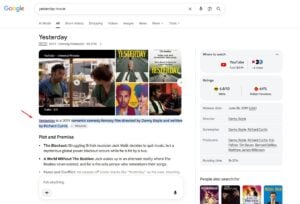
Google may be testing AI Overviews without the “AI Overview” label on desktop. Glenn Gabe was the first to flag this on X, after seeing it in search results for shows and movies.

Glenn wrote:

“No AIO label? -> Very interesting to see AIOs for shows or movies and Google not providing the AIO label. Noticed that this morning. I wonder if we will see more AIOs without labeling. Stay tuned.”

Here is the screenshot he shared:

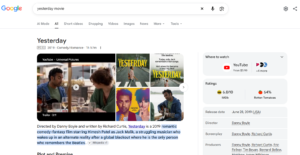
I was able to replicate it when I searched for “yesterday movie”. Here is my screenshot:

AI Overview label on desktop-1

It is unclear whether Google is intentionally testing AI Overviews without labels or if this is a temporary issue.

The post Google appears to remove AI Overview labels from desktop results appeared first on Search Engine Watch.

Source:: searchenginewatch.com
How Meta’s AI shopping assistant decides which products you see

Meta’s Muse checks a shopper’s saved preferences, searches retailer websites and Meta’s product catalog, then filters the results into recommendations. A small study by Profound found that websites supplied most final choices, despite the catalog returning many more candidates.

Sensor Tower estimates put Muse above 10 million US downloads in 40 days, TechCrunch reported on October 20.

From dozens of products to a handful of recommendations

Profound’s October 2 research covered 50 prompts in one retail category, using a single Muse account. It reported these typical results:

Source Products found Products recommended
Meta’s catalog About 60 across 30 merchants Two
Retailer websites Four across two merchants, after visiting three domains Four

Catalog listings dominated retrieval, but website finds took more places in the shortlist, showing how those stages can diverge.

Profound, which sells AI marketing software, calls the sample exploratory; it does not establish how Muse weighs individual ranking factors.

The customer still reviews the purchase

Meta’s account of Muse’s design explains how the agent uses a full browser to navigate websites, fill in forms and complete transactions. The company built explicit approval controls for consequential actions, including purchases.

Its published checkout example shows a merchant’s product page inside an approval card, alongside a payment method and estimated total. The shopper can review the order and choose “Deny” or “Allow.” The card asks them to check the merchant’s details and terms before approving.

Access to the retailer can interrupt the process too. SEW previously reported on Amazon blocking Muse from buying on customers‘ behalf, citing objections to how the agent accessed accounts. A shopper’s permission to proceed does not override the merchant’s access restrictions.

The shopper has an activity log that retailers may lack

Profound also reports that Muse’s browser traffic can resemble ordinary human visits, making agent activity difficult to identify on a merchant’s website.

On the customer’s side, Meta describes a more explicit record: tapping the Muse avatar opens an activity log and the permissions the user has approved. Those records offer a way to investigate a shopping attempt from the account that initiated it.

A retailer testing its own products could save the exact shopping request, recommendations and activity log, then match any approved order to its transaction records. That would let the retailer investigate specific failures, such as a product missing from the shortlist, a website access problem or a proposed order the shopper declined.

The post How Meta’s AI shopping assistant decides which products you see appeared first on Search Engine Watch.

Source:: searchenginewatch.com
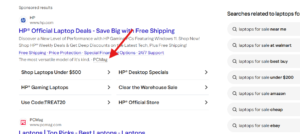
Yahoo tests reviews and popular links in search ads

reviews in search ads

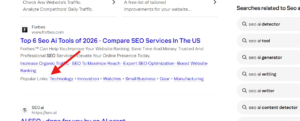
Yahoo appears to be testing popular links and reviews within its search ads. I spotted a review below a shopping ad, and a popular link shown with a separate ad.

Here is a screenshot of the review in Yahoo’s results:

And here is the popular link shown with the ad:

popular links in search ads

Similar tests have shown up elsewhere in recent days. Bing tested reviews and popular links in ads, and Google tested top pages and reviews within ads.

The post Yahoo tests reviews and popular links in search ads appeared first on Search Engine Watch.

Source:: searchenginewatch.com