Yahoo tests reviews and popular links in search ads

reviews in search ads

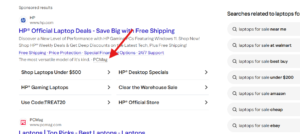
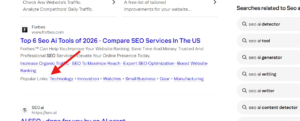
Yahoo appears to be testing popular links and reviews within its search ads. I spotted a review below a shopping ad, and a popular link shown with a separate ad.

Here is a screenshot of the review in Yahoo’s results:

And here is the popular link shown with the ad:

popular links in search ads

Similar tests have shown up elsewhere in recent days. Bing tested reviews and popular links in ads, and Google tested top pages and reviews within ads.

The post Yahoo tests reviews and popular links in search ads appeared first on Search Engine Watch.

Source:: searchenginewatch.com
Google tests product features in Shopping ads

shopping ads that show key product features

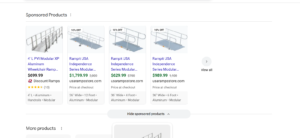
Google appears to be testing a new design for its Shopping ads in search results. Until now, these ads showed the product image, name, price, and review rating. In the new test, Google also shows key features of the product in a grey background.

I spotted this while searching for “ramps for home.” Here is a screenshot:

Showing key features inside Shopping ads looks like a good addition. If users can see a product’s main features right in the search results, they may be more likely to click through.

The post Google tests product features in Shopping ads appeared first on Search Engine Watch.

Source:: searchenginewatch.com
Google shows cart icon by default in Search

Google shows cart icon by default in Search

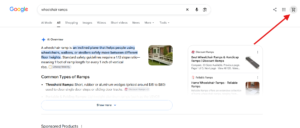
Google is showing a cart icon by default on the side of the page. I checked my browser earlier and didn’t see it, but today the icon appeared without me adding anything. Normally, this icon only shows up after a user adds a product to the cart.

Here is a screenshot of this.

I might be wrong about this being new. The icon may have been visible to others for a while and I could simply be late to notice it, but it looked new to me.

The post Google shows cart icon by default in Search appeared first on Search Engine Watch.

Source:: searchenginewatch.com
Google AI Mode tests two responses and asks users to pick the better one

Ai Mode tests two responses-1

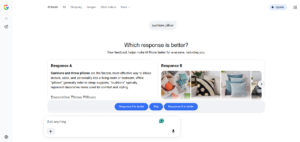
Google AI Mode is now showing two responses to a query and asking users to pick the one they like better. The prompt reads: “Which response is better? Your feedback helps make AI Mode better for everyone, including you.”

ChatGPT has done something similar, where it shows two answers to a prompt and lets the user choose which one they prefer.

Here is a screenshot of this.

Ai Mode tests two responses-1

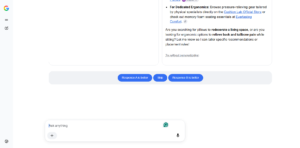
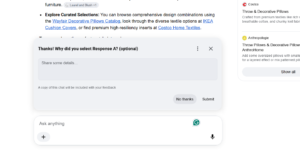
When I clicked on one of the responses, a popup appeared asking why I chose it.

Ai Mode tests two responses-3

Showing two answers can help users, since they can pick the one that suits them best. It also gives Google direct feedback on which responses people prefer.

Have you seen this “Which response is better?”

The post Google AI Mode tests two responses and asks users to pick the better one appeared first on Search Engine Watch.

Source:: searchenginewatch.com
DeepSeek says its search engine filters ‘GEO manipulation’

DeepSeek has put “GEO manipulation” alongside SEO spam and low-quality AI-generated content in the announcement opening its search API to developers. It says its engine filters all three, without giving examples of the GEO tactics it catches.

The claim appears in the company’s October 17 changelog. DeepSeek says the same in-house engine powers search on its website and through its API. Developers can now retrieve ranked web results and use that material in their own applications.

Generative engine optimization, or GEO, describes work intended to make brands and content more visible in AI-generated answers. The launch note offers no definition of manipulation or test results showing how the filtering works.

Google already applies spam rules to AI answers

Google’s spam policies explicitly cover attempts to manipulate generative AI responses in Search. They also identify specific abusive practices, including hidden text placed to manipulate search engines and producing large numbers of pages that add little value for readers.

At the same time, its guidance for AI Overviews and AI Mode continues to recommend ordinary SEO work: making important information available as text, helping crawlers access pages and keeping structured data consistent with visible content. Google says no special optimization is required for those AI features.

Those documents give site owners both recommended actions and examples of abuse. DeepSeek’s announcement supplies a filtering claim without comparable detail about the publishing practices it targets.

The API exposes scores for returned pages

DeepSeek is more specific about what developers can inspect. Its Search API reference documents two scores attached to each returned page:

Field What DeepSeek documents
authority A page authority tier from 0 to 4, with −1 meaning unknown. Tiers of 3 or above indicate highly authoritative sources.
rerank_score A score from 0 to 3 combining relevance, authority and freshness. DeepSeek classifies scores of 1.5 or above as high quality.

The API accepts site: queries and can return up to 50 results. A publisher could use it to inspect which pages from its domain appear in a search and the tiers attached to those pages.

That gives marketers a way to examine source selection before an AI application writes its answer. Whether a returned page becomes a visible AI citation is a further outcome to check in the answer itself.

DeepSeek’s published pricing lists Search and Fetch at $0.75 per 1,000 successful requests each. Search finds ranked results; the separate Fetch API retrieves an individual page as Markdown text.

The response schema contains no field identifying a spam-filter decision. If a page is missing, the returned data leaves its absence unexplained.

The post DeepSeek says its search engine filters ‘GEO manipulation‘ appeared first on Search Engine Watch.

Source:: searchenginewatch.com